Beachcombing Report: Keeled Earless Lizard


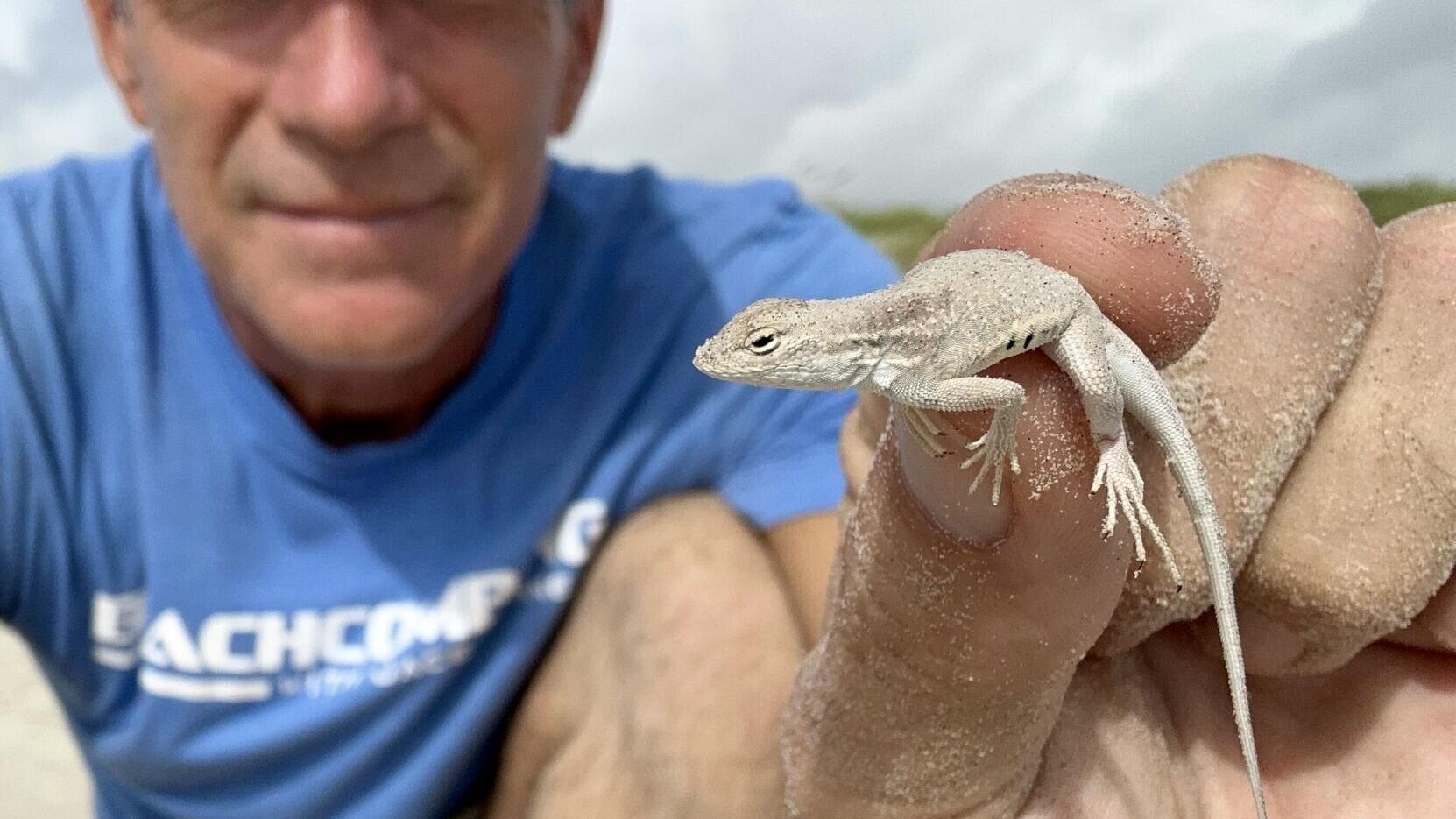
I spent nearly 30 minutes chasing one of the fastest little creatures on the Texas coast. By the time I finally caught a keeled earless lizard, I was covered head to toe in fine, powdery sand that clung to me for the rest of the day. It was well worth the effort.
Despite its name, the keeled earless lizard does have ears. It simply lacks the large external ear openings that most lizards have, giving it the appearance of being earless. Found only in Texas and northeastern Mexico, it's a true regional specialty and one of the most fascinating animals you might encounter while exploring our coastal dunes.
These lizards are masters of camouflage. Their tan, gray and brown colors blend perfectly with the sand and sparse dune vegetation. They'll sprint across open sand at remarkable speed, then suddenly freeze with their heads raised, scanning for insects or predators. If you blink, they seem to vanish right before your eyes.
Their rough, textured scales, each with a raised ridge called a keel, give the species its name. They're active during the day, relying on excellent eyesight to hunt ants, beetles, grasshoppers, spiders, flies and other small invertebrates. Rather than climbing, they spend nearly all of their lives racing across open ground. If a predator manages to grab one, it can even shed its tail to make a quick escape.
The barrier island's sandy dunes provide excellent habitat for these harmless little reptiles. Unfortunately, development, dune disturbance and invasive plants can reduce the open sandy areas they depend on to survive.
So the next time you're walking at the base of the dunes, keep an eye out for a tiny lizard making a lightning-fast dash across the sand before freezing in place. If you spot one, you've just discovered one of the Gulf Coast's best hidden treasures.
Jace Tunnell is the Director of Community Engagement for the Harte Research Institute at Texas A&M University-Corpus Christi. His Beachcombing series appears in newspapers, as a weekly video on YouTube and KEDT PBS and as a weekly feature on KEDT NPR. Follow Jace at harteresearch.org, Facebook (@harteresearch) and Instagram (@harteresearch).