State health officials endorse MMR vaccines as measles cases rise
As measles cases rise in Pa., especially around the Lancaster-Lebanon region, health officials are encouraging MMR vaccinations and vigilance.
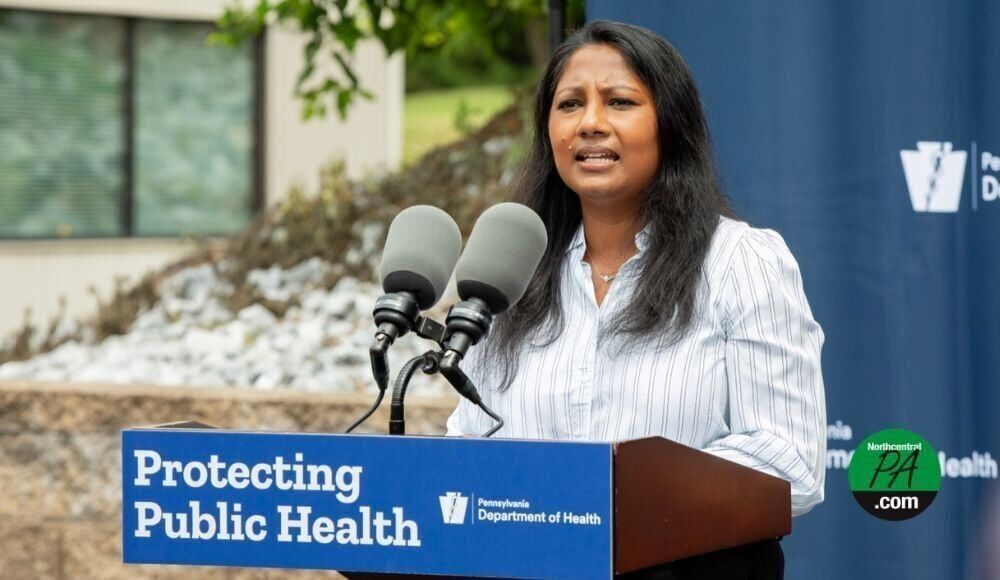
Dr. Fahmida McGann, Penn State Health, speaks about increasing measles cases around Lancaster and Lebanon.
Lancaster, Pa. — The Pa. Department of Health (DOH) is working with local healthcare and community partners to address increasing numbers of measles cases throughout Pa. among people who are not fully vaccinated.
Cases have especially risen around the Lancaster-Lebanon region. DOH is working to mitigate the highly contagious virus, with experts and medical professionals ready to respond to new cases as they emerge.
“The single most effective way to avoid contracting or spreading measles is to get fully vaccinated. We know Pennsylvanians care about their communities, and doing their part to protect our youngest and most vulnerable residents creates the immunity we need in every city and town to keep this disease at bay,” said Secretary of Health Dr. Debra Bogen. “High rates of vaccination in a community reduce the spread of the highly contagious measles virus. The Department of Health is working hand in hand with a host of community partners to ensure people across the state have access to accurate information and to vaccines close to home.”
So far this year, there have been 84 identified cases of measles. Seventy-two of the cases were in the Lancaster-Lebanon region.
The case breakdown since late April is as follows:
Berks County: 2 cases
Dauphin County: 2 cases
Lancaster County: 41 cases
Lebanon County: 20 cases
Northumberland County: 6 cases
York County: 1 case
Earlier in the year, eight cases were identified in Lancaster County, three in Montgomery County, and one in Chester County.
The DOH and many partners are increasing vaccine information campaigns and ensuring access throughout the Commonwealth.
This year, state health center staff administered more than 1,300 doses of the measles, mumps, and rubella (MMR) vaccine to Pennsylvanians. DOH continues to host pop-up MMR vaccine clinics. Since cases first started emerging in the Lancaster-Lebanon area in late April, pop-up clinics provided more than 430 doses to residents of those counties.
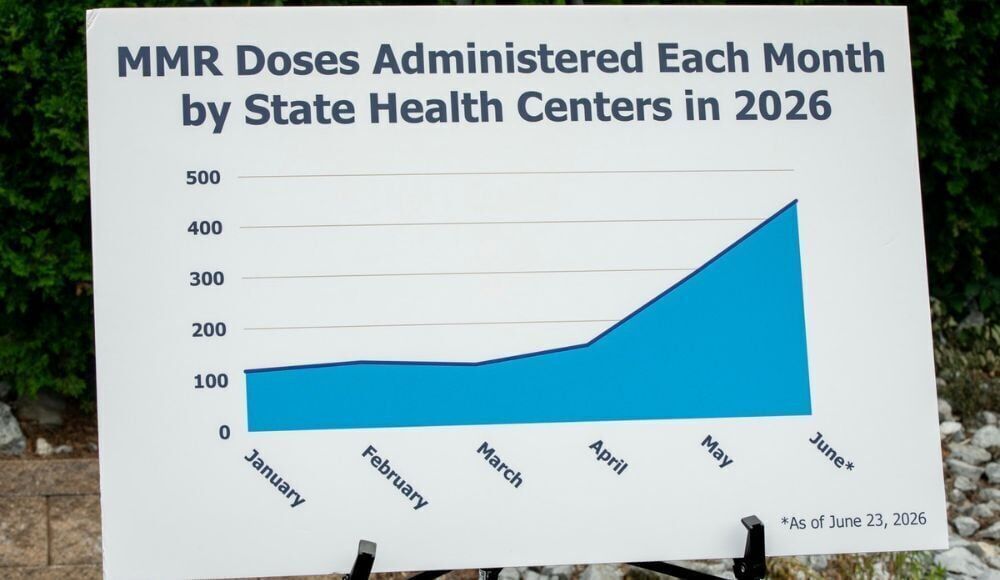
Two doses of the MMR vaccine is the recommended method of guarding against the measles virus, with a 97% effectiveness rate for complete prevention. The vaccine has been successfully used for several decades since its introduction in the early 1960s. Since then, cases and deaths from measles decreased almost completely compared to the pre-vaccine era, to the point that it was declared eradicated in the U.S. in 2000.
Because measles was basically eradicated 26 years ago, many healthcare providers have never treated a patient with the disease. DOH is issuing Health Alert Network messages outlining signs and symptoms of measles and reminding clinicians to encourage patients to stay up-to-date on vaccines.
In addition to the alerts DOH measles experts have hosted in-person and live virtual medical briefings to over 1,000 doctors, nurses, and other providers to help them identify and treat patients with measles.
“Pennsylvania health care providers and trusted community partners are integral in the Department of Health’s measles response,” said Dr. Bogen. “These dedicated individuals are answering questions and discussing the importance of getting vaccinated, and in the end, helping keep residents healthy from a potentially life-altering disease.”
According to the CDC, people most at risk are the unvaccinated, infants who are too young to have received the MMR vaccine, and people from parts of the world where there is low vaccination coverage/access or where measles regularly circulates.
Signs and symptoms of measles
Measles is a disease that infects the lungs and breathing passages like the nose, mouth, and throat and spreads throughout the body. The virus is incredibly contagious, spreading to other people when an infected person breathes, coughs, or sneezes. The virus remains in the air and on surfaces for up to two hours even after an infected person leaves the area.
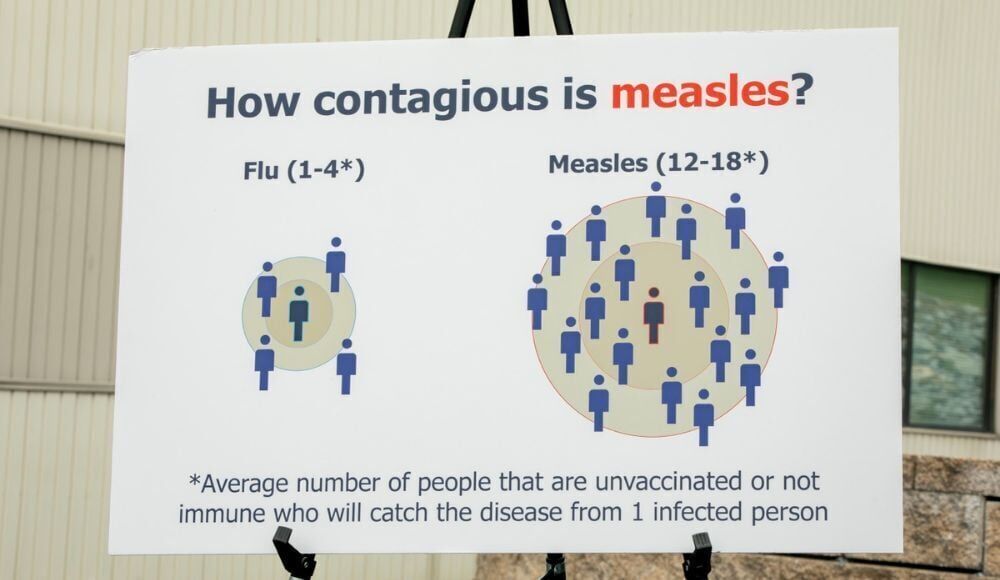
A diagram showing the contagiousness of the flu versus the measles
Symptoms to note include fever, cough, runny nose, and red, watery eyes (conjunctivitis), followed by a rash that starts on the head and spreads downward.
Without proper protection or supportive care, measles can be deadly. Symptoms can start one to three weeks after exposure to the virus.
What happens when measles is reported
When DOH is alerted to a new measles case in a specific location, local public health staff conduct contact tracing to identify contacts and places where exposure may have occurred, and to implement actions including public notification to prevent further viral spread. The contact tracing team works around the clock to reach anyone who might have been exposed to the virus.
The contact tracing team also ensures that people with measles isolate while contagious as much as possible.
DOH continues to closely monitor the situation and work with local providers to swiftly respond and test for potential cases. The DOH is continually evaluating new public health strategies and partnerships to reduce the spread of the virus and increase vaccine access.
School vaccinations and more information
DOH provides school vaccination data at both the county and state level. In the next few weeks, school-level vaccination information will be available online so that families have additional information to make health and educational choices.
People who believe they were exposed to measles and are experiencing symptoms should contact their health care provider or call the Department’s toll-free hotline at 877-PA-HEALTH (877-724-3258).
More information on measles is available at pa.gov/measles.