Why the Billings Chamber decided to oppose the anti-dark money initiative
The Billings Chamber of Commerce declined a debate on the Montana Plan Wednesday, but was still more than willing to express their opposition to the initiative in an interview Thursday.
As organizers held a town hall Wednesday for the Montana Plan, there were two empty seats reserved for the anti-dark money initiative’s formal opponents: the Montana Chamber of Commerce and the Billings Chamber of Commerce.
Montana Plan organizers wanted a debate on I-194, an initiative that will be on Montanans' ballots in November. The Montana Chamber was willing, until it backed out five days before, according to organizers. The Billings Chamber, meanwhile, declined to participate from the start.
“I think the empty chairs say it all,” said Gary Buchanan, former independent House candidate and head of Billings-based Buchanan Capital, a business that’s a member of the Billings Chamber of Commerce. He had wanted it to be a community discussion, rather than the rally for the Montana Plan it turned out to be. The initiative would strip businesses operating in Montana of the right to make any sort of political contribution.
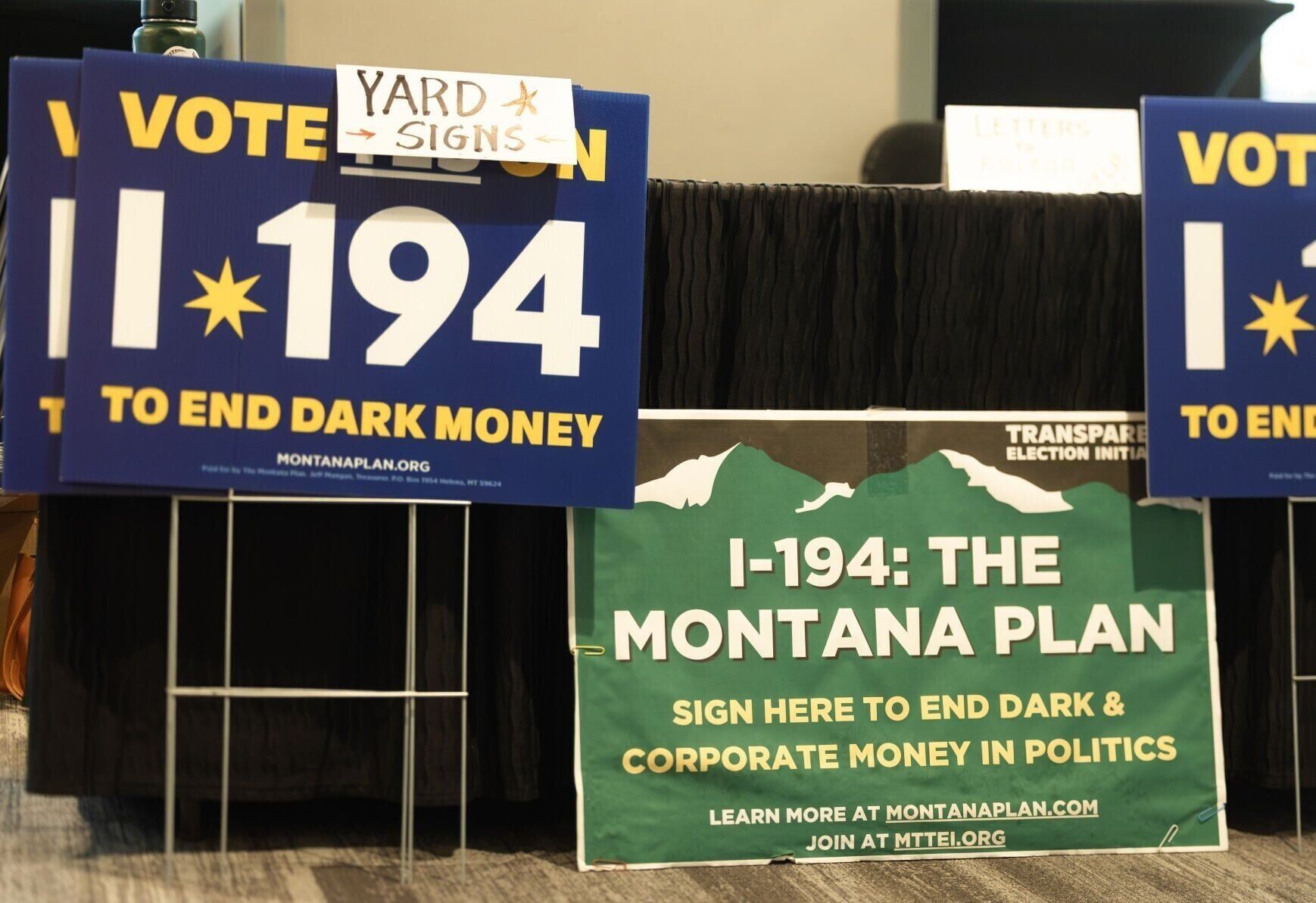
Signage supporting I-194 is pictured during a town hall for the ballot initiative at the Alberta Bair Theater on Wednesday, Sept. 16.
He said 20 years ago, when he was helping push a local public safety levy, akin to what the Billings Chamber of Commerce does in the present day, names mattered more. When he received a corporate check for the campaign for the levy's campaign, he had to turn the money away and told the owners to submit personal checks. That was before Citizens United v. FEC, a 2010 Supreme Court decision that allowed an ever-rising wave of corporate spending in U.S. elections.
“And that levy passed, because people stood up in this town, wrote their own checks, and put their own name on it,” Buchanan said.
But executing on that reality in the current day, as required by the Transparency Election Initiative, wouldn’t be realistic for a sucessful levy campaign, the Billings Chamber said in an interview the day after they were represented by an empty chair.
They said they are willing to talk about the Montana Plan to anyone who is interested, but only had 10 days notice for an event where a Chamber representative would have been outnumbered. It didn’t feel like a sincere request, Dan Brooks, vice president of business advocacy for the Billings Chamber, said.
In response, Jeff Mangan, who helped conceive the plan, wrote in a statement to the Gazette that: "They were invited to the debate. They had the perfect opportunity to share their position with everyone and answer questions themselves.”
Billings Chamber pushes back
The organization has significantly helped push local initiatives in recent years, collecting support from local businesses along the way. They doubt the same sort of revenue would come from individuals as envisioned by proponents of the Montana Plan.
A 2021 campaign for the public safety levy saw 68% of donations come from businesses, according to Brooks. Thousands of dollars in donations came from places like Circle K, SCL Health (now Intermountain) and St. John’s United, according to campaign records. A campaign for the 2023 Parks and Recreation Bond saw 58% of contributions come from businesses. That effort saw thousands in contributions from McCall Homes, a Montana restaurant group, and PAR Pacific Holdings, which owns a refinery in Billings. And currently, for the ongoing push around the jail expansion bond and levy, 53% of contributions have come from local businesses, Brooks said. That sort of information is publicly accessible already through a state portal, the Billings Chamber has noted.
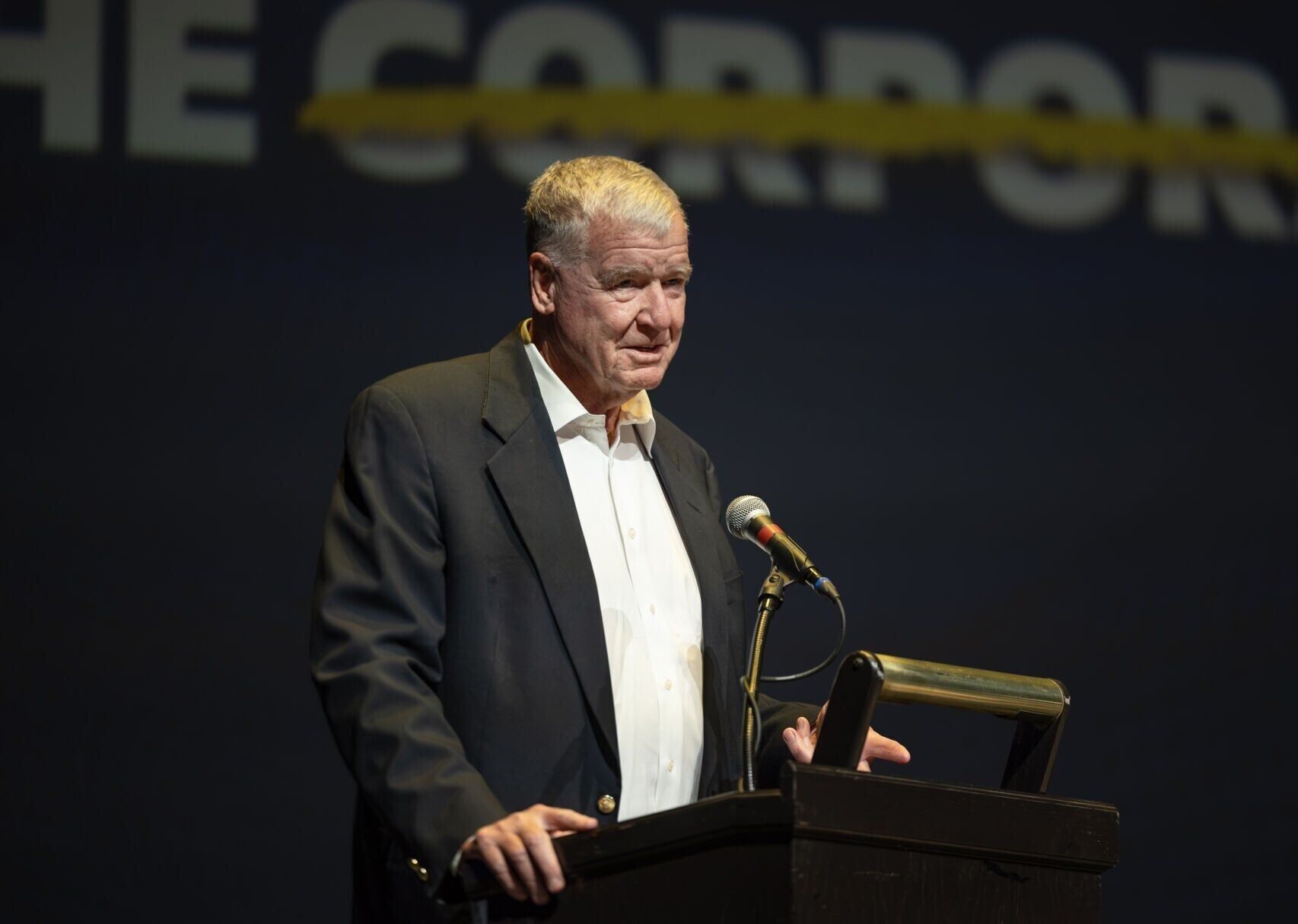
Gary Buchanan speaks during a I-194 town hall at the Alberta Bair Theater on Wednesday, Sept. 16.
“This initiative is focused on the dark money and ways that those hidden contributions find their way to influencing a campaign,” John Brewer, president of the Billings Chamber of Commerce, said. “The process of these local initiatives, these local levies and bonds, are completely transparent.”
Brewer said the headline of opposing dark money is hard to argue with, and considered the general intent as good and worth discussing. He also recognized that the Chamber’s opposition to it might not be welcomed by all small businesses within the city. Campaigners for the initiative have noted that more than a hundred local business have endorsed it in Montana. That includes 13 in Billings.
But the chamber president described the potential impact to local voter initiatives as an “unintended consequence” of the Montana plan that might not have been fully envisioned.
“To not be able to invest and support these campaigns like we've had in the past to make a difference with addiction and mental health and policing and jails and public safety or schools and so on — it takes our community back a big step,” Brewer said.
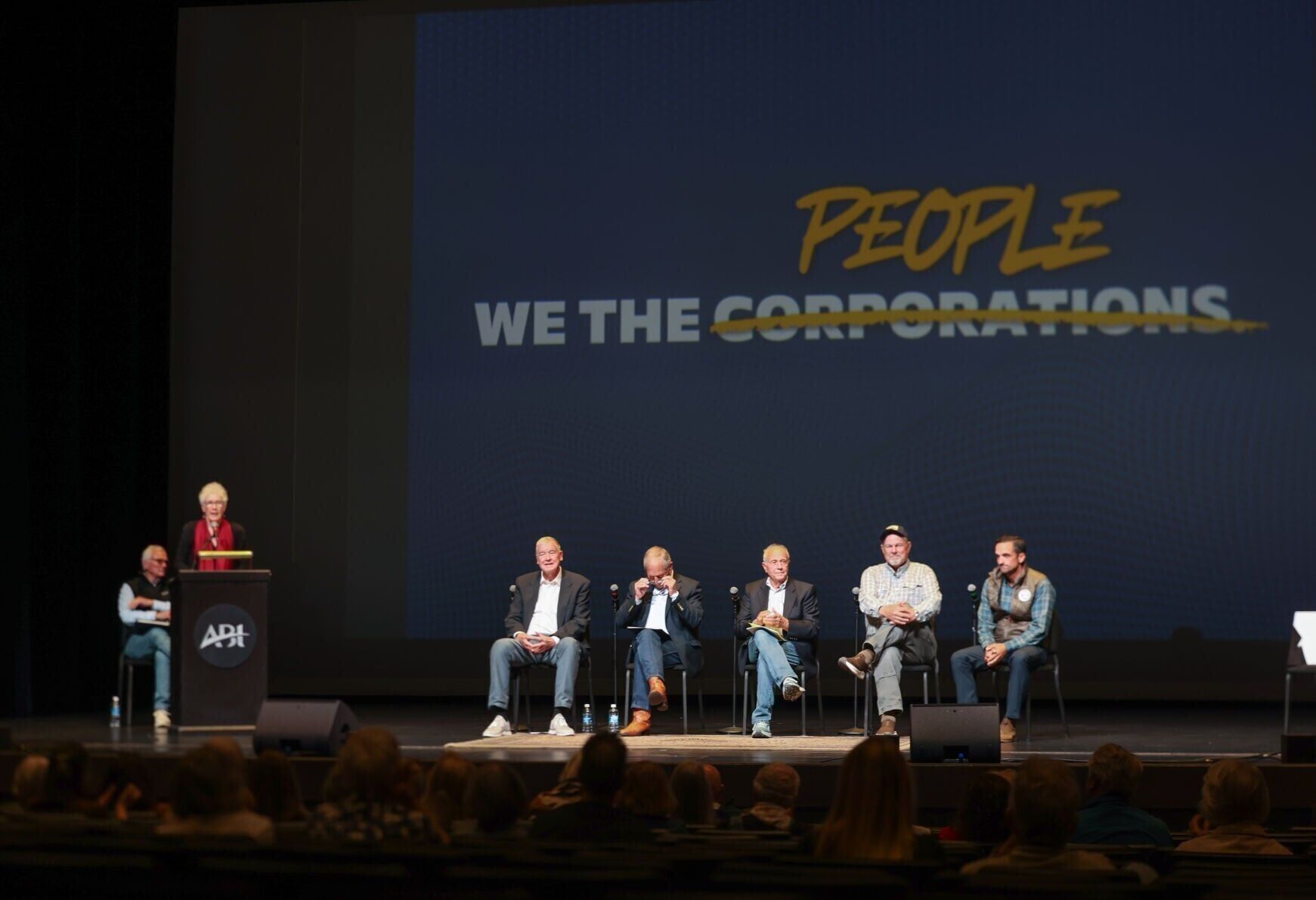
Panelists Gary Buchanan, Marc Racicot, Gene Jarussi, Jon Tester, and Russ Cleveland appear on stage during a I-194 town hall at the Alberta Bair Theater on Wednesday, Sept. 16.
Brooks said they wouldn’t even risk doing local campaign forums, debates and general community engagement on politics like they have done in the past, as it would pose a potential risk if the chamber came off as endorsing a candidate or perspective. If found in violation of the rule, the chamber likely would no longer be allowed to operate.
Mangan pointed the Gazette to a past op-ed that published Tuesday about why local efforts of businesses won't be curtailed. In it, he said businesses could still do educational events about local initiatives.
"The distinction is straightforward: Organizations may educate the public about public issues and community needs, but they may not use corporate treasury funds to tell voters how to vote on a particular ballot measure," Mangan wrote. "If I-194 passes, Montana communities have an opportunity to strengthen — not weaken — their year-round public dialogue."
Still, the Billings Chamber doesn't believe their events will be the same if the Montana Plan passes.
The chamber’s board of local business leaders decided to unanimously oppose the initiative back in early spring, one of two local chambers to do so alongside the Kalispell Chamber of Commerce. During the vote, the Billings board consisted of leaders from First Interstate Bank, KOA and Western Skies Strategies, among other larger local businesses. Proponents of the plan have repeatedly noted local leaders of businesses can still contribute their own money and resources to initiative campaigns, but the Billings Chamber has considered it likely to greatly reduce money that could be raised for local campaign efforts that the chamber wouldn't be able to organize anymore.
‘The Montana Plan is the solution’
Russ Cleveland, an executive director of partnerships for the Montana Plan, told the Gazette after the town hall on Wednesday the reason many other local chambers haven’t come out in opposition was that they have chosen to stay neutral. They might also believe the plan will help foster a greater sense of community, without the assessed polarization and atomization created by the funneling of dark money from businesses to politics.
“I'm here for small businesses,” former U.S. House candidate Cleveland said in his opening statement at the town hall. “I'm a small business owner. My wife and I built a childcare company from zero to 42 locations, taking care of 9,000 kids. And guess how much money we had to put into politics to build a good company like that? Zero. It's not required.”
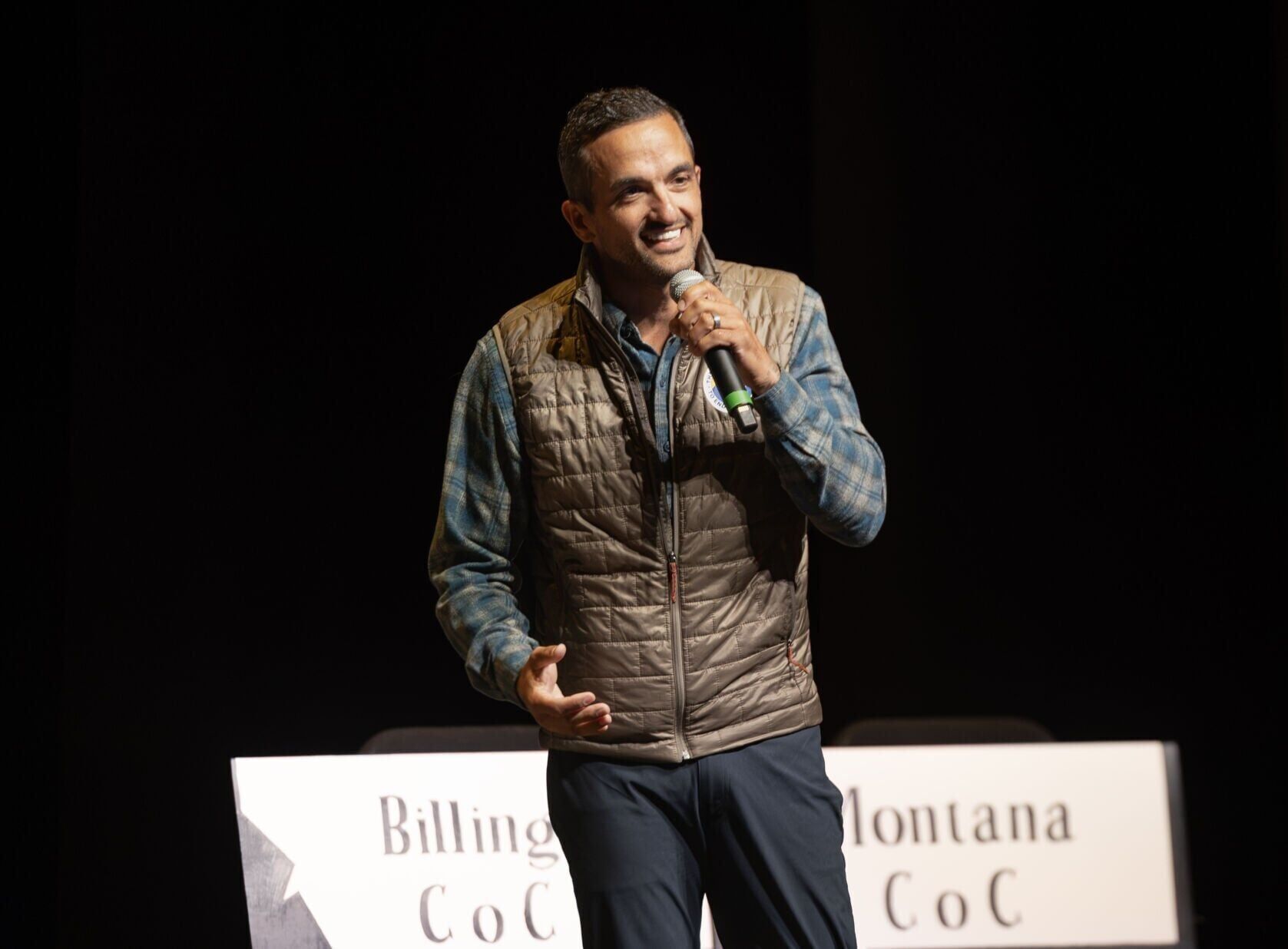
Russ Cleveland speaks during a I-194 town hall at the Alberta Bair Theater on Wednesday, Sept. 16.
Brooks said there might be a hesitancy for other local chambers to get involved in any sort of opposition. He said other chambers don’t have as many resources to stake a position like the Billings Chamber does as the largest in the state.
Even the Billings Chamber’s own opposition has been relatively muted when compared to the immense push by supporters to have the initiative pass through statewide events, yard signs and a constant churn of endorsements. Much of the Chamber’s own advocacy efforts in the past months have been instead taken up by generating support for the proposed county jail expansion.
Thus far, the organization’s actions regarding I-194 have mostly consisted of a series of emails expressing its opposition to fellow Chamber members, though those emails aren’t accessible to the general public. After the town hall Wednesday, the Billings Chamber sent out another missive Friday morning on I-194 titled: “Montana already solved this.” It echoed much of their messaging to the Gazette.
The email quoted Mangan, a former Montana Commissioner of Political Practices. He testified in 2021 to Congress that Montana “has been lauded as one of the most robust campaign finance laws in the country."
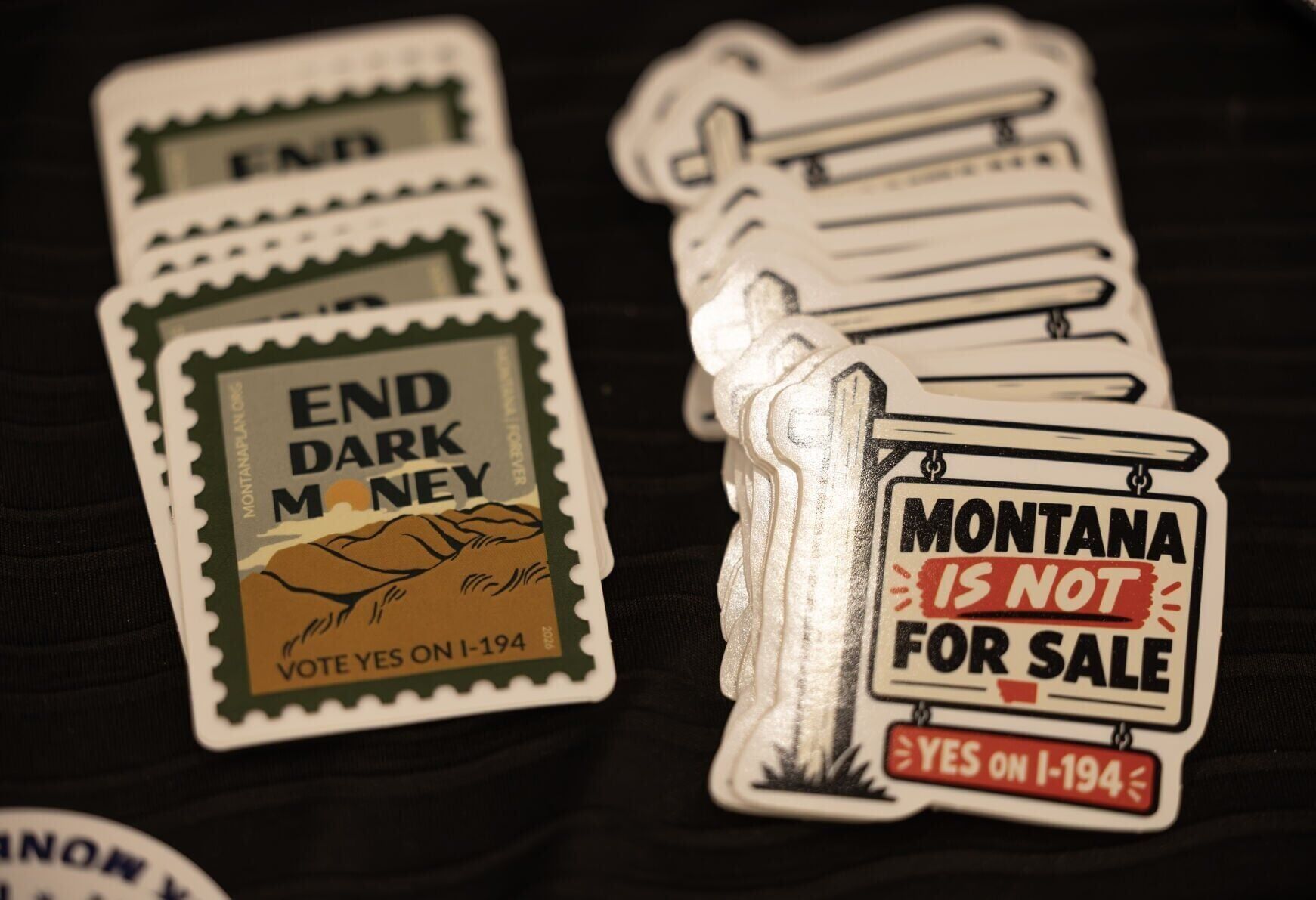
Stickers supporting I-194 is pictured during a town hall for the ballot initiative at the Alberta Bair Theater on Wednesday, Sept. 16.
“We agree with him,” the email noted. “And it’s why we keep returning to one question: Since disclosure is working in Montana, why the drastic step to prohibition? If transparency was indeed the aim of the Transparency Election Initiative, they would be promoting campaign disclosures, rather than prohibiting speech. Sunlight, not silence.”
The Montana Chamber of Commerce had already challenged the initiative as restricting freedom of speech to the Montana Supreme Court, but was unsuccessful alongside other challenges made by industry groups on the way to the ballot box. The initiative could still be challenged in court if it passes.
During a brief appearance during Wednesday’s town hall, Mangan said people almost unanimously agree that there’s too much money in politics.
From when Sen. Jon Tester was elected in 2006 to when he was defeated in 2024, his races saw spending increase by an order of magnitude to $280 million in his final race, the former Senator said Wednesday. The Last Best Place Political Action Committee spent $41 million alone opposing Sen. Tim Sheehy in the 2024 race, more than the total campaign spending Tester saw in 2006.
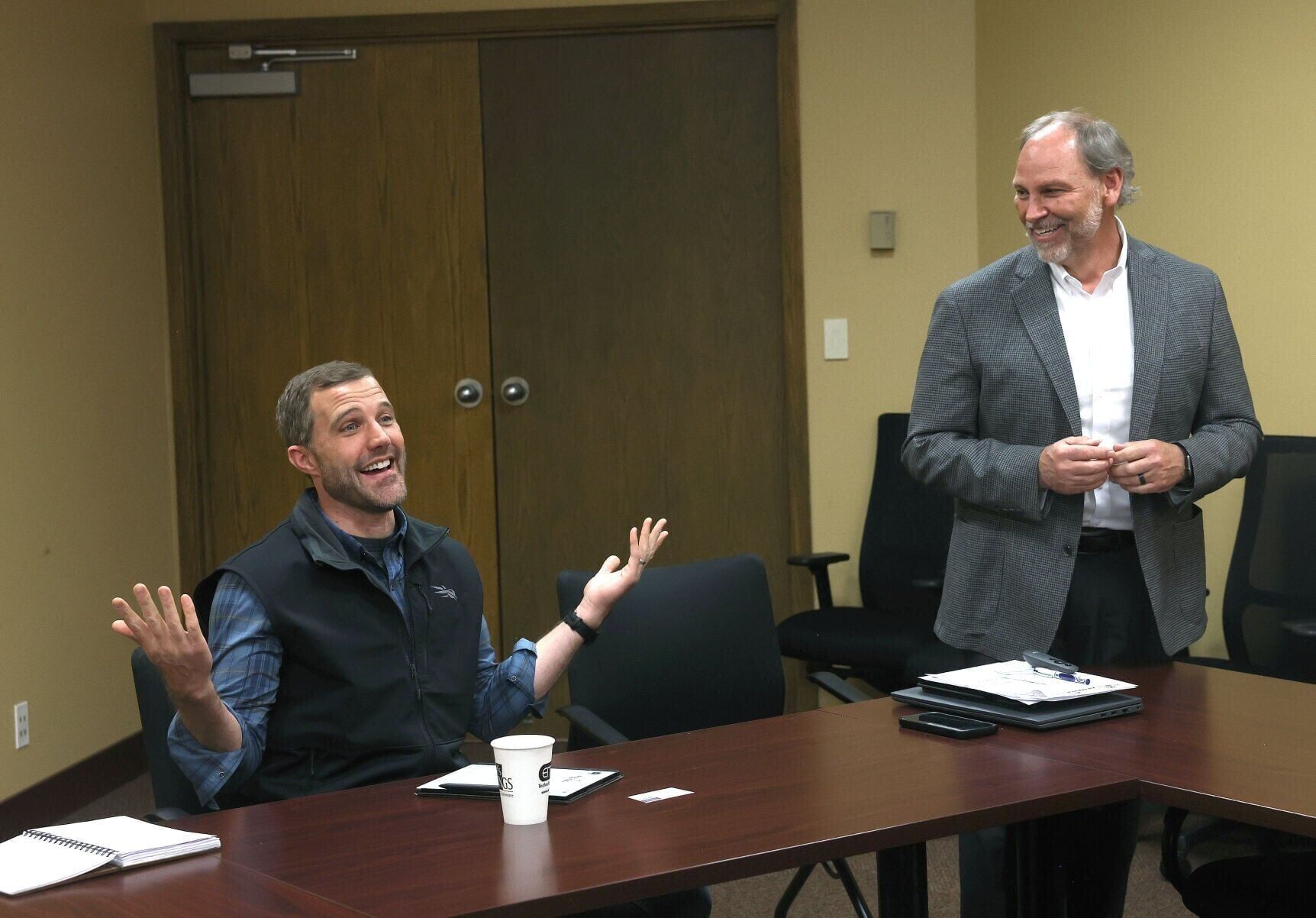
Independent U.S. Senate candidate Seth Bodnar, left, is introduced to a Billings Chamber of Commerce meeting by chamber president John Brewer on May 7, 2026
It’s just a matter of how to respond to all that money, Mangan said. He and other proponents believe it will help return Montana to the days of in-person town halls and frequent debates among politicians, rather than a deluge of ads around campaign seasion.
“I mean, they may not agree on the solution, but we believe the Montana Plan is the solution, or at least it's the start of the solution,” Mangan said during a final pitch for the initiative during the town hall. “It's work that we're doing on the ground, rolling up our sleeves, and getting Montana back to where we were.”