Smoke, poor air quality expected to last through week in western Montana

Scenes of a smoky Missoula sunset on Tuesday night.
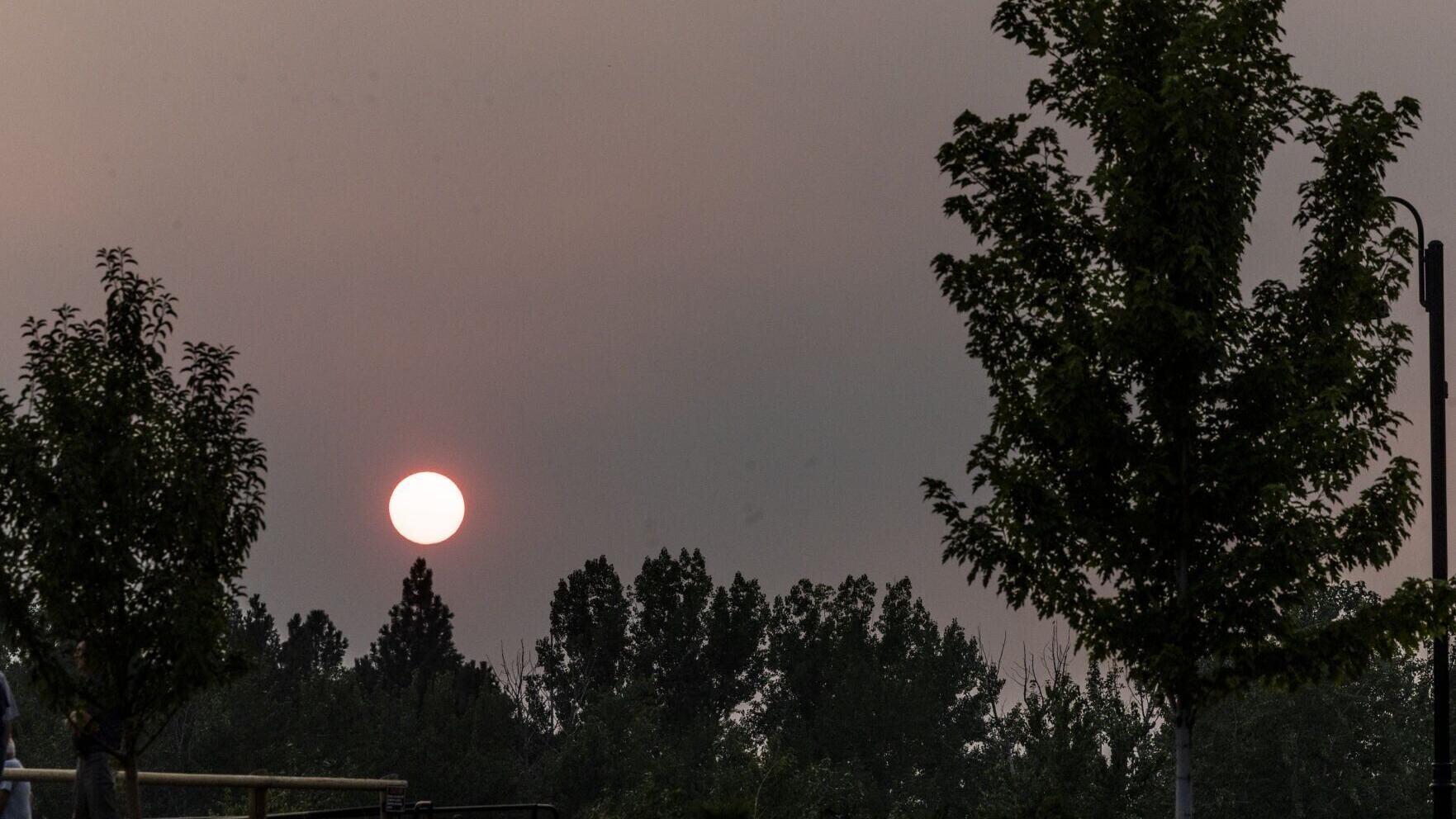
Scenes of a smoky Missoula sunset on Tuesday night.
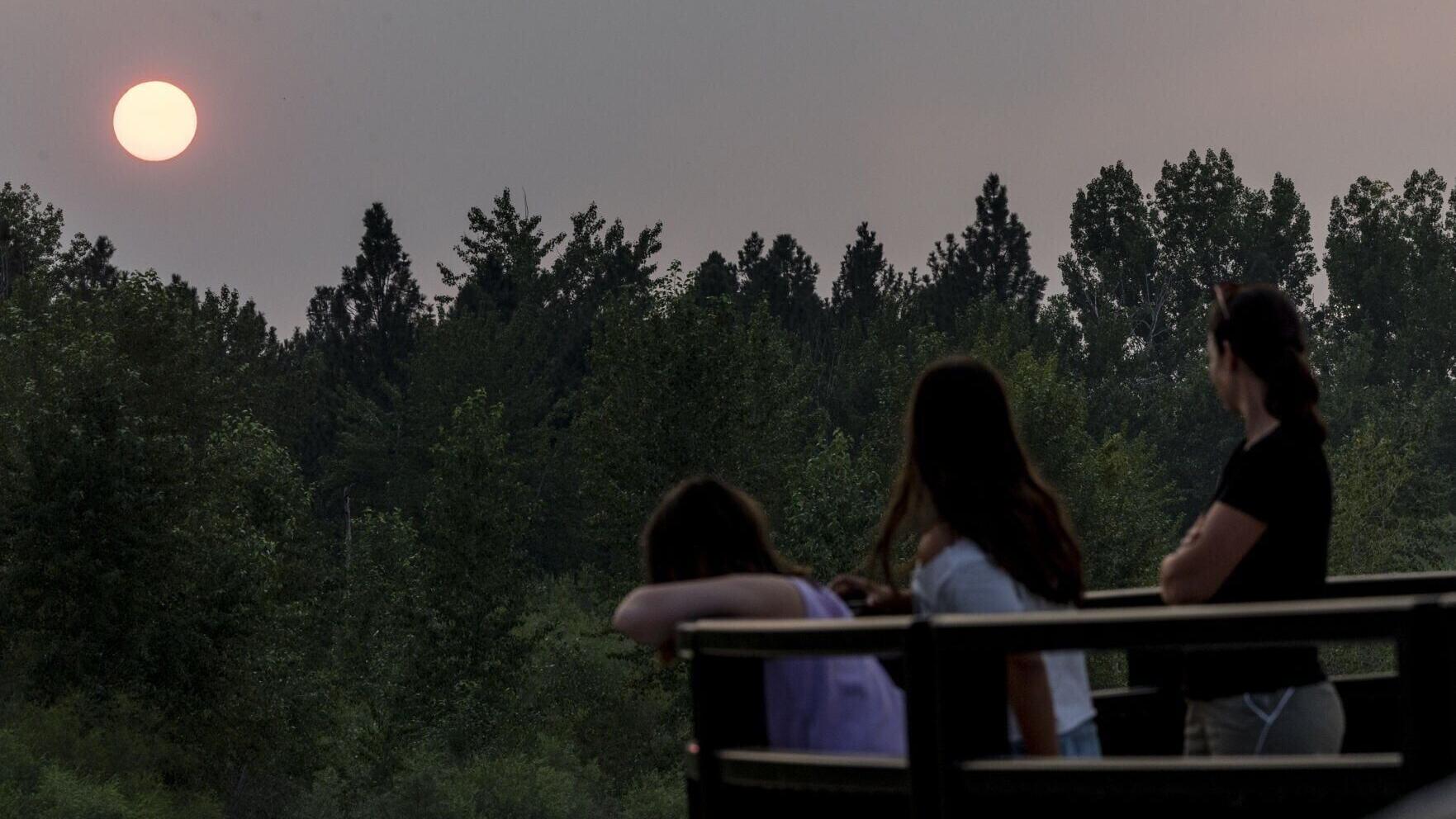
Scenes of a smoky Missoula sunset on Tuesday night.
Western Montana can expect continued poor air quality alongside potential record heat this weekend before a return to more normal temperatures next week.
On Tuesday, the Montana Department of Environmental Quality issued an air quality alert for Missoula and Ravalli counties, as smoke from wildfires in Washington and Oregon continues to pour into western Montana. The air quality across Missoula County was ranging between "moderate" to "unhealthy for sensitive groups," and was sitting at the latter in Ravalli County on Tuesday afternoon.
The conditions extend into the Flathead Reservation. Confederated Salish and Kootenai Tribes Tribal Health Public Health is following DEQ guidance and recommending that sensitive groups stay indoors.
The notably heavy plumes of smoke hanging over the area are largely coming in from out-of-state wildfires, DEQ meteorologist Aaron Ofseyer told the Missoulian.
Oregon and Washington alone have had over a million acres burn. Officials say that a steady southwesterly flow is transporting smoke from those fires into western Montana, where it’s settling.
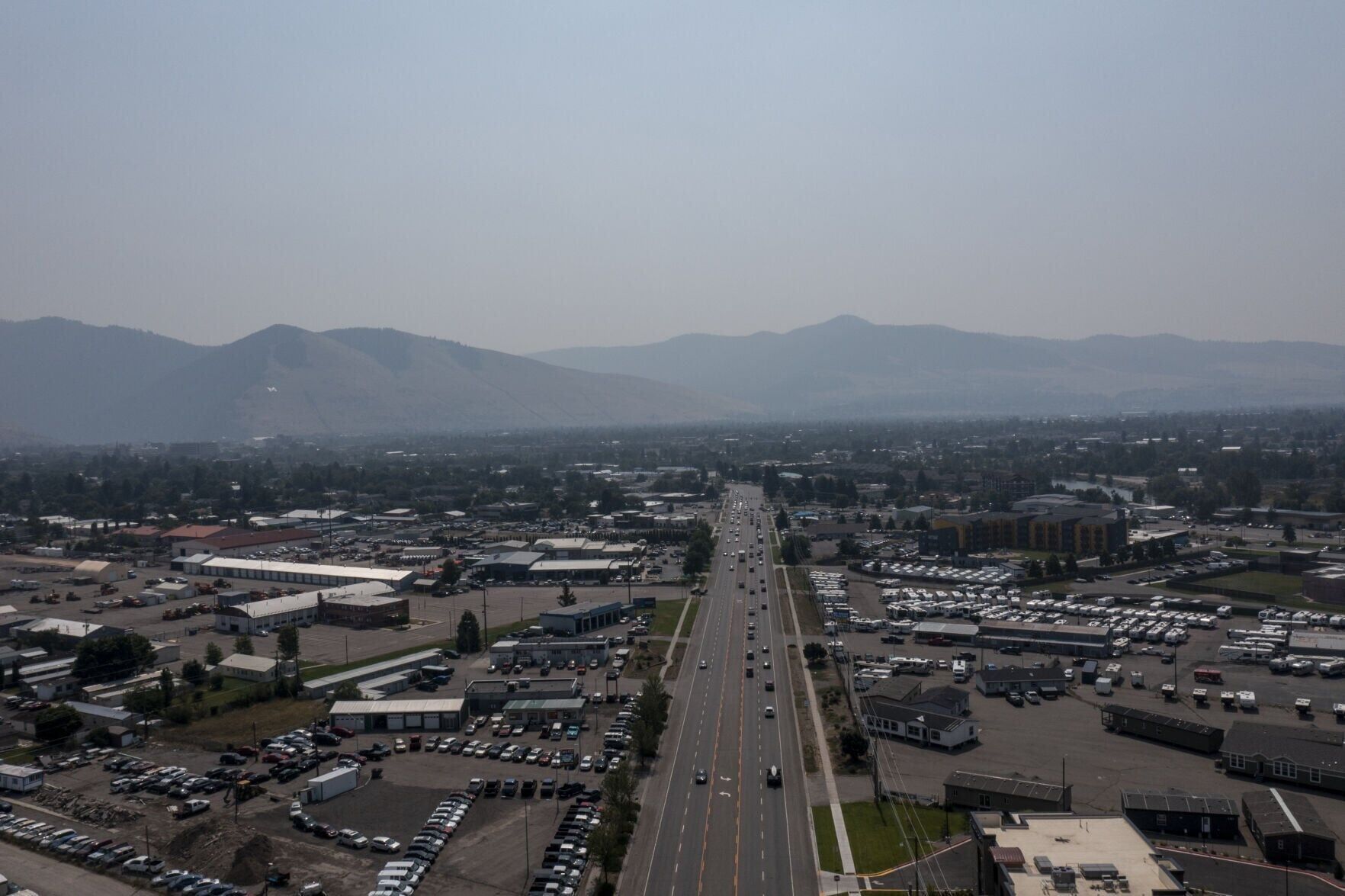
Smoke fills the air above Missoula on Tuesday.
“Even though we've had a relatively quiet start to the wildfire season in Montana, all things considered, it doesn’t really matter,” Ofseyer said. “Because our surrounding states are having a kind of a historically busy wildfire season, and so that smoke is being transported into our backyards.”
On the Air Quality Index, zero-50 is considered "good," 51-100 is considered "moderate," 100-150 is "unhealthy for sensitive groups," and anything above 150 becomes increasingly unhealthy for everyone until it becomes hazardous.
AQI locally has been ranging from “unhealthy for sensitive groups” to “unhealthy for everyone” for the past several days.
“I wish there was better news, but unfortunately, we're probably going to be dealing with smoke for the foreseeable future,” Ofseyer said.
Accompanying the smoke is possible record warmth Saturday afternoon, with some areas potentially seeing over 100-degree heat before returning to more seasonable temperatures on Sunday.
With very little precipitation in the forecast that could mitigate the impacts of wildfires, skies will likely remain smoky for at least the next week to 10 days across western Montana.
While the combination of smoke and high heat can have an exacerbating effect from a public health standpoint, Ofseyer noted that the minor “silver lining” is that smoke can limit the sun's radiational powers.
“We'll actually see forecast models behave poorly in response to smoke,” Ofseyer said. “And afternoon high temperatures are often three, four (or) five degrees cooler because of smoke. It's kind of good news, bad news when it comes to wildfire smoke of this magnitude.”
Health concerns
Exposure to wildfire smoke has both short-term and long-term health effects, Missoula Public Health Air Quality Specialist Arden Feldman told the Missoulian in an email.
Short-term symptoms to consider are:
- Headaches
- Itchy or sore throats
- Itchy eyes
- Wheezing
- Coughing
- Fatigue
- Congestion
- Aggravation of chronic diseases, especially considering smoke has persisted in the air for over a week straight.
Feldman added that smoke exposure also weakens our immune system, sets off inflammatory responses, and reduces cognitive function.
As for long-term impacts, research has shown that wildfire smoke exposure can reduce lung function and capacity, immune dysregulation, and can increase risk of dementia, Feldman wrote.
“This is an active field of research, and we are constantly learning more about both the short and long-term health effects of smoke exposure,” Feldman wrote.
Staying safe inside
The public can take several steps to protect their health depending on their individual needs, Feldman wrote in an email.
In general, the goal is to minimize exposure to smoke to minimize potential health effects. The public should be prepared to adjust plans to accommodate the smoke, avoiding strenuous outdoor activities when smoke is prevalent and maintaining clean indoor air as much as possible.
“Creating a clean indoor air space is the best way to reduce your exposure to smoke,” Feldman wrote. “This is important because if it’s smoky outside, that smoke also works its way inside.”
Using a portable air purifier with a HEPA filter or a MERV 13+ furnace filter attached to a box fan is a good way to keep indoor air clean, Feldman wrote.
Feldman noted that the heat can add barriers for those trying to maintain safe indoor temperatures and clean air, especially for those who don’t have air conditioning.
“Try cooling your home off by opening your windows once it’s cooler outside than it is inside, and then shutting the windows and running a HEPA air purifier,” Feldman recommended.
Current air quality levels can be found online at fire.airnow.gov, which shows the color-coded Air Quality Index scale to demonstrate the amount of smoke in the air and what the different air pollution levels mean for public health.
“Remember that the goal is to reduce your exposure to smoke,” Feldman wrote. “It’s nearly impossible to completely eliminate your exposure, but reducing your exposure will help you stay healthy.”
Staying safe outside
While being indoors with well-ventilated air is ideal, there are options to mitigate smoke exposure if you have to be outside.
According to Feldman, individuals who have to be outside while high smoke levels persist should wear a well-fitted N95 mask and avoid strenuous activity. Those traveling in or working out of a car should run the air on recirculate to limit the smoke brought into the cab.
Individuals can also visit a Clean Air Center, which were established through a partnership between Missoula Public Health, Climate Smart Missoula and the Department of Public Health and Human Services.
Centers in Missoula County are located at the Lolo, Missoula and Seeley Lake public libraries and the Missoula Senior Center.
Individuals in Ravalli County can visit the North Valley, Bitterroot and the Darby public libraries.
Additional information on the centers and their hours can be found at Montanawildfiresmoke.org.