Silver Bow Mining enters into agreement to buy bankrupt Montana Tunnels Mining
Silver Bow Mining announced Monday it has entered into an agreement to purchase the bankrupt Montana Tunnels mine near Jefferson City, with intentions of processing ore there and maybe mining.
The long-in-limbo Montana Tunnels open pit mine and ore processing complex in Jefferson County appears to be on the cusp of possible resurrection.
Early Monday, Silver Bow Mining announced it has signed an asset purchase agreement to acquire from Montana Tunnels Mining and parent company Montana Goldfields what Silver Bow Mining describes as the Jefferson County Metallurgical Complex, along with the mine’s historic open pit, known as the M-Pit, and associated infrastructure on about 5,000 acres.
In a news release, Travis Naugle, chairman and CEO of Silver Bow Mining, addressed the transaction, which requires court, government and shareholder approval.
“The acquisition of the Jefferson County Metallurgical Complex represents an important strategic opportunity for Silver Bow Mining and supports our primary focus of advancing the high-grade Rainbow Block Project in Butte,” he said. “The complex provides us with existing milling and flotation infrastructure that we believe could offer meaningful processing flexibility and potential development synergies for the Rainbow Block.”
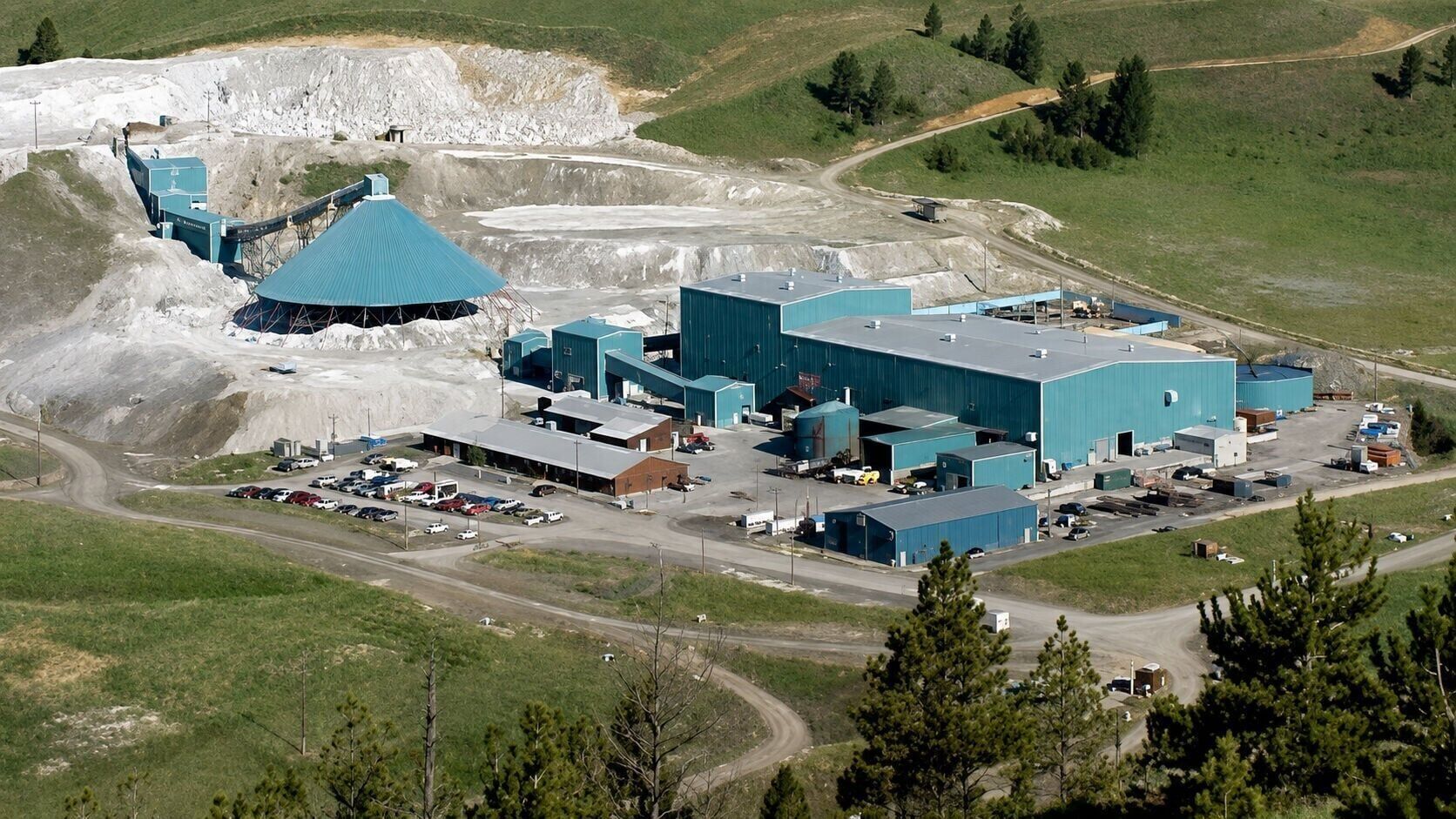
Silver Bow Mining said Monday that metallurgical processing facilities at the Montana Tunnels mine could someday help process ore from the company's Rainbow Block exploration project near Walkerville.
Court records show that Montana Tunnels Mining, Montana Tunnels Mine and Diamond Hill Mine filed July 27 for federal bankruptcy protection under Chapter 11. A list of top unsecured creditors includes the Montana Department of Environmental Quality, the Jefferson County treasurer and U.S. Environmental Protection Agency, among others, records show.
Doug Stiles, president of Silver Bow Mining, acknowledged that acquiring the metallurgical complex is a key driver for the acquisition.
“It provides options for future ore processing from our Butte properties,” he said. “In addition to the potential to process underground vein mineralization from Butte, which would require permits from Montana DEQ, we will complete a feasibility study on additional mining at Montana Tunnels.”
Flotation refers to a milling process in which valuable mineral particles are induced to become attached to bubbles and float as others sink. Concentrate produced by the metallurgical complex would require additional processing elsewhere for mineral recovery.
The Rainbow Block is Silver Bow Mining’s 878-acre flagship property in north Butte and Walkerville. The company says its mining claims sit atop silver, zinc, gold and lead veins that Anaconda developed over decades before ceasing zinc mining in 1959.
The Montana Tunnels mine, once active as a gold, silver, zinc and lead mine, has not operated since 2008.
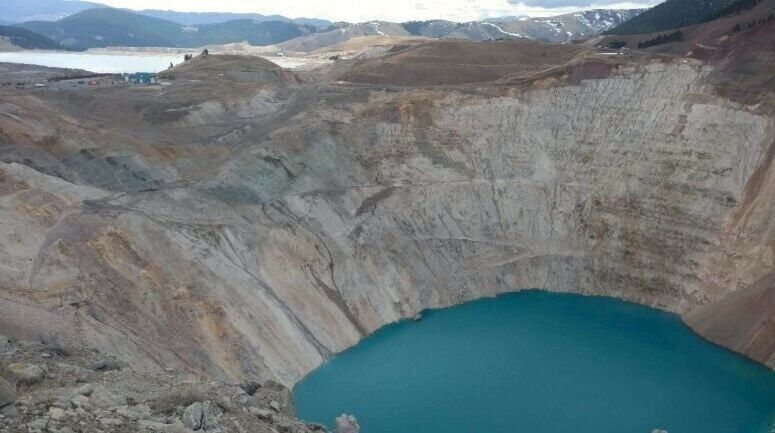
The Montana Tunnels mine has been operationally inactive since 2008.
In 2018, DEQ suspended the mine’s permit over its failure to post an adequate bond. The agency later declared the mine abandoned.
Silver Bow Mining is incorporated in Canada but headquartered in Butte. The company’s initial public offering of stock earlier this year raised nearly $60 million in gross proceeds. The company is listed on the New York Stock Exchange American as SBMT.
Silver Bow said Monday it will fund about $28.6 million to satisfy specified creditors, including about $4.27 million to Jefferson County and about $20.8 million for obligations owed to DEQ.
Matt Vincent, executive director of the Montana Mining Association, was upbeat about Silver Bow Mining's news.
"This is the by far the most positive development I’ve heard on Tunnels in my tenure," he said. "It’s also a very positive piece for the Silver Bow Mining project in Butte.
"This provides a viable processing facility in economical proximity and truly presents the opportunity for win-win on multiple levels," Vincent added. "The Association is on standby to monitor this development and to support our member Silver Bow Mining in its endeavors."
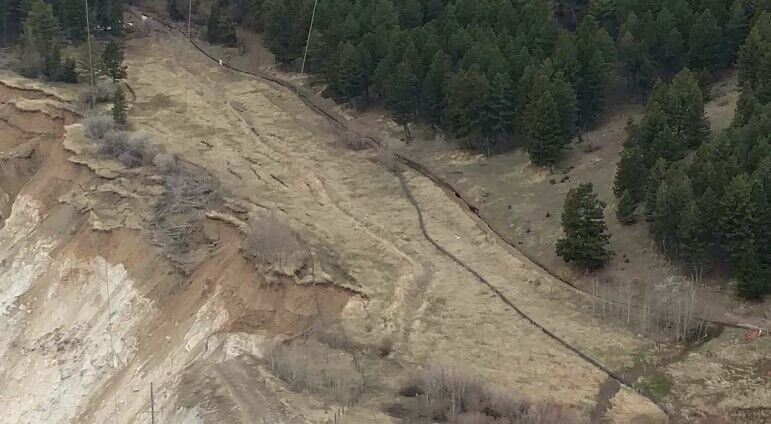
Clancy Creek, which flows close to the edge of the Montana Tunnels mine, is endangered by a possible collapse of the mine wall.
Madison McGeffers is a spokesperson for DEQ.
“The $20.8 million is to pay Montana Tunnels Mining’s outstanding reclamation liability for the Montana Tunnels Jefferson City Mine,” she said. “DEQ is still reviewing the proposed sale documents and has until Sept. 2, 2026, to note any objections.”
If the sale goes through and Silver Bow Mining demonstrates to DEQ that it is an eligible successor operator, the reclamation funds will be available toward Silver Bow Mining’s bonding obligations in assuming the suspended permit, McGeffers said.
The Montana Environmental Information Center has actively bird-dogged the Montana Tunnels quandary for years. Derf Johnson is MEIC’s deputy director.
“My main thought on this is that it appears the company has plans to satisfy the default in the reclamation bond, and we think that’s a good thing,” he said.
“The site has been unraveling for some time, and it appeared it was going to be a significant environmental liability for the state of Montana,” Johnson said.
He said the devil is in the details and those details will include a need to address sloughing of a pit wall and finding a home for Clancy Creek, which flows now through a pipe.
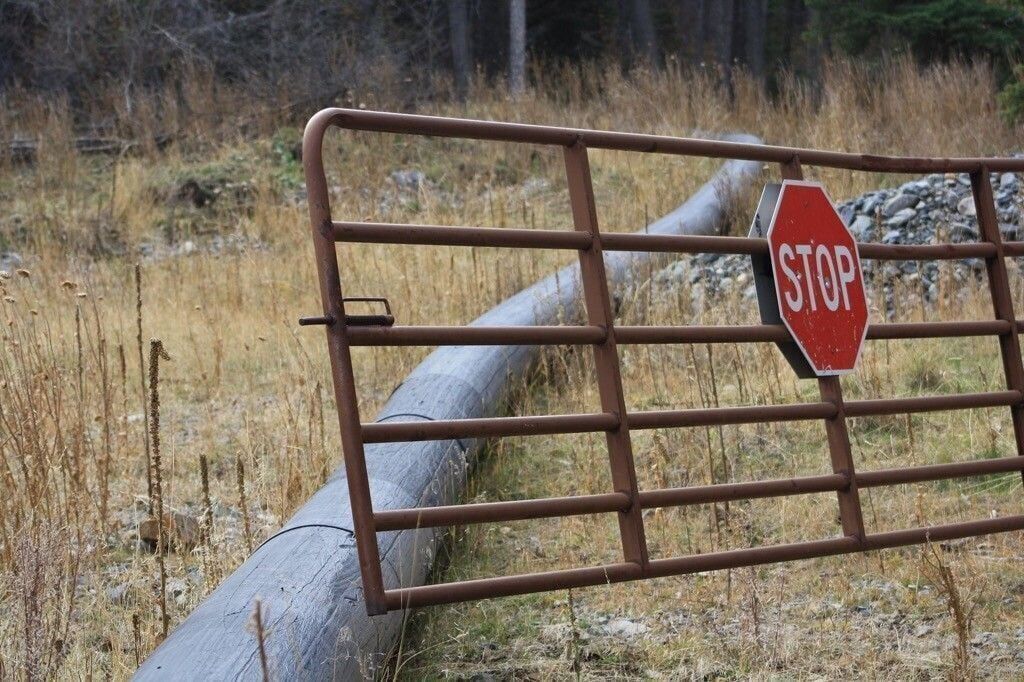
Clancy Creek bypasses the Montana Tunnels mine in a pipe.
Stiles referenced the creek.
“We will also immediately begin permitting and planning to construct the Clancy Creek bypass channel, which was never constructed,” he said.
MEIC has noted, “Clancy Creek, formally an excellent fishery, is now required to flow through a quarter mile-long plastic pipe in order to avoid being captured by the open pit, the highwall of which is now cracking, sloughing and going to fail.”
There are separate and complex financial provisions with Montana Goldfields, parent company of Montana Tunnels Mining, for the so-called M-Pit, for potential deferred compensation through “contingent value rights” following a decision on M-Pit expansion or completion of an M-Pit feasibility study, which demonstrates positive economics for the project.
According to one definition, contingent value rights “are financial instruments offered to target company shareholders during mergers or acquisitions to provide additional compensation if certain future milestones are achieved.”
Mining officials previously deemed “bad actors” in Montana will not be eligible to directly convert contingent value rights into shares of Silver Bow Mining for such compensation. That would include all the principals and controlling members of Goldfields and Montana Tunnels; Patrick Imeson is the CEO of Goldfields.
They could, however, sell the contingent value rights to a qualified individual, thus indirectly receiving compensation from the deal.
“Our goal was to get this valuable asset out of Goldfield's hands and into the hands of a company that has the resources to get things settled with creditors in very short order and move forward constructively,” Stiles said.
Under the terms of the agreement, Silver Bow Mining will acquire 100% ownership of the property at closing, free and clear of liens.
Stiles said the acquisition of the metallurgical complex at the Montana Tunnels site is a positive sign for the exploratory mining underway near Walkerville.
“Yes, the exploration drilling we have completed to-date continues to corroborate the reported mineral resource,” he said. “As drilling from surface continues and underground drilling commences, we expect to include those additional results in a future update to the current mineral resource.”
Duncan Adams covers the environment, natural resources, Montana Tech and other beats for The Montana Standard. Reach him at (406) 496-5572 or duncan.adams@mtstandard.com