'Our right to roam': The Battle of the Little Bighorn 150 years later
Two days of violence in some of the quietest land in country, and Little Bighorn became part of the American cannon, joining the likes of Saratoga, Gettysburg and Okinawa.
Drive the stretch of paved road that leads from Little Bighorn Battlefield’s visitor center and the hills look the same as when Wooden Leg and Half Yellow Face rode through it, minus the red and white granite gravestones.
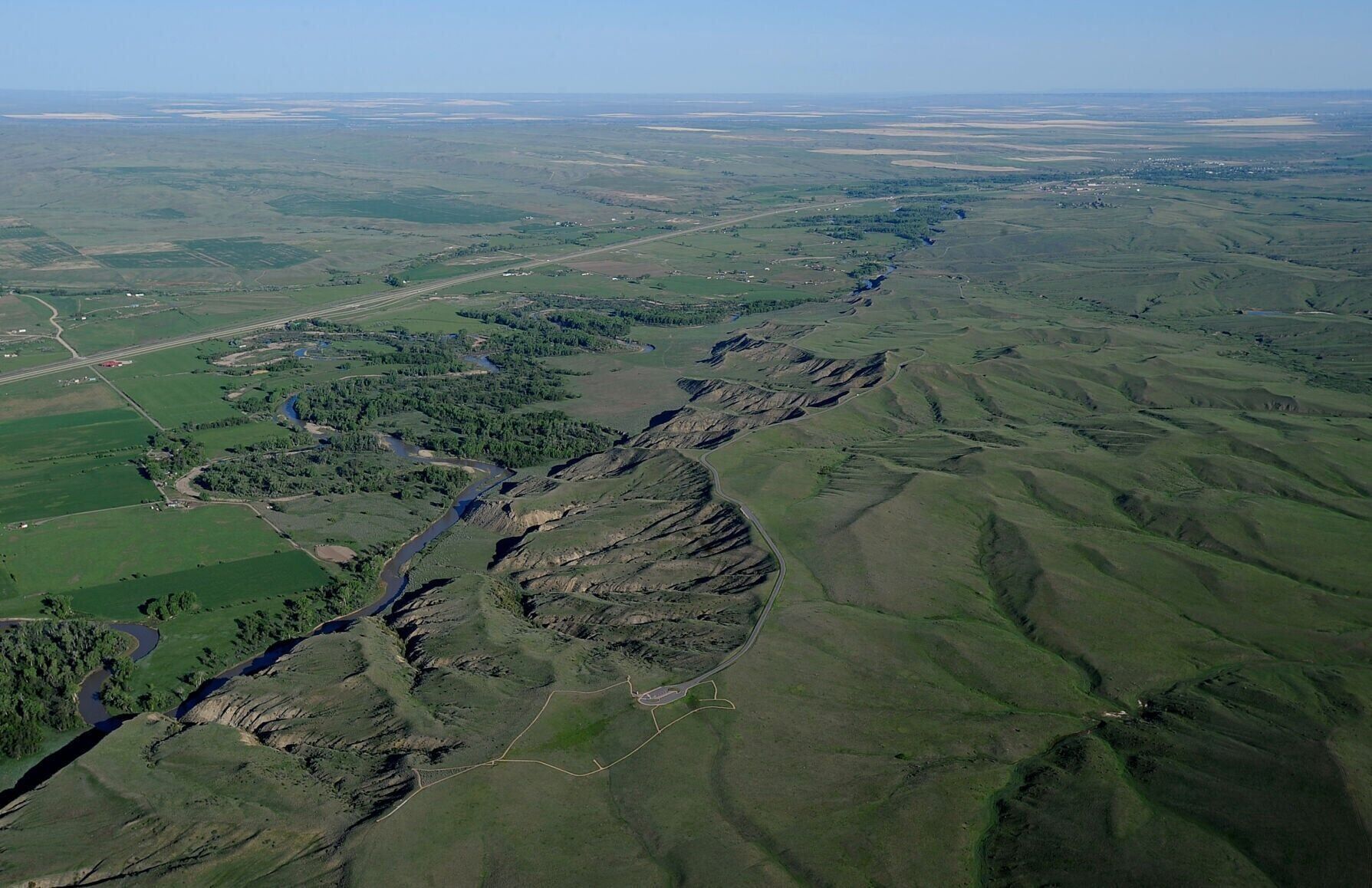
The Reno Benteen site is in the foreground of this aerial view of the Little Bighorn Battlefield National Monument.
A half a day of violence in some of the quietest land in the country turned this spot into part of the American canon, joining the likes of Saratoga, Gettysburg and Okinawa, names rich in tragedy and elation, fodder for thousands of books, movies and documentaries.
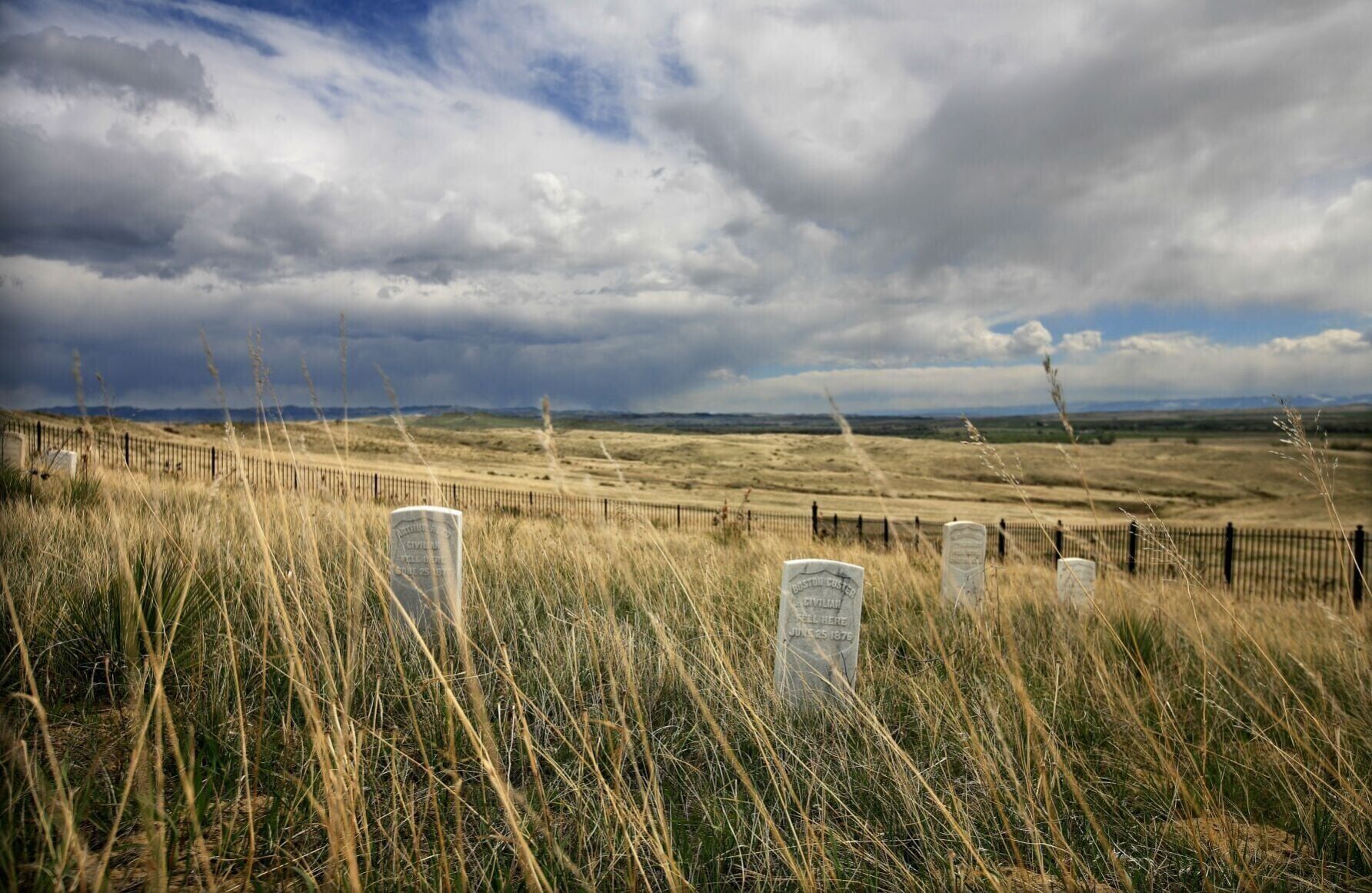
The Little Bighorn Battlefield National Monument.
“There was no dancing nor celebrating of any kind in any of the camps that night,” recalled Wooden Leg in the wake of the Battle of the Little Bighorn, according to an account compiled by the physician and Northern Cheyenne historian Dr. Thomas B. Marquis. Wooden Leg, a Northern Cheyenne man, fought in the battle that ended with the decimation of the 7th Calvary and the Battle of the Rosebud that preceded it.
“Too many people were in mourning,” Wooden Leg said, “among all of the Sioux as well as among the Cheyennes. Too many Cheyenne and Sioux women had gashed their arms and legs, in token of their grief. The people generally were praying, not cheering.”
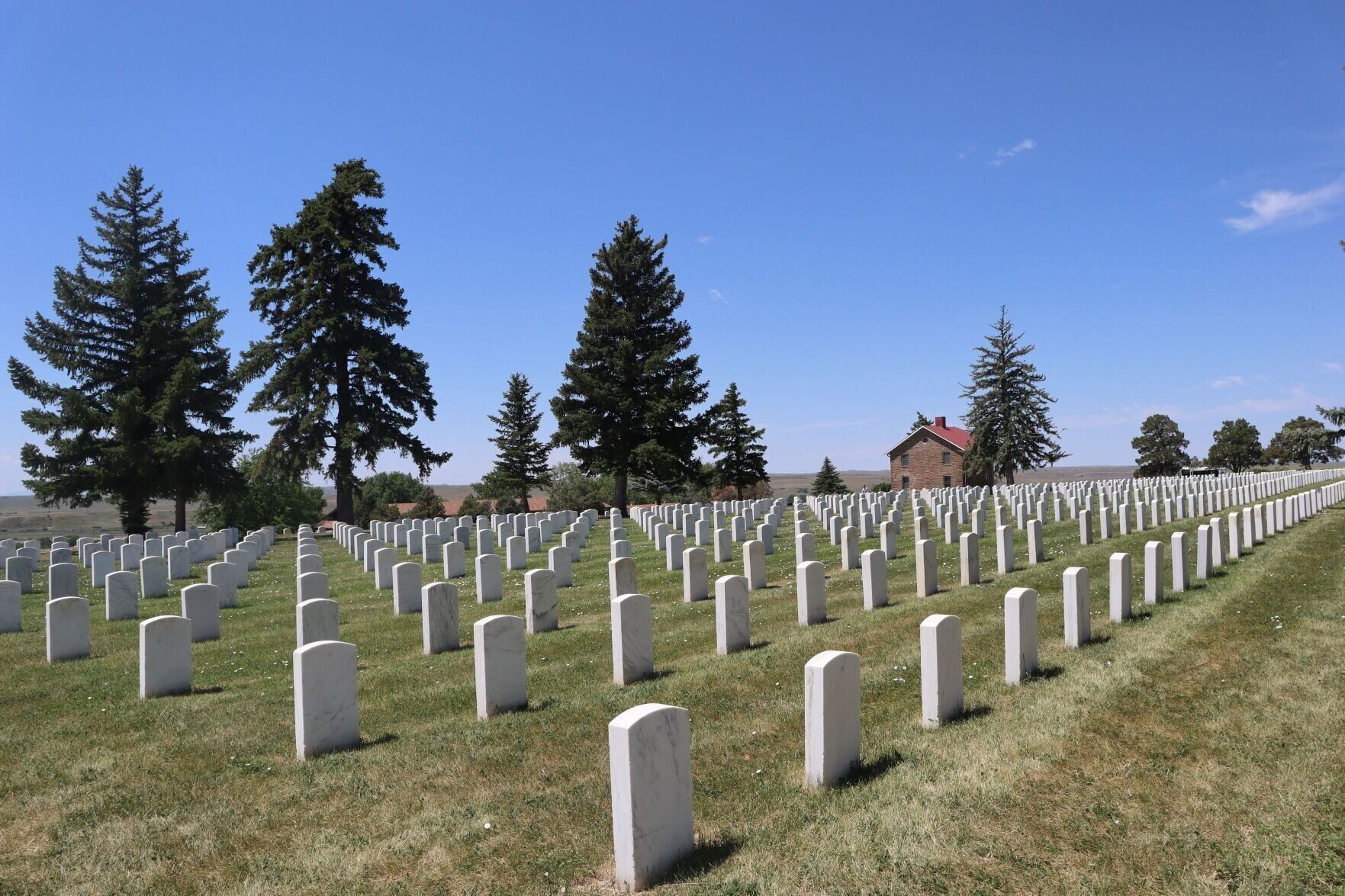
The Custer National Cemetery is seen at the Little Bighorn Battlefield.
After the Civil War, the completion of rail lines that connected the contiguous United States galvanized westward expansion. It also stoked tensions between encroaching homesteaders and the continent’s first peoples. Through policies of either assimilation or extermination, the federal stance on Native Americans through the 19th century was not ambiguous.
In an 1830 address to Congress, President Andrew Jackson celebrated the forced removal of Native Americans from their traditional lands in the Southern United States, opening wide the expansion of farming and, consequently, chattel slavery. Pushing tribes further west, he asserted, would alleviate all hostilities in the long run.
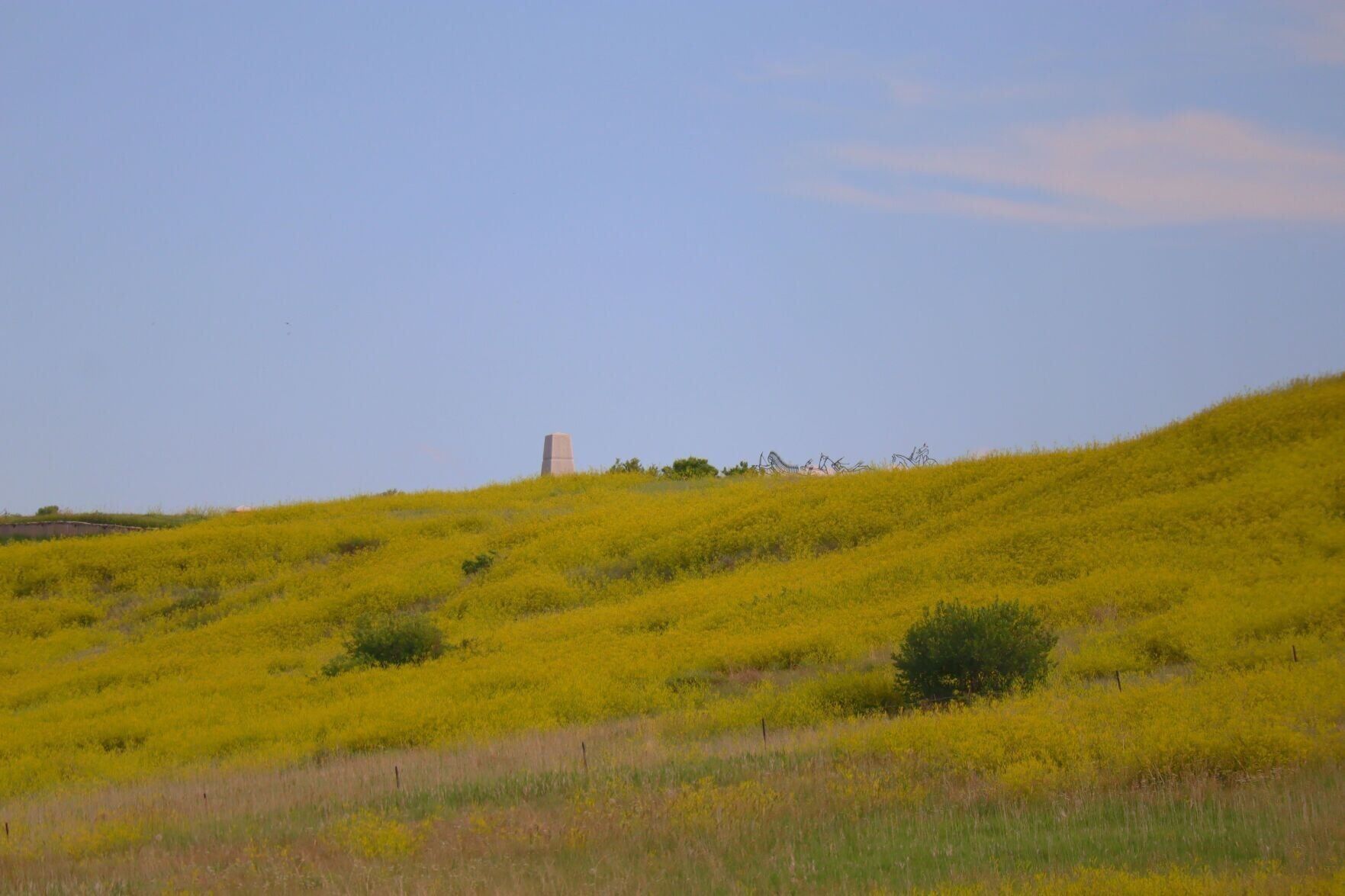
The Little Bighorn Memorial obelisk and the Indian Memorial sit atop Last Stand Hill.
"It gives me pleasure to announce to Congress that the benevolent policy of the Government,” Jackson said, “steadily pursued for nearly thirty years, in relation to the removal of the Indians beyond the white settlements is approaching to a happy consummation."
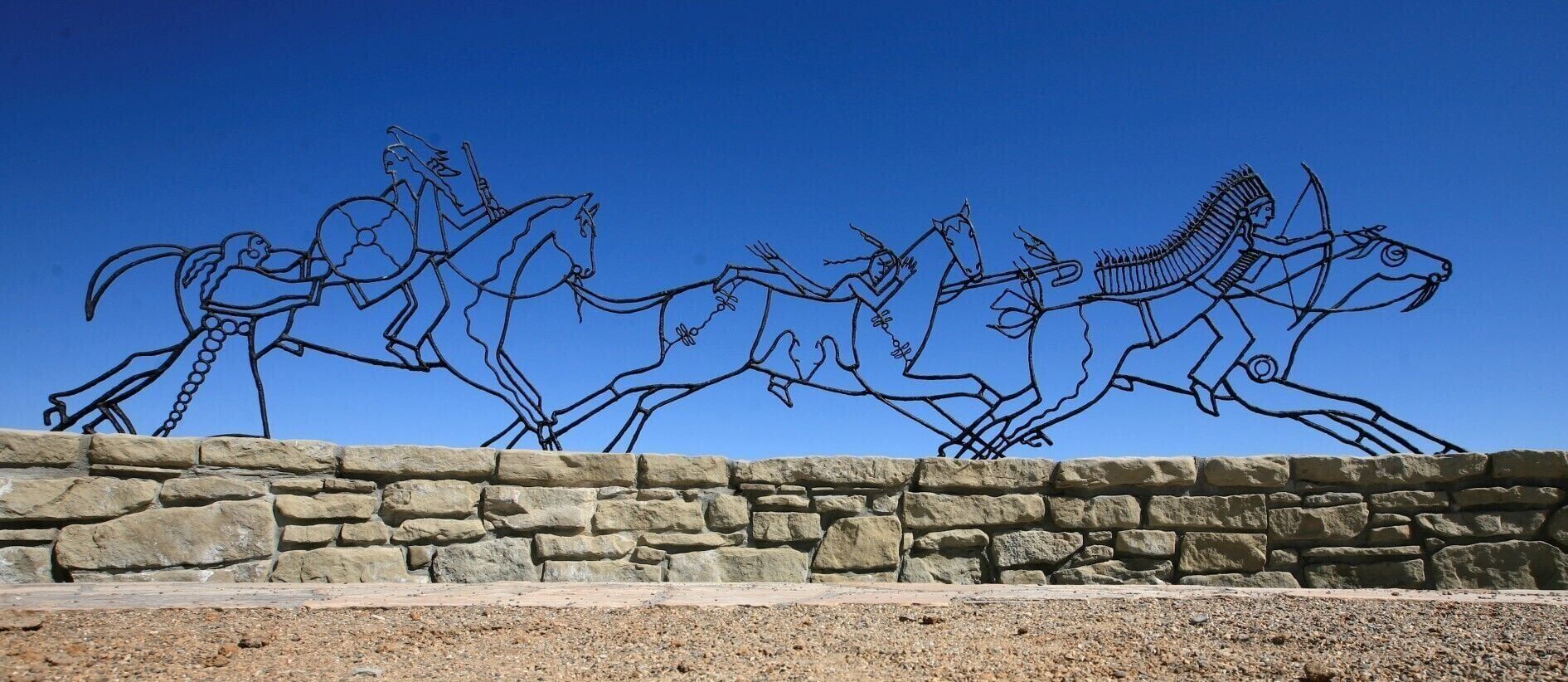
A battle scene sculpture in the Indian Memorial at the Little Bighorn Battlefield National Monument.
By 1850, pressures from the westward expansion of the United States brought Cheyenne and Lakota into the eastern portion of the Crow’s territory in what is today Montana, Wyoming and the Dakotas. A treaty negotiated the following year at Horse Creek near Laramie, Wyoming, included representatives from the Crow, Cheyenne, Lakota Sioux, Arapaho, Assiniboine, Mandan, Hidatsa and Arikara. The ratified treaty resulted in the Crow ceding roughly half of their traditional land.
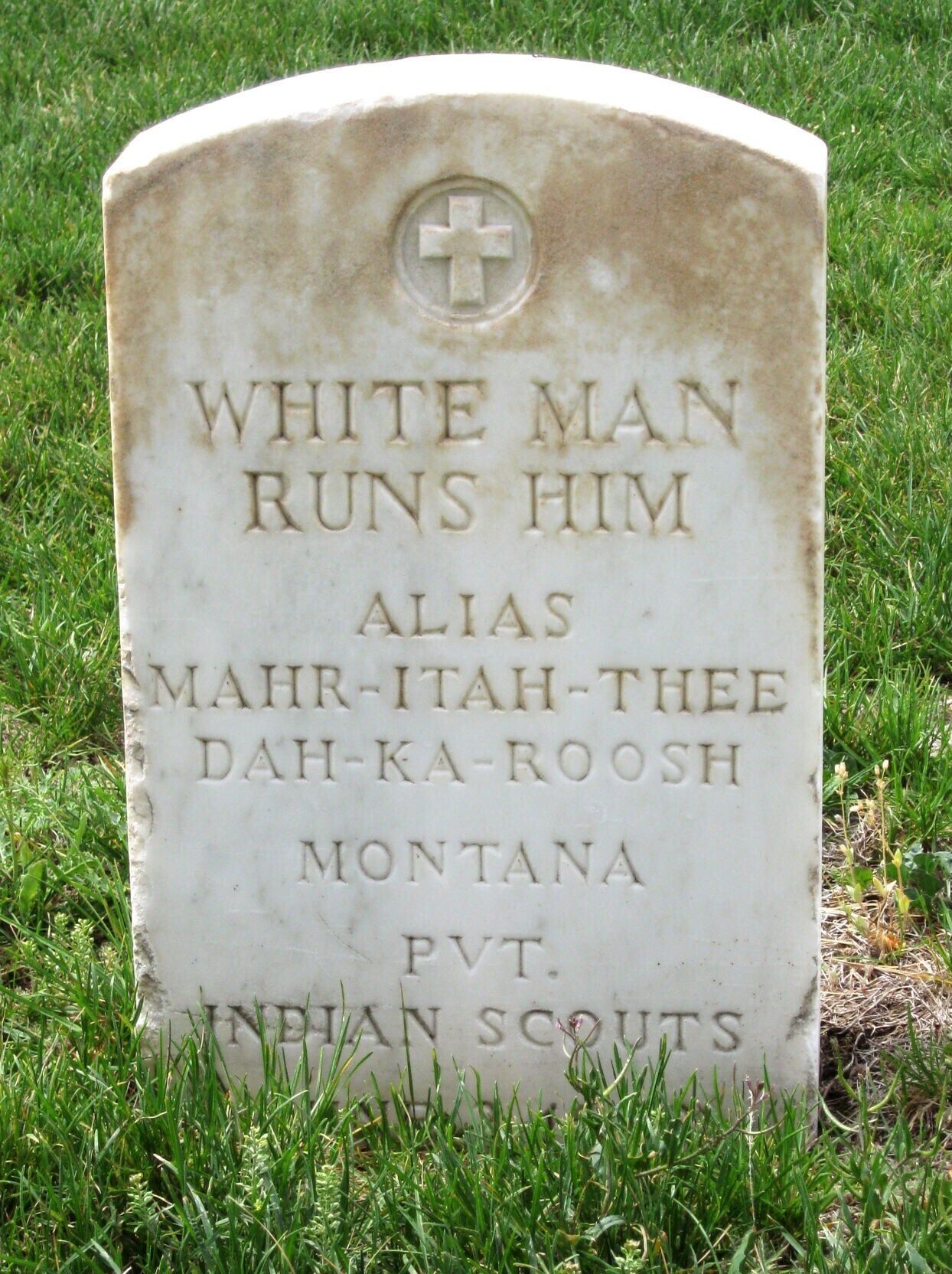
Grave of White Man Runs Him, a Custer Scout, at the Little Bighorn Battlefield National Monument.
The Crow, despite allying with the U.S. against the Cheyenne, Dakota and Lakota, didn’t make them immune to federal policy shifting from extermination to assimilation, with disease and the near extinction of the bison decimating the tribe’s population by the end of the 1800s. Every tribe, allied with and fighting against the United States, faced similar hardships.
Tensions continue to boil over in the form of massacres, skirmishes and all-out warfare. Red Cloud’s War, fought between a coalition of tribes from the Great Plains, the Lakota and Northern Cheyenne among them, and the United States turned what would become portions of Montana and Wyoming into a battleground. The Treaty of Fort Laramie in 1868 brought peace. It didn’t last.
Such was the fraught environment for all Indigenous people who lived in the country from California to Maine; however, in early April 1876, the U.S. Army launched a campaign to combat those Indigenous tribes who refused to adhere to their designated reservations. The Army enlisted the assistance of scouts from the Crow Tribe, with men like Half Yellow Face and White Man Runs Him serving as scouts for the U.S. Army.
In June 1876, three columns of U.S. calvary and infantry marched into what would become South-Central Montana: one headed southeast along the Yellowstone River, one walking north from Fort Fetterman in the Wyoming Territory and a third marching in from Fort Abraham Lincoln to the east, under the command of George Armstrong Custer.
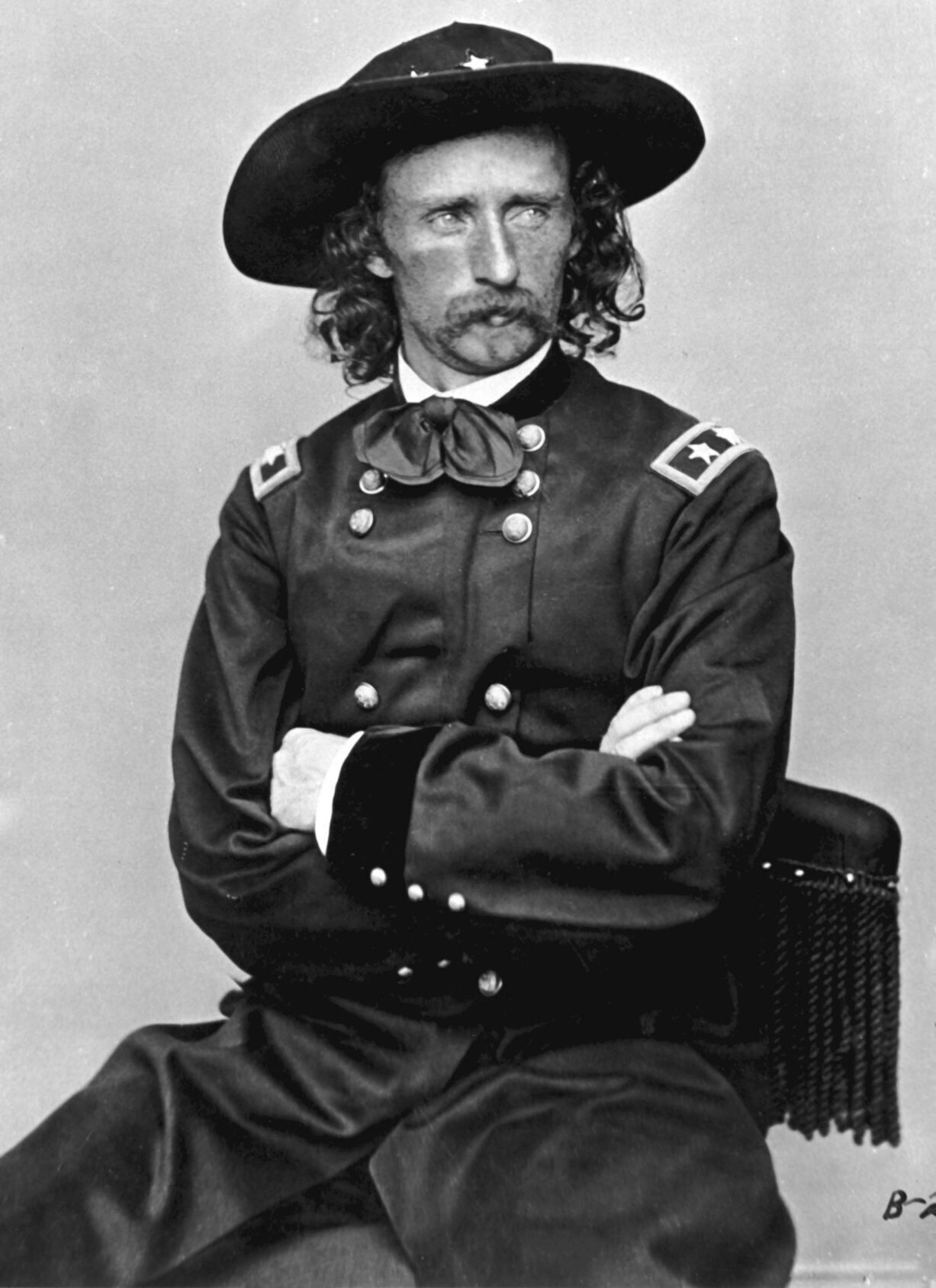
George Armstrong Custer, 1865, by Mathew Brady.
At the start of that same month, a religious ceremony along Rosebud Creek ended with the Hunkpapa Lakota man Sitting Bull having a vision that the Lakotas interpreted as a premonition of a great victory. Sitting Bull, a respected leader, had amassed a massive camp of allies united in their resistance to being relegated to reservations.
"I have seen nothing that the white man has,” Sitting Bull is quoted as saying, “which is as good as our right to roam and live on the open plains as we choose."
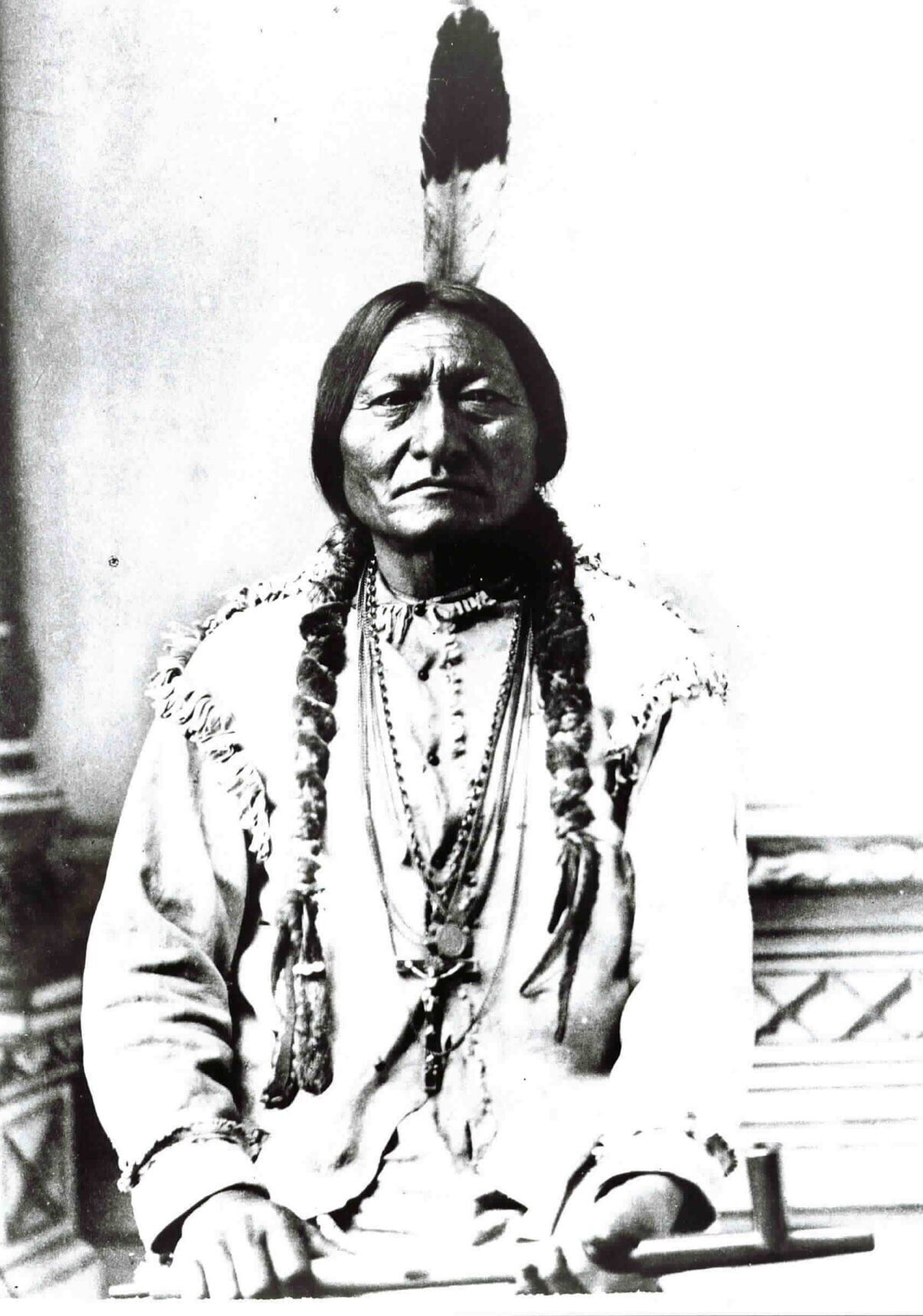
Lakota warrior Chief Sitting Bull was one of the key players in defeating the U.S. 7th Cavalry at the Little Bighorn in 1876.
Those serving under Gen. George Crook in the northbound column of U.S. troops made their way to Rosebud Creek, traveling lightly with only a few days' worth of rations. They expected to find a village along the creek to attack, with the violence limited to brief hit-and-run encounters.
There was no village, and on the morning of June 17, anywhere from 700 to 1,500 Northern Cheyenne and Lakota led by Oglala Chief Crazy Horse and Cheyenne chiefs Two Moons, Young Two Moon and Spotted Wolf sprang on Crook's men while they rested their horses.
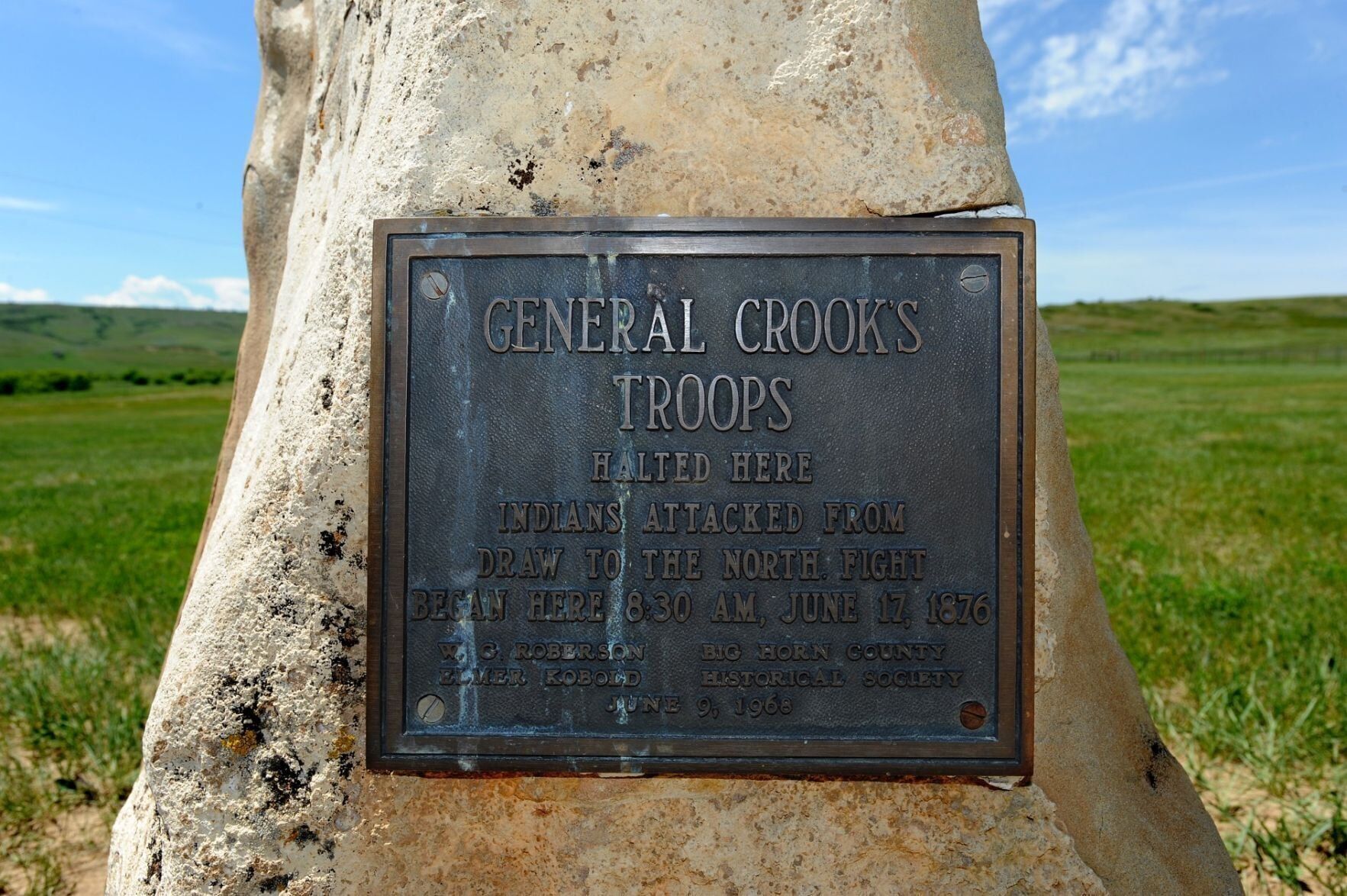
A vintage plaque informs visitors at Rosebud Battlefield State Park.
For the next several hours, a battle occurred over a three-mile front in volleys that saw soldiers fending off repeated charges. Although federal troops managed to hold their ground against the Northern Cheyenne and Lakota, one Army officer marveled at the skill and tactics showcased by those he fought, later writing, “They proved then and there that they were the greatest cavalry on earth.”
With the shooting over by 2:30 in the afternoon, Crook counted nine of his men dead, along with a Shoshone scout. The Sioux and Northern Cheyenne, who refer to the battle as “Where the Girl Saved Her Brother,” fought the federal troops to a standstill, and accounts of their total losses vary. Although his losses were limited to nine men, Crook retreated in the aftermath of the Battle of the Rosebud, taking his column several miles south to regroup and await reinforcements.
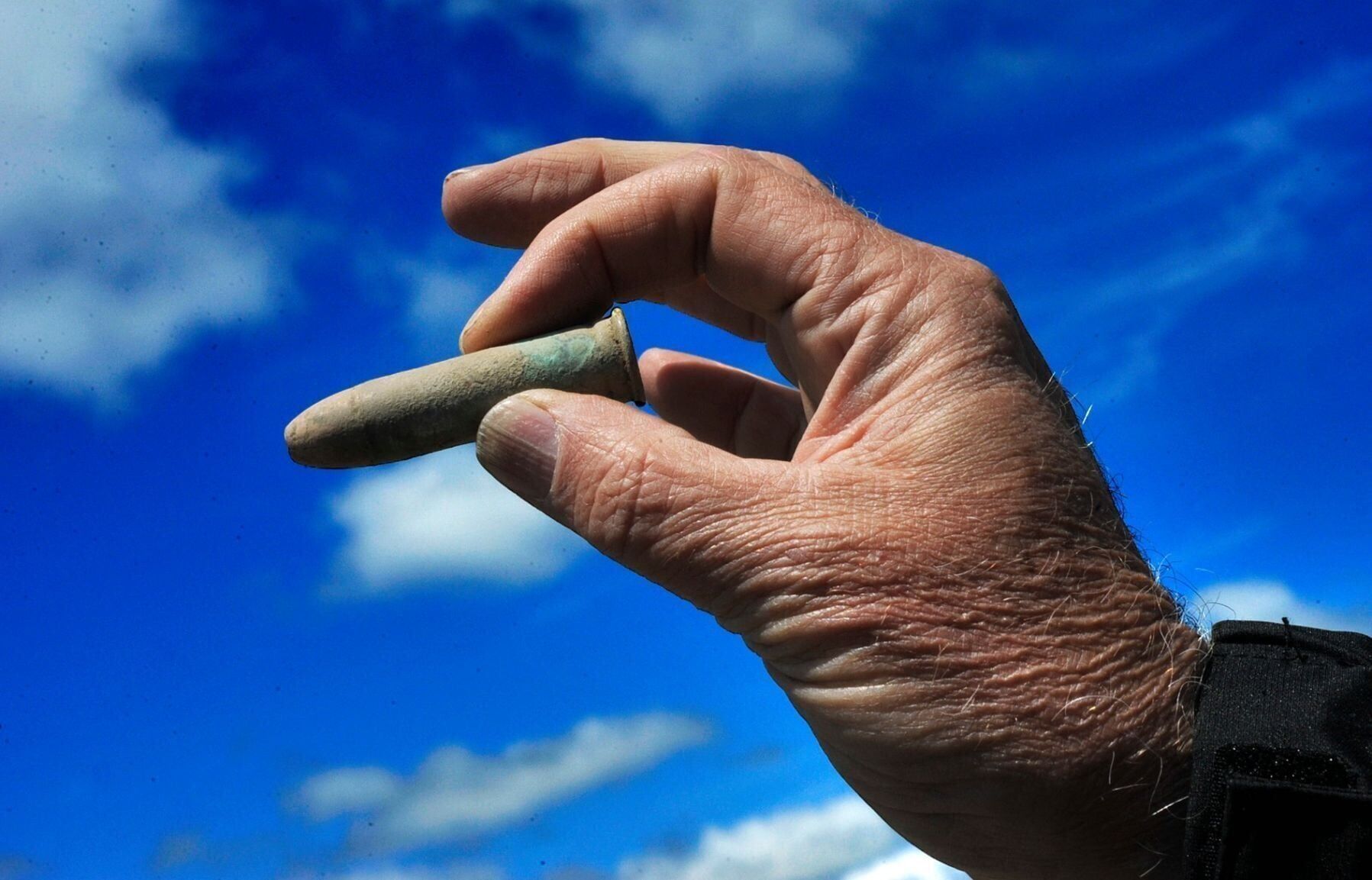
A .50-100 caliber round uncovered by volunteers with metal detectors during an archaeological search for remnants at Rosebud Battlefield State Park in 2015.
The same bands that fought and stalled Crook at Rosebud Creek would overwhelm Lt. Colonel George Custer just eight days later at the Battle of Little Bighorn, where some 7,000 Lakota Sioux, Northern Cheyenne, and Arapaho were camped nearby.
On the morning of June 25, 1876, Custer shirked warnings from Crow men and attacked what he thought was a small village. When the sun set the following day, Custer and 267 other men under his command were dead. Six more would later die from their wounds.
Like the interpretation of Sitting Bull’s vision, there was a victory. But by the close of the century, there were no more battles and no major opposition to federal forces. Within a year of the battle, the Sioux and Cheyenne had surrendered to the U.S.
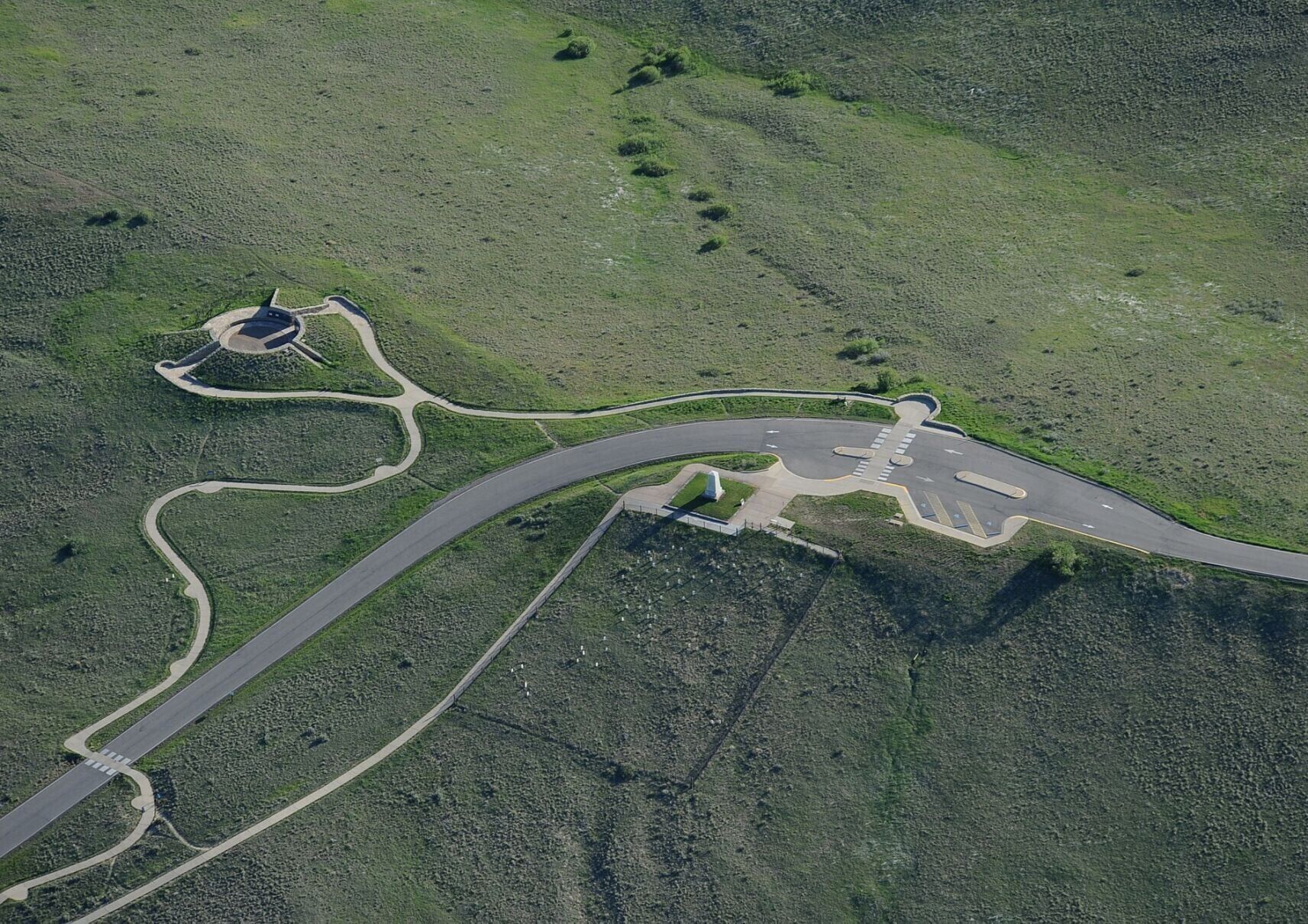
The Indian Monument and mass grave at Last Stand Hill at the Little Bighorn Battlefield National Monument can be seen in this aerial view.
“We were having a good many days of hunger,” Wooden Leg remembered in the weeks leading up to his band’s surrender. “Out horses had plenty of grass, but our own ribs were becoming thin. Our clothing was wearing out, and we could not get enough of skins to renew them and to keep our beds and our lodges in good order. My soldier coat and breechers were gone, and my last shirt and cloth breeches were almost in tatters. The only good article of wear I had now was my big white hat I had captured at the Rosebud battle.”
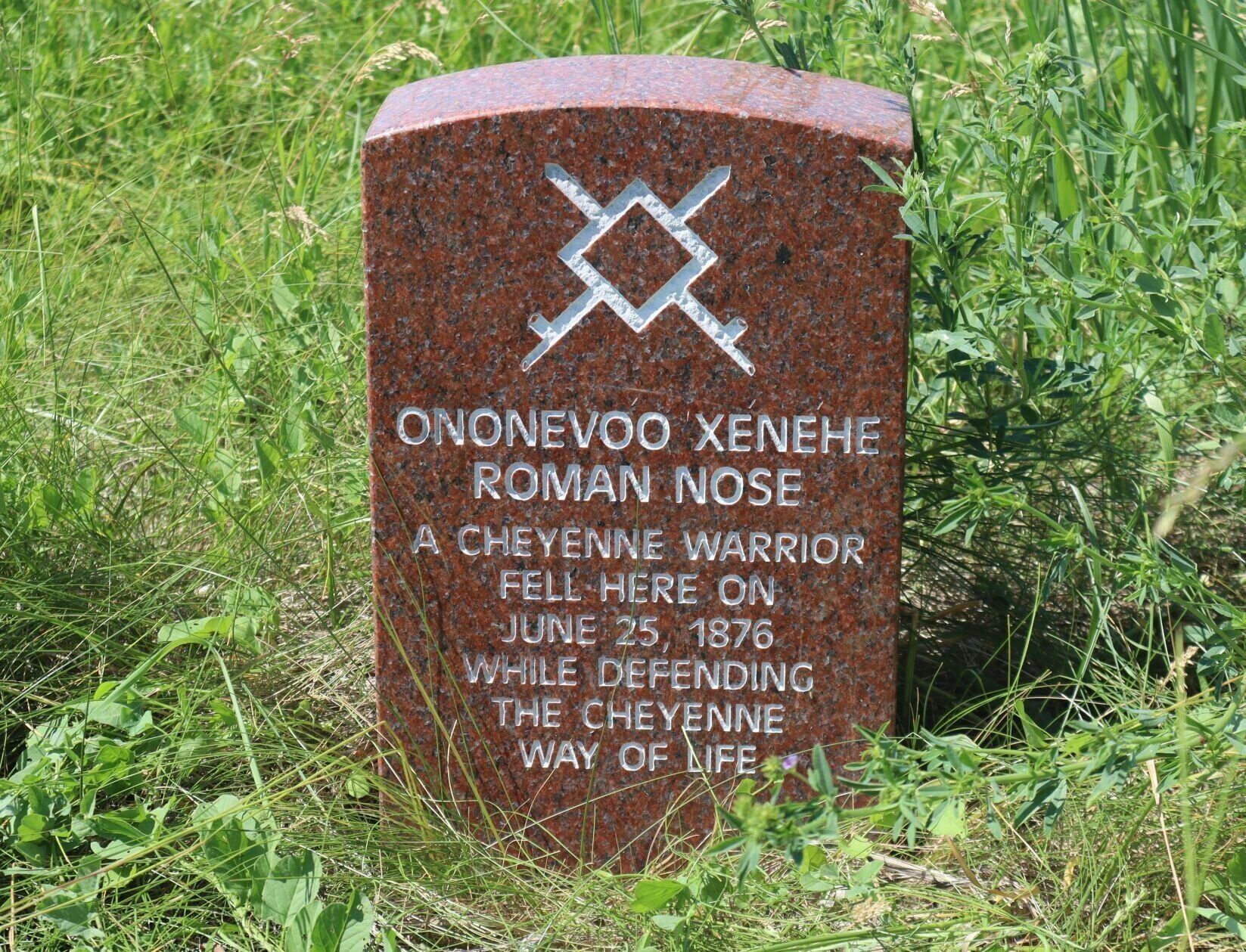
This memorial, for the Northern Cheyenne warrior Roman Nose, is one of several on the Little Bighorn Battlefield.
In recent decades, Indigenous recognition and input have shaped the battlefield’s grounds. Along with exhibits documenting how the battle erupted due to the U.S. government’s larger campaign to quash Native American resistance to federal expansion, an entire memorial was dedicated to Indigenous men and women who fought in the battle and red granite markers dot the landscape where they died in the fighting.