NorthWestern reveals previously secret info on data center agreements
The Montana Public Service Commission on Monday released initial data center agreements made with NorthWestern Energy after the letters were previously held from public view for months.
The Montana Public Service Commission on Monday released some information about data center agreements that it had long shielded from public view.
Heavy redactions had kept the contents of some of the documents released hidden. Now, after the contents of entire pages were blacked out previously, one word was left redacted between the three documents.
The newly released documents offer some new insight into the scale of some of the proposed data center projects that NorthWestern Energy would support.
Multiple public interest groups had been pressing the PSC, Montana's regulatory body for utilities, to provide these materials for months. Such documents are typically classified as confidential to prevent other businesses from learning trade secrets that might harm NorthWestern. The PSC doesn't have a choice on the redactions.
In a letter on July 31, NorthWestern told the PSC that it mostly had no reason anymore to redact its service agreements from the public. Therefore, it was seeking the public release of the three documents.
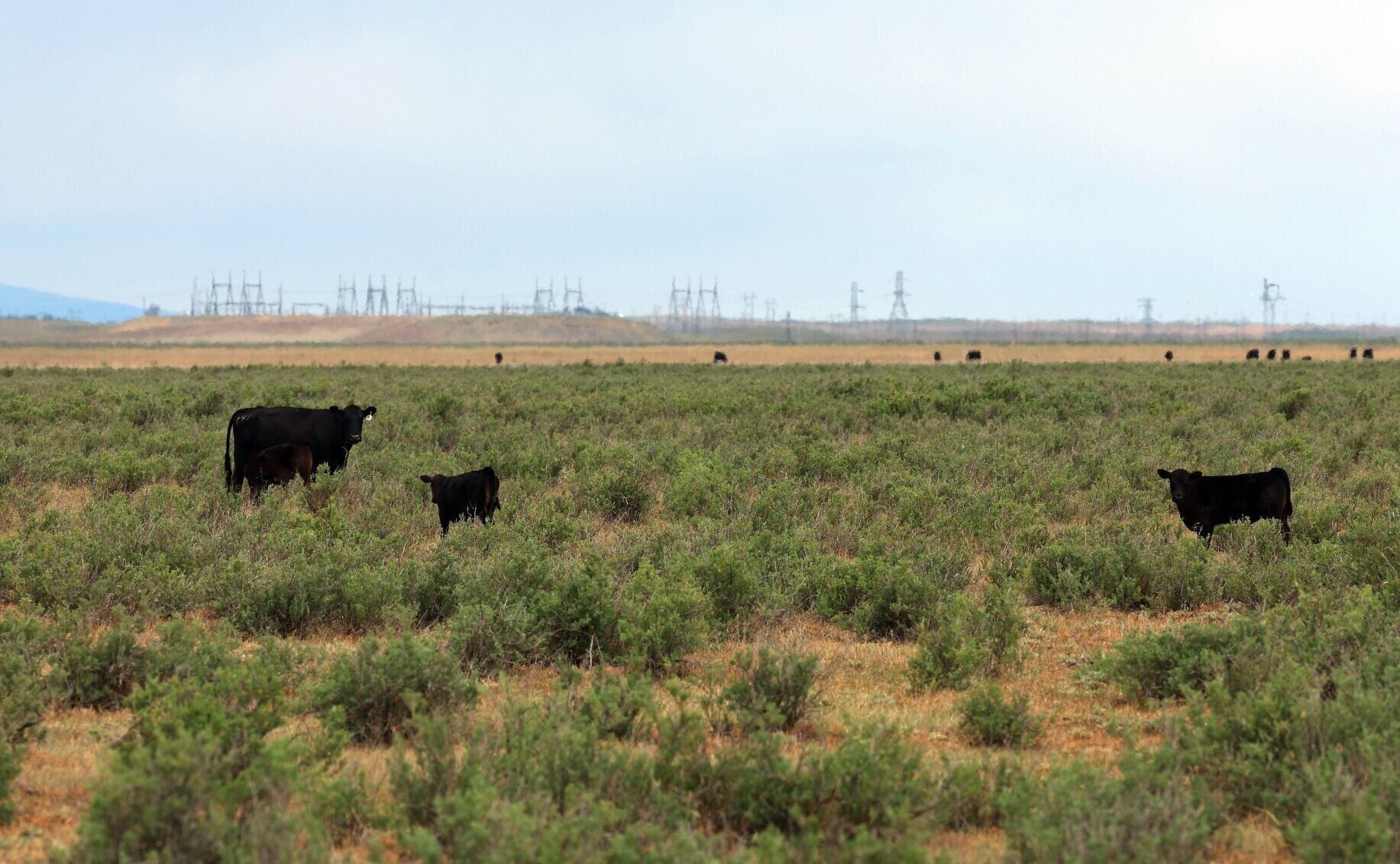
Cattle graze where Quantica hopes to build a data center and power plant that will connect with the power substation near Broadview, Montana.
Two of the three data center developers, Quantica Infrastructure and Atlas Power Group, have said that the information shared in NorthWestern’s letters of intent were no longer considered confidential, NorthWestern attorney Sarah Norcott told the commission.
“Subsequent developments with these potential customers have also diminished the economic value derived from the confidentiality of these LOIs,” Norcott concluded in her letter, using the acronym that stands for "letters of intent."
Still, not everything was made public.
The revised letter outlined Sabey Data Centers considering two different locations to build data centers with up to 250 megawatts provided at each site, for a total of 500 megawatts.
One site was the proposed Butte Montana Connections Site. Plans for that project fell through in May after the company was denied space there by REC Silicon exercising a right of first refusal over the land.
The other site was blacked out. Norcott stated in her letter that Sabey still found it advantageous to have the location redacted.
It isn’t clear whether that site might be in Butte, but in an Aug. 5 statement to Lee Montana newspapers, Butte-Silver Bow Chief Executive JP Gallagher repeated past comments that it might not be in the Mining City.
"Sabey had indicated they were still evaluating other potential sites in Southwest Montana, but we have not identified another location within Butte-Silver Bow that they’ve expressed interest in since the termination in late May," Gallagher wrote in a statement to Lee Montana on Aug. 5.
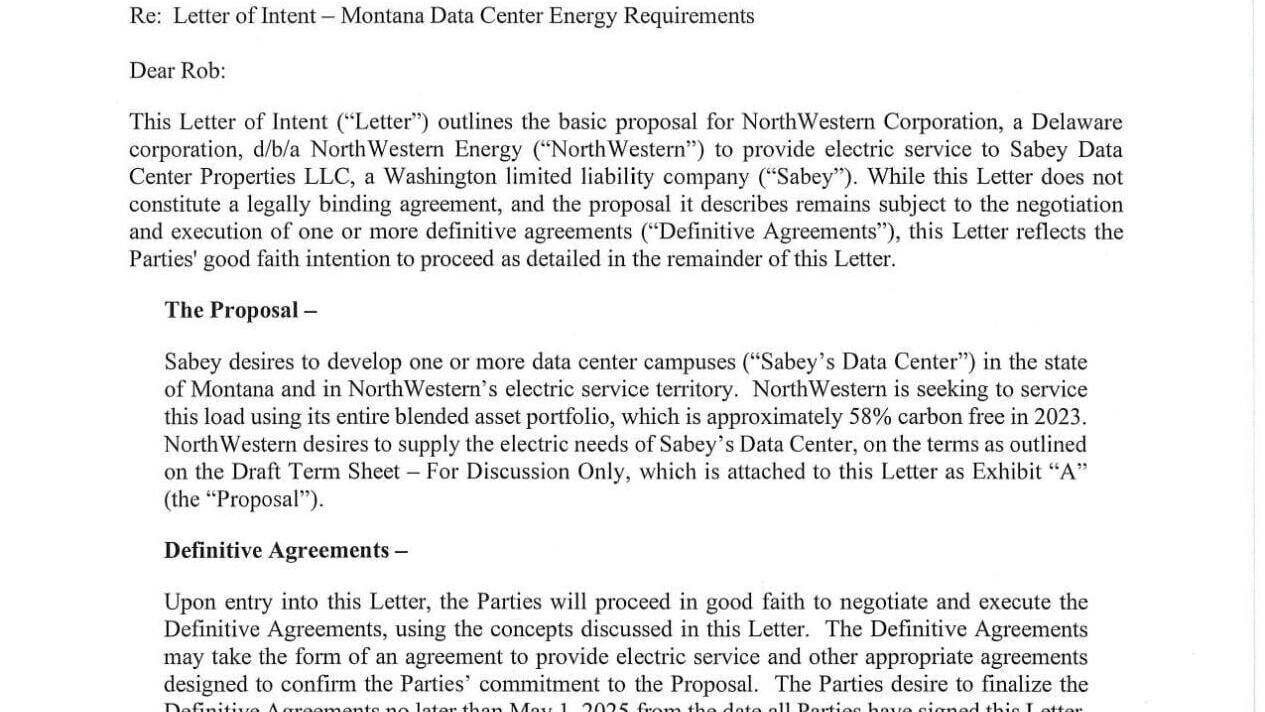
Read the revised Letter of Intent with Sabey Data Centers here.
The other letters indicated Quantica plans to use up to 1,000 megawatts of power that will come from NorthWestern substations north of Billings. The letters also suggest Atlas Power plans to use up to 150 megawatts from the utility south of Butte.
The letter with Quantica was entered into on July 1, 2025. Atlas Power’s letter was entered into on Dec. 9. 2024.
Like the December 2024 Sabey agreement, they’re likely not fully representative of current circumstances, given developments that have occurred since the letters were entered.
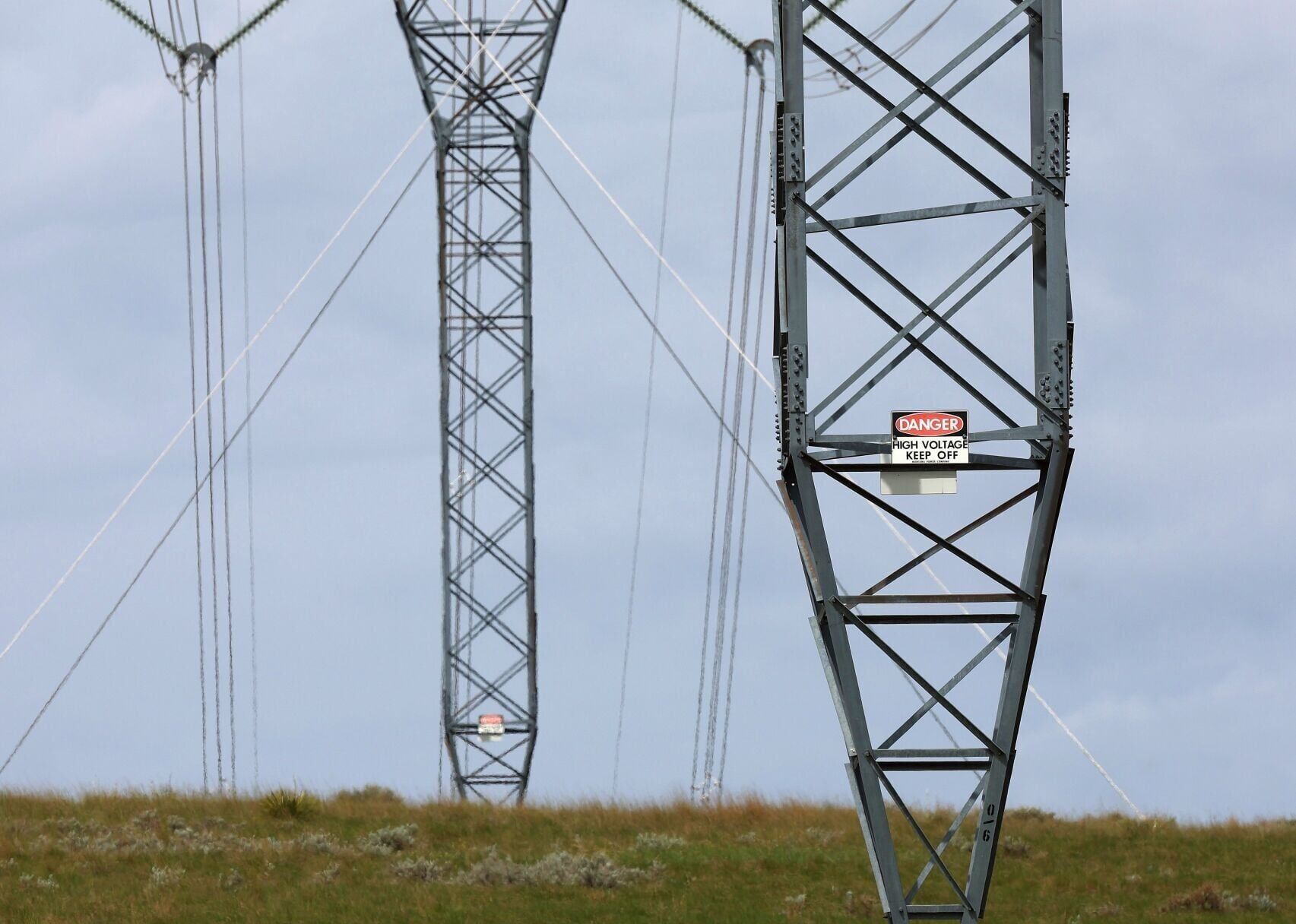
Quantica hopes to build a data center and power plant that will connect with the power substation near Broadview, Montana.
NorthWestern Energy spokesperson Jo Dee Black said the utility is currently conducting studies to better understand how data centers’ needs and costs can be met. That would then lead to the negotiation of an Electric Service Agreement, which would be presented to the PSC for review. The process was outlined in the utility’s proposed tariff rule that is intended to protect existing customers from being burdened with new costs.
No such agreements are currently active, Black said.
In an earnings call last week, NorthWestern CEO Brian Bird expected agreements to be made by the end of the year with Quantica and Atlas. Sabey’s agreement doesn’t match that timeline, as the data center developer is still working to obtain land for the project.
Since the letter last July, Quantica has said they are planning for an 1,100-megawatt data center, rather 1,000 megawatts. The draft terms also didn’t mention the potential of gas power for the data center. NorthWestern's interconnection queue indicates the Quantica is looking at building 8,835 megawatts of gas, solar, wind and storage. The queue is part of the study process that projects where power generation can connect to the utility’s grid.
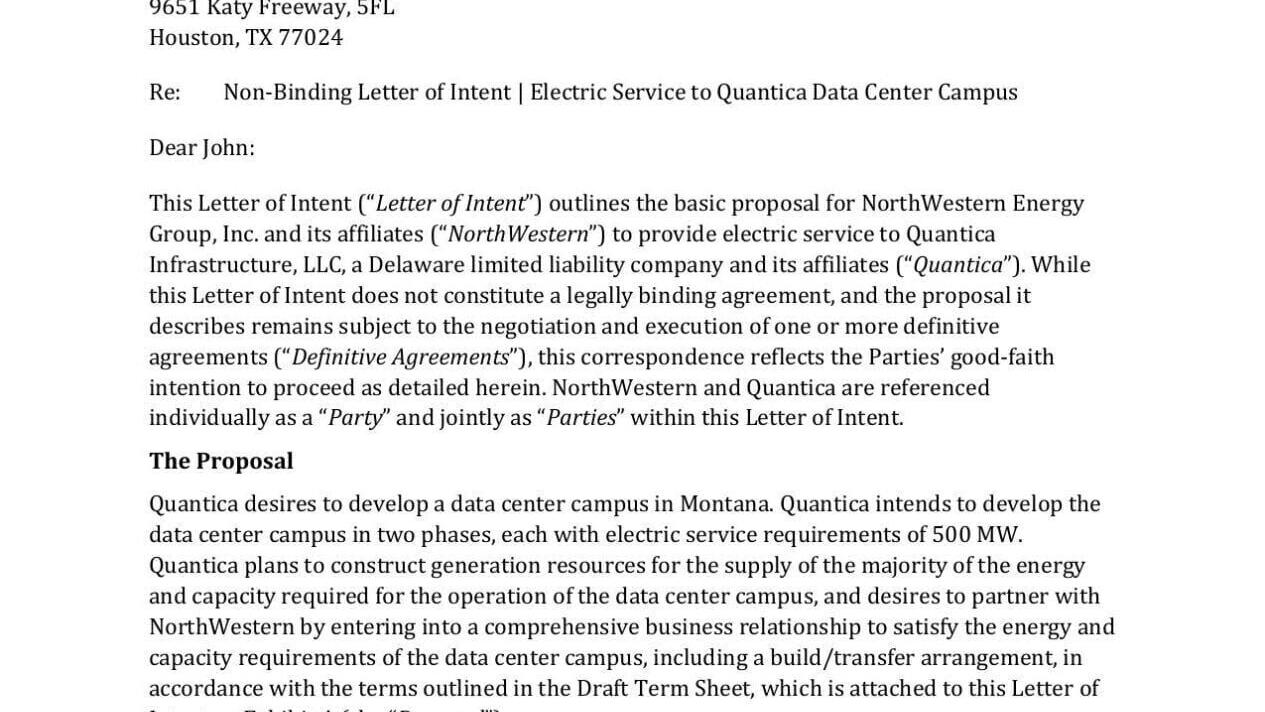
Read the unredacted letter of intent with Quantica Infrastructure here.
The proposed terms in the 2025 letter of intent said Quantica’s power would ultimately be “owned/operated” by NorthWestern. This would be a vast addition to NorthWestern’s energy portfolio. NorthWestern currently has around 1,600 megawatts of maximum energy capacity, according to planning documents.
NorthWestern is privately eyeing gas storage near a Broadview substation where the data center would be planned. Additionally, the July letter said another substation used to take and transfer power would likely be built near the substation for future phases of the project alongside an extension of an existing transmission line. NorthWestern is currently in the process of developing a Shorey Road substation south of Acton to the Broadview substation.
It noted Quantica would be responsible for any upgrade costs associated with the project. The data center developer for its part has pledged to “pay our own way” amid customer concerns around paying for electricity.
The letter with Atlas outlines that NWE planned to serve the station with up to 150 megawatts of its own power. It stated the parties had previously wanted to finalize the agreement by Jan. 1, 2026. Atlas was a past customer of NorthWestern’s in Silver Bow County, where it operated a cryptomine. Little information has been made public since.

Read the unredacted Letter of Intent with Atlas Power Group here.
Groups have lobbied for further transparency in agreements NorthWestern makes with data centers for months, with the letters of intent being used as evidence that transparency wasn't happening. The PSC had previously granted approval for redaction in November after a request by NorthWestern.
“It’s inexcusable that we haven’t seen the Letters of Intent until now,” said Anne Hedges, the executive director of the Montana Environmental Information Center, one of the groups that lobbied for their release. “There’s nothing in there that the public couldn’t have seen last October.”
Hedges was asked if there was anything unexpected in the Letters of Intent.
“I did not expect to see that Sabey wants two data centers of 250 megawatts each, for a total of 500 megawatts,” she said. “Five-hundred megawatts is a lot. That’s two-thirds of NorthWestern Energy’s existing customer load (in Montana). I think the people of Butte would certainly have wanted to know nine months ago that Sabey is looking at using 500 megawatts, not 250.”
She still wanted that one word redacted on Sabey’s other considered location to be released.
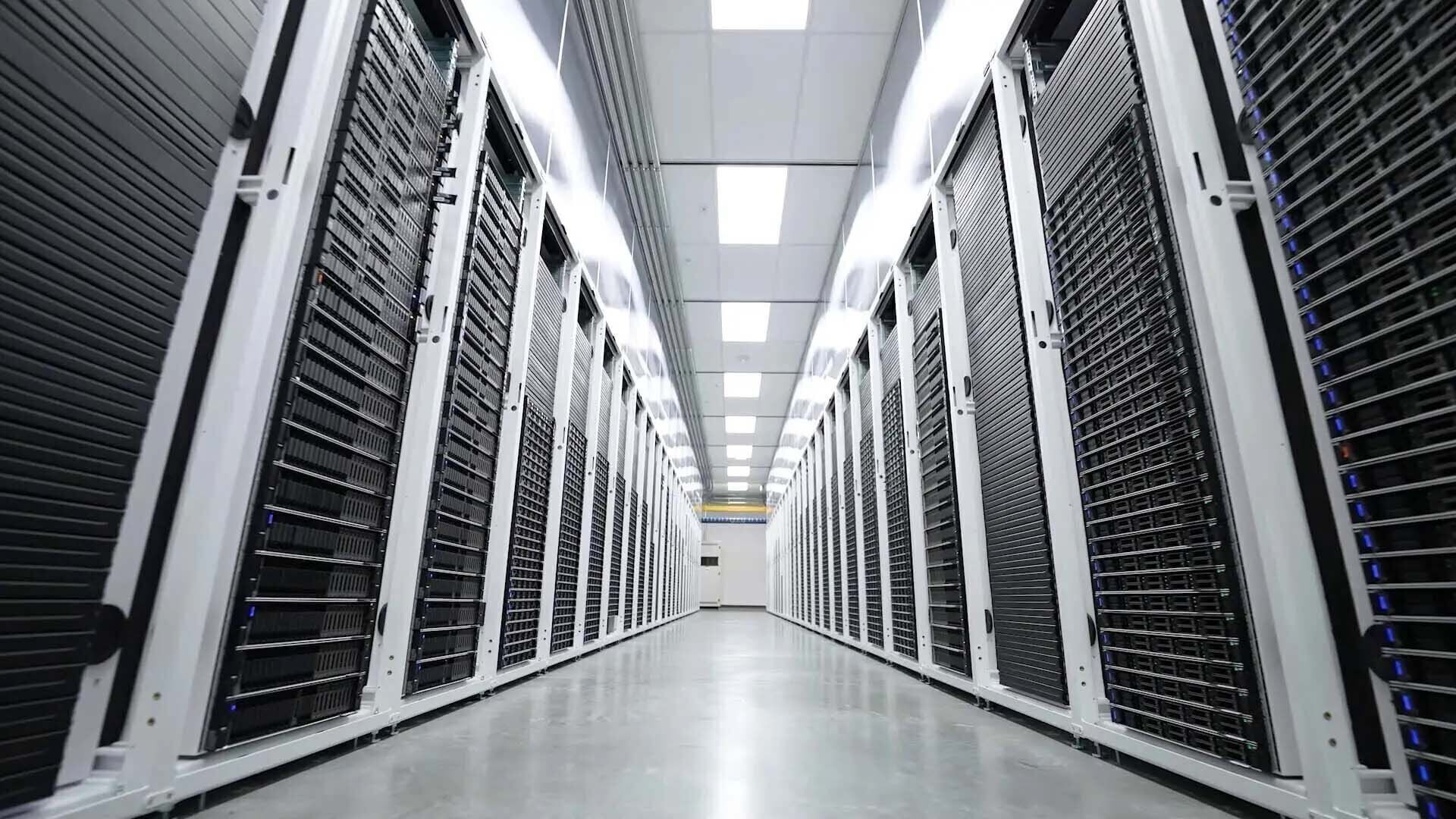
Sabey Data Centers and other data center companies from around the country have staked out Montana as one place to build the sprawling facilities.
“The community deserves to know where it’s going to be located,” Hedges said. “They’re keeping it redacted so the community doesn’t know that it’s under threat. And I think the people in Butte would certainly want to know.”
In NorthWestern’s recent earnings call, Bird acknowledged that there were eight data centers currently being assessed by the utility, which mainly serves Montana and South Dakota. Only the three addressed in the letters have been made public.
The CEO also responded to a question from an investor asking how he sees local pushback and proposed ballot initiatives, like those in Silver Bow and Yellowstone counties, around restricting the projects. He said both developers and the utility need “to do a better job in terms of communicating and working with communities to find out what the communities want, not necessarily what we think they want.”
“I think what has been recently done here in terms of an acknowledgment by utilities and data centers that we’re not going to pass on higher costs to customers … those commitments are going to help deal with some of these issues,” Bird told investors. “But this is going to be a continuing issue for the industry for some time.”
David Erickson and Blair Miller contributed reporting.
Editor's note: This story has been updated on 8/7/26 with clarification from the PSC.