Montana delegation opposes Trump's deal to drop tariffs on imported foreign beef
"Most importantly, this will harm our ranching families who feed the nation," said Montana Sen. Tim Sheehy.
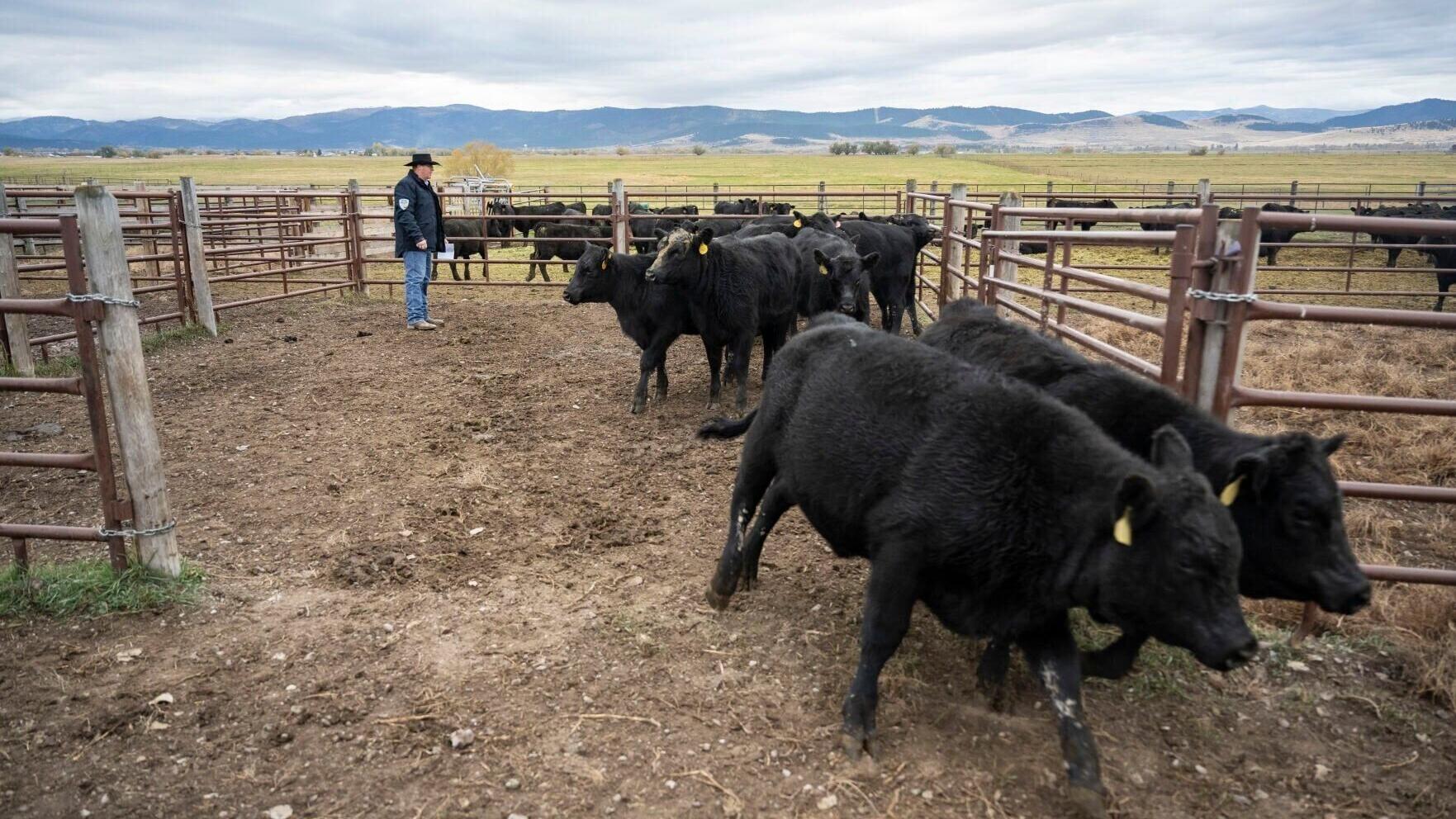
Wes Seward inspects cattle for brands of ownership and health issues at Lazy JM Ranch on Tuesday Oct. 29, 2024, in St. Ignatius, Montana. Seward is a district investigator for Montana’s Department of Livestock.
Montana's all-GOP congressional delegation has come out against a plan by their fellow Republican, President Donald Trump, to allow 300,000 metric tons of ground beef to be imported into the U.S. with no tariff.
Many national and state cattlemen's associations are also opposed to Trump's deal, saying it will hurt American ranchers financially.
Trump made the announcement on Friday on the social media platform he owns, Truth Social.
"Today, I concluded a deal to substantially lower the price of ground beef for working American families," Trump wrote. "As everyone knows, under President Biden, beef prices soared at their fastest rate and the American beef herd fell to its smallest size in modern history. As we work to rebuild this herd and help our ranchers, for the next 90 days, the United States will allow up to 300,000 metric tons of product for ground beef to be imported with no out of quota tariff. We have a commitment that this beef will be sold at 25 percent below current market prices. This deal will reduce prices for Americans while giving space for our Great American Beef Herd to grow again."
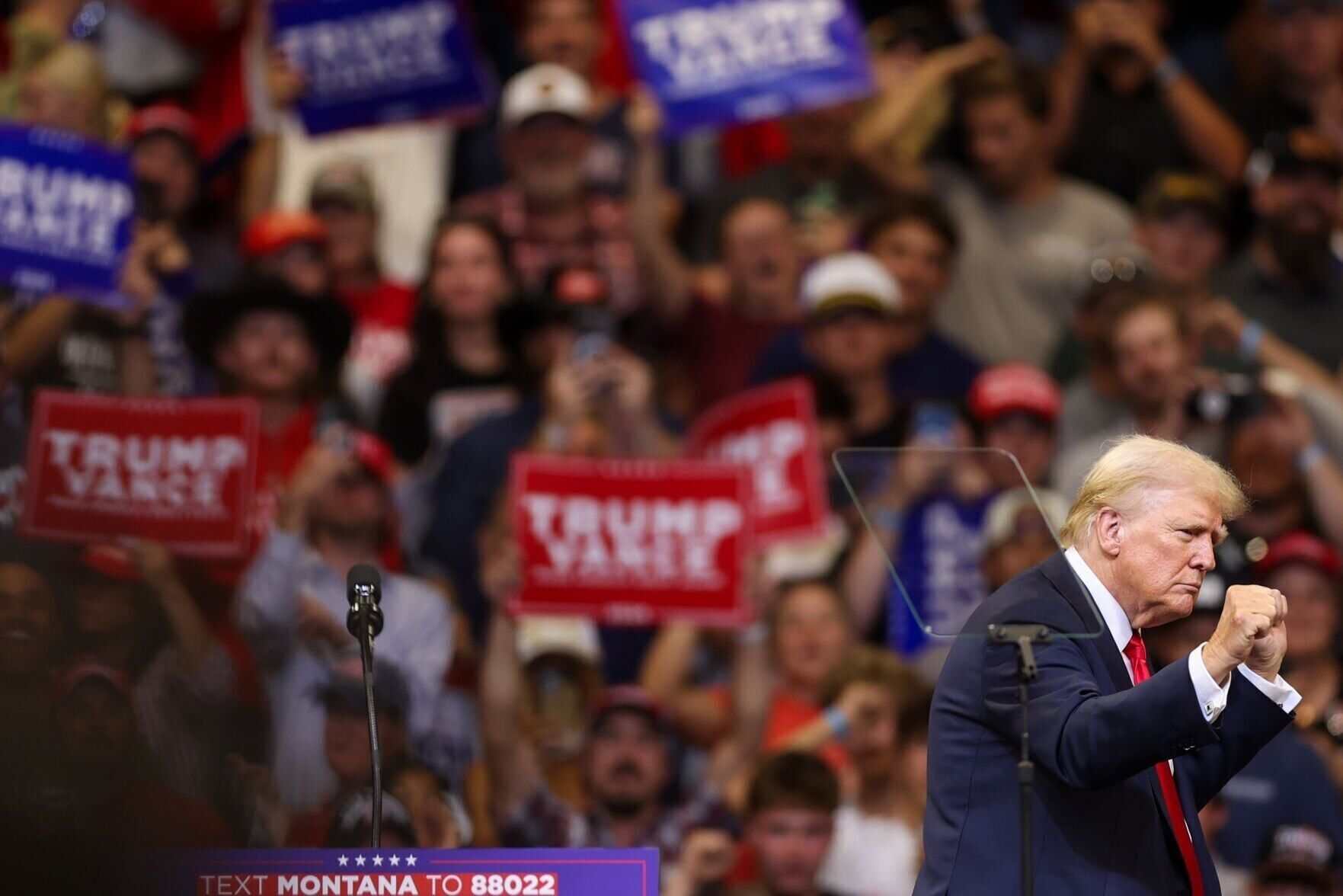
Former president Donald Trump dances during a rally for senatorial candidate Tim Sheehy at Brick Breeden Fieldhouse in Bozeman, Mont., on Friday, Aug. 9, 2024.
Cattle ranching is an important part of Montana's economy. The U.S. Department of Agriculture found that the inventory of all cattle and calves in Montana was around 2.16 million head as of January 2025, and livestock sales bring in around $1.5 billion to Montana every year, with cattle the largest sector by far.
Rep. Troy Downing was one of the earliest to dissent from Trump’s deals to open U.S. markets to more foreign beef. In October, he and seven fellow House Republicans signed a letter expressing concerns about a plan to quadruple imports of Argentinian beef.
When Trump signed the executive order, Downing acknowledged that limited imports could provide short-term relief for consumers. If the price of ground beef hit $10 per pound, those consumers might start shopping for a different protein, he said, potentially leaving Montana ranchers in a worse position.
Downing on Friday joined Montana’s delegation in objecting to new beef imports. The widening flow of foreign food now has Downing concerned about market stability for producers.
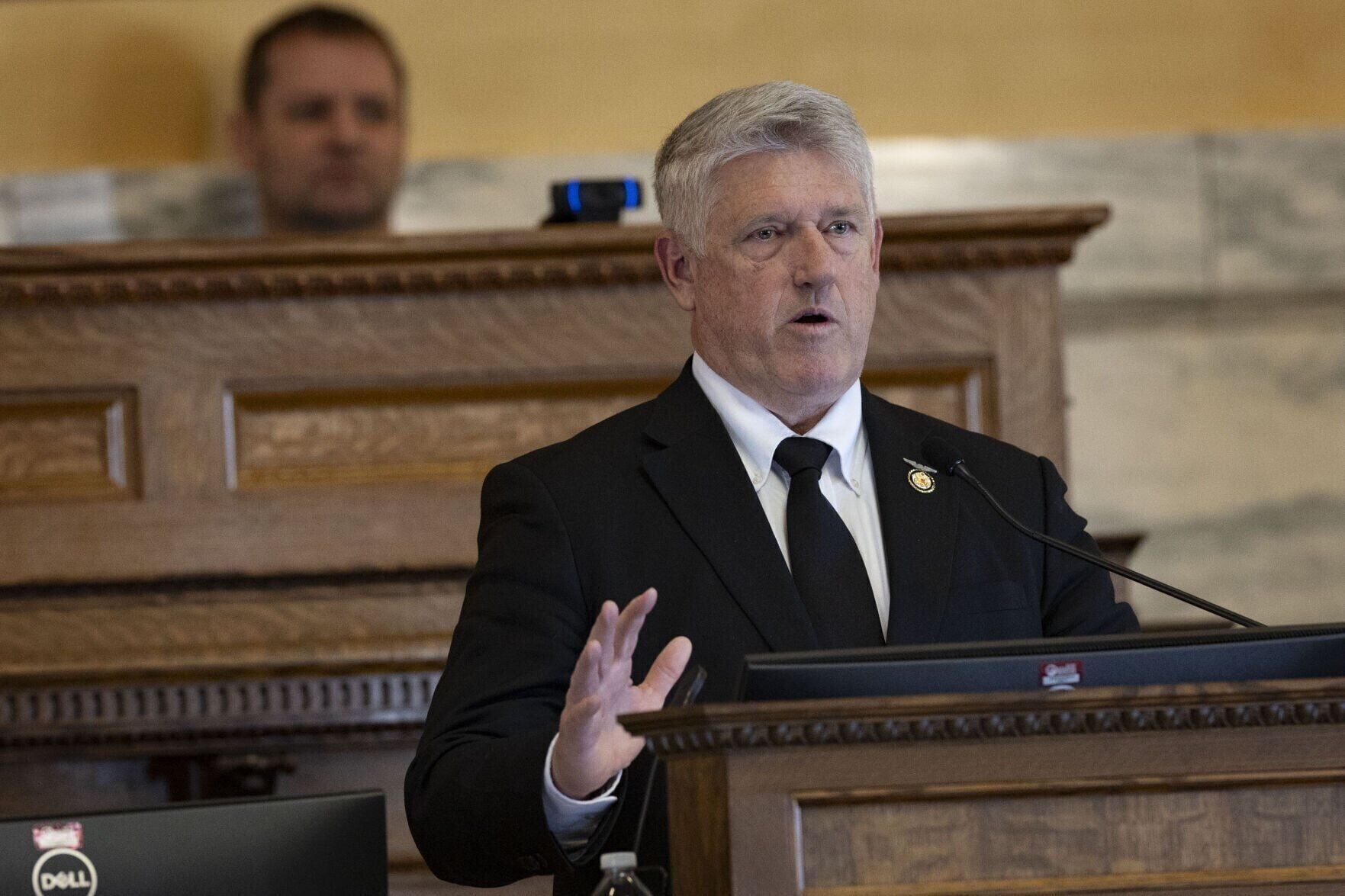
U.S. Rep. Troy Downing addresses a joint session of the Montana Senate and House of Representatives on Feb. 17 in the state Capitol.
“Montana ranchers need stability in the market if we are serious about rebuilding the American cattle herd,” Downing said Monday in an emailed statement. “The last thing our ranchers need are comments or actions from Washington that tank the value of domestic beef and pull the chair out from under them. If we want ranchers to invest and regrow the herd, we have to give them confidence that the market will be there.”
Sen. Tim Sheehy posted about Trump's latest plan on X at 9 a.m. Mountain Time on Friday, about two hours after Trump's post.
"I’ve advised President Trump against this course of action for a year because American ranchers have been struggling against the packer monopoly for decades, and this will further harm them — most of whom are MAGA Republicans," Sheehy wrote. "The President’s heart is in the right place on wanting lower prices for the American people, and beef prices have been impacted by the Mexican screwworm. But the reality is this action will make it more difficult for American ranchers to rebuild our herd and bring prices down for the American people. And most importantly, this will harm our ranching families who feed the nation."
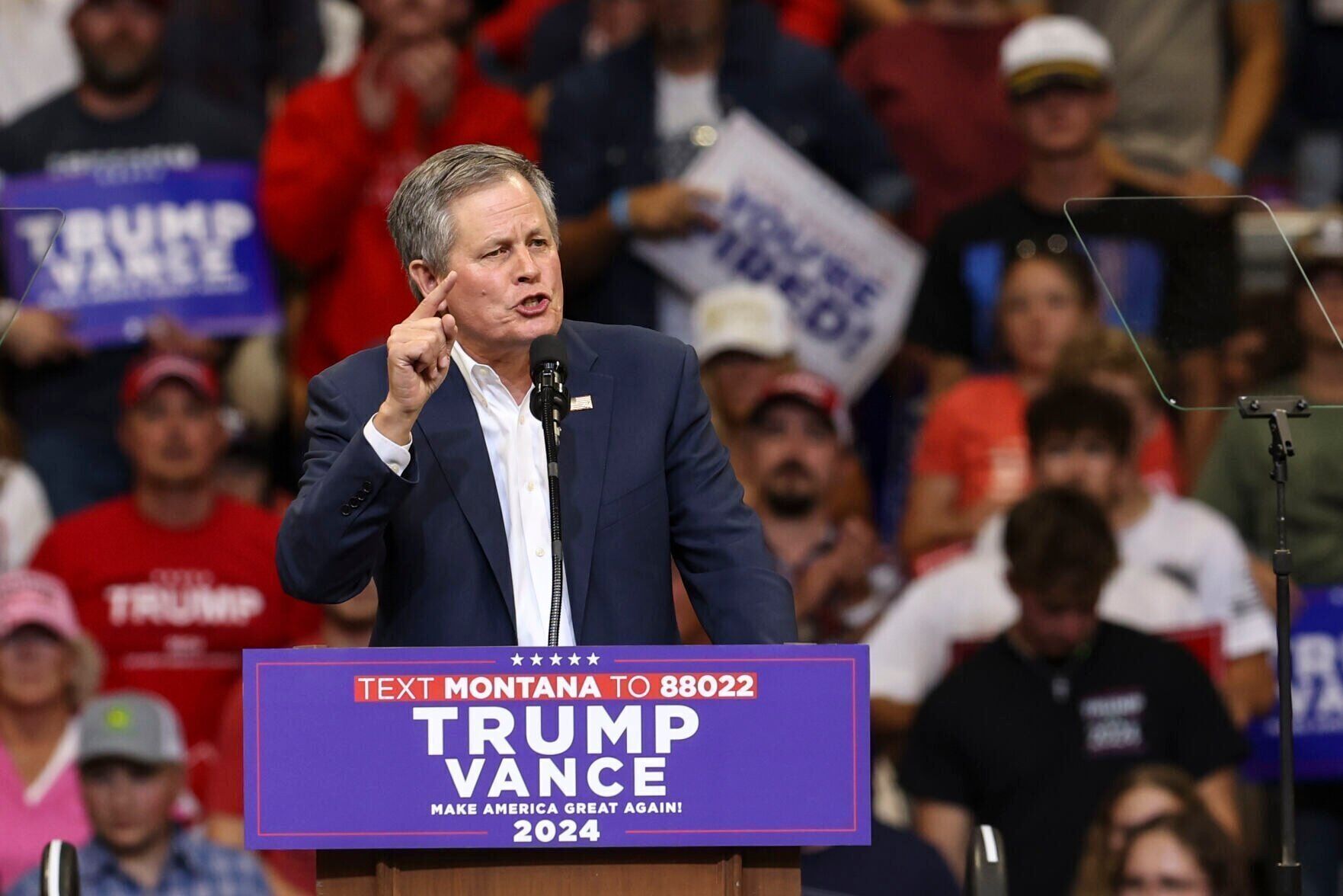
U.S. Sen. Steve Daines speaks at a Donald Trump rally in the Brick Breeden Fieldhouse in Bozeman on Aug. 9, 2024.
Sen. Steve Daines posted a few hours later.
"Montana ranchers are struggling due to years of drought that has thinned their herds," Daines wrote on X. "While I commend President Trump for working to lower the price of goods at the grocery store, importing foreign beef is only going to hurt our ranchers and increase prices over the long-term. We need to do all we can support them by letting the market recover."
Rep. Ryan Zinke, a longtime proponent of Mandatory Country of Origin Labeling (MCOOL) policy, struck a similar tone.
“President Trump is right to focus on lowering grocery prices, but more foreign beef is not the answer,” Zinke said through a spokesperson on Monday. He added, "Food security is national security, and I’ll always stand with Montana ranchers.”
Zinke and Daines are retiring from Congress when their terms conclude in early January.
Montana Cattlemen's Association President Tim Brunner posted about the issue on social media and took Trump to task.
"Trump just opened the door to another 300,000 metric tons of grinder beef imports over the next 90 days, on top of the Argentina deal from earlier this year," Brunner said. "He says it'll lower prices at the counter and 'build the herd.' So how'd the Argentina deal work out? Cattle prices haven't come down. The herd hasn't rebuilt. And just this month, nearly 30,000 pounds of Argentine beef hit store shelves in Florida and Texas after skipping required USDA import inspection, recalled only after the fact."
Trump's plan to increase foreign beef imports upsets Montana cattle ranchers
Brunner said he hasn't seen anyone explain how the announcement will allow American ranchers to build the herd again.
"Our question: who's advising this guy?" Brunner's post continued. "We've got elected officials from Montana and cattle country who could tell him exactly how this works. Where's this new beef even coming from, and who's checking it before it reaches your plate? The American cattle producer is finally seeing a fair price after years of getting squeezed. Now DC wants to flood the market with cheap, under-inspected imports and call it 'rebuilding the herd.'
"If you think you can rebuild a national cow herd in 90 days," Brunner continued, "I've got some heifer calves to sell you."
On Monday, Gilles Stockton, the Montana Cattlemen's Association director who is also a sheep and cattle rancher, posted about the plan.
"I've lost a hell of a lot more money to two-legged wolves than four-legged wolves," his post said.
Last fall, the Montana Stockgrowers Association and a few longtime Montana ranchers told the Missoulian they were opposed to Trump's plan to import beef from Argentina, because it would lower the price they can get for their animals.
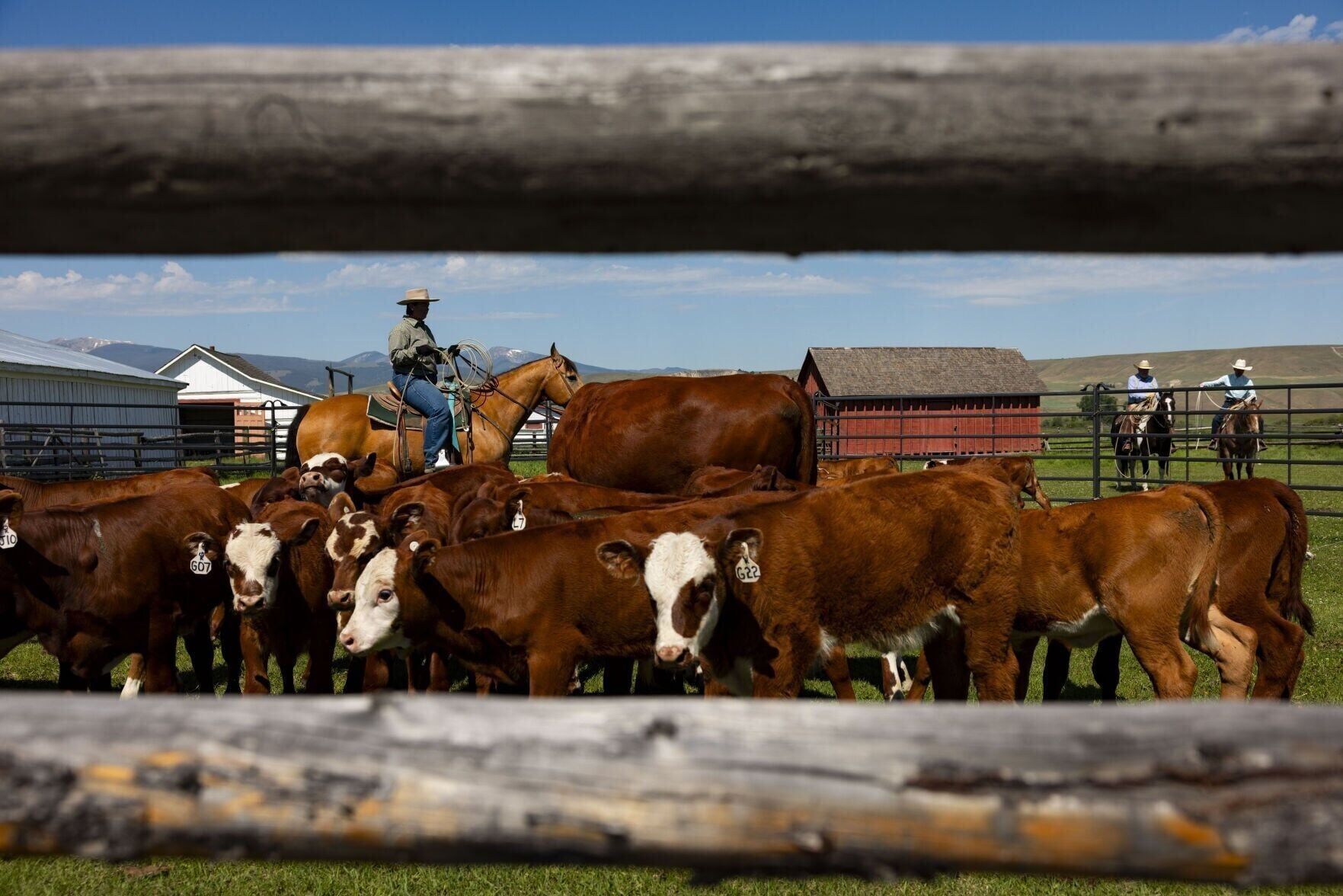
Brandy Davis herds cattle for branding at Grant-Kohrs Ranch in Deer Lodge on July 8.
The Missoulian reached out to the Montana Stockgrower's Association for comment on the issue, but did not hear back as of press time Monday.
Trump's announcement was still making waves on social media in Montana on Monday. A restaurant in Ravalli County, the Red Rooster Artisan Bakery in Hamilton, posted about the issue in order to advertise locally raised steers for sale that will be ready to be butchered in the fall.
"Rumor has it, we'll soon all be eating imported beef soon," the restaurant wrote. "You won't know where it came from, what it's been fed or vaccinated with or even how it's stored while shipped overseas, no thanks!"
The CEO of the National Cattlemen's Beef Association, Colin Woodall, sent out a statement opposing Trump's plan as well.
“NCBA is disappointed by the President’s statement," Woodall said. "While America’s cattle producers share the goal of keeping groceries affordable for consumers, flooding the market with government-subsidized, below-market beef is not the way to rebuild the American cattle herd. Cattle markets have already turned sharply lower this morning, to the detriment of farmers and ranchers."
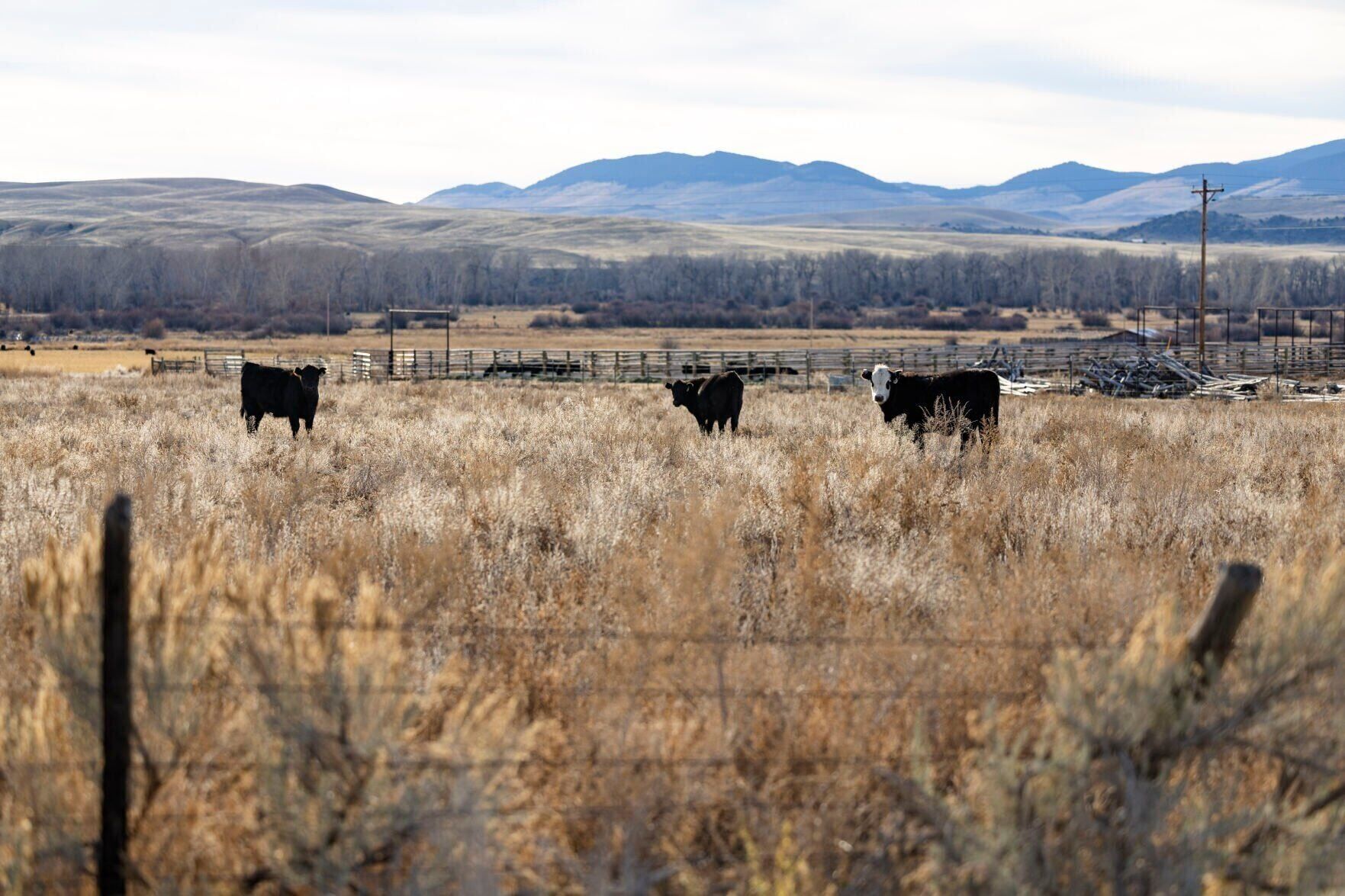
Cattle on a ranch along the Big Hole River near Twin Bridges, Mont. in Nov. 2023.
Woodall noted that the fall is when many cattle producers make critical decisions about their herds.
"Cattle farmers and ranchers are responding to strong market signals and historically high demand, and we are already working to rebuild after years of ongoing drought, high input costs and other challenges that have reduced U.S. cattle numbers," he said. "Today's announcement and other market interventions throw cold water on the prospect of herd expansion and sacrifices long-term stability for short term messaging.”
The new beef plan didn't specify which country or countries the meat will come from, but the imports will have no out-of-quota tariff, which is a tax that is imposed once the amount crosses a certain threshold.
David Erickson is a reporter for the Missoulian, often writing about business, housing, agriculture and other topics.