‘Let’s get to work’: UM President Shinn gives first ‘State of University’ address
Shinn touted university programs aimed toward solving statewide issues like rural healthcare access, cybersecurity and recruiting teachers in K-12 classrooms.
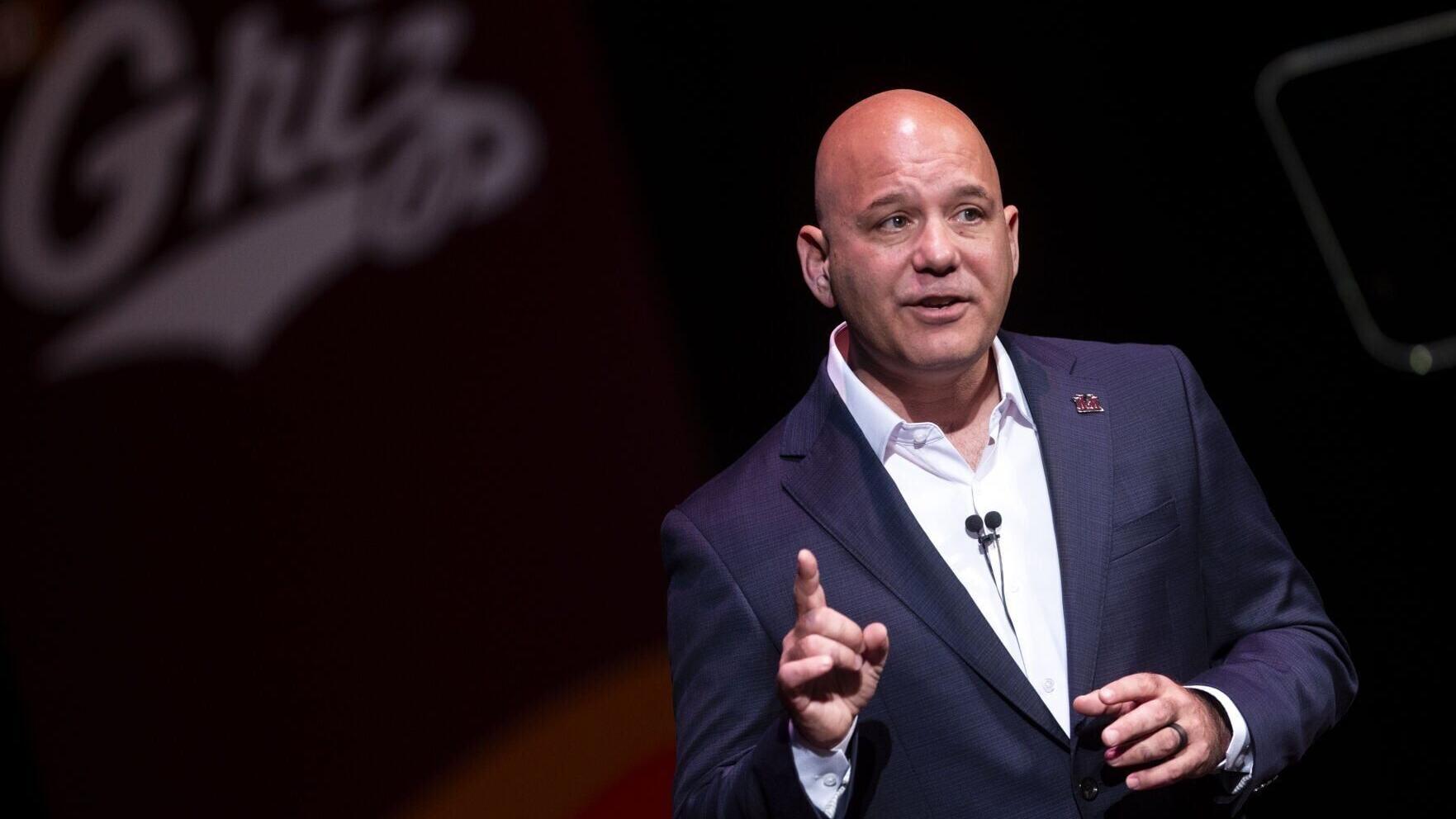
University of Montana President Jeremiah Shinn gives his first State of the University address on Friday, Aug. 21 in the Montana Theatre on campus.

“Our goal is simple: if a talented Montana student wants to earn a degree from this university, they will have the resources to earn a degree from this university,” Shinn said at the State of the University address on Friday, Aug. 21, 2026.

University of Montana President Jeremiah Shinn gives his first State of the University address on Friday, Aug. 21 in the Montana Theatre on campus.

University of Montana President Jeremiah Shinn gives his State of the University address on Friday at the Montana Theatre on campus.
“Why does the University of Montana exist?”
That was the opening question posed by new UM President Jeremiah Shinn during his first State of the University address on Friday morning at the Montana Theatre on campus.
Public confidence in higher education has declined, Shinn said, with everyone from legislators to employers questioning its value.
“There are questions about the value of a UM degree,” Shinn said. “And we intend to answer them — not with arguments, with proof.”
Shinn went on to tout the university programs aimed toward solving statewide issues like rural healthcare access, cybersecurity and recruiting teachers for K-12 classrooms.
The university is also launching a fundraising effort to help ensure finances are not a barrier for students to attend UM, with details slated to be released early next week.
Shinn took over July 1 as the university’s 20th president, coming to Montana from Boise State University, where he served as vice president for student affairs and enrollment and then interim president. His predecessor, Seth Bodnar, stepped down in January and is running for U.S. Senate as an independent.
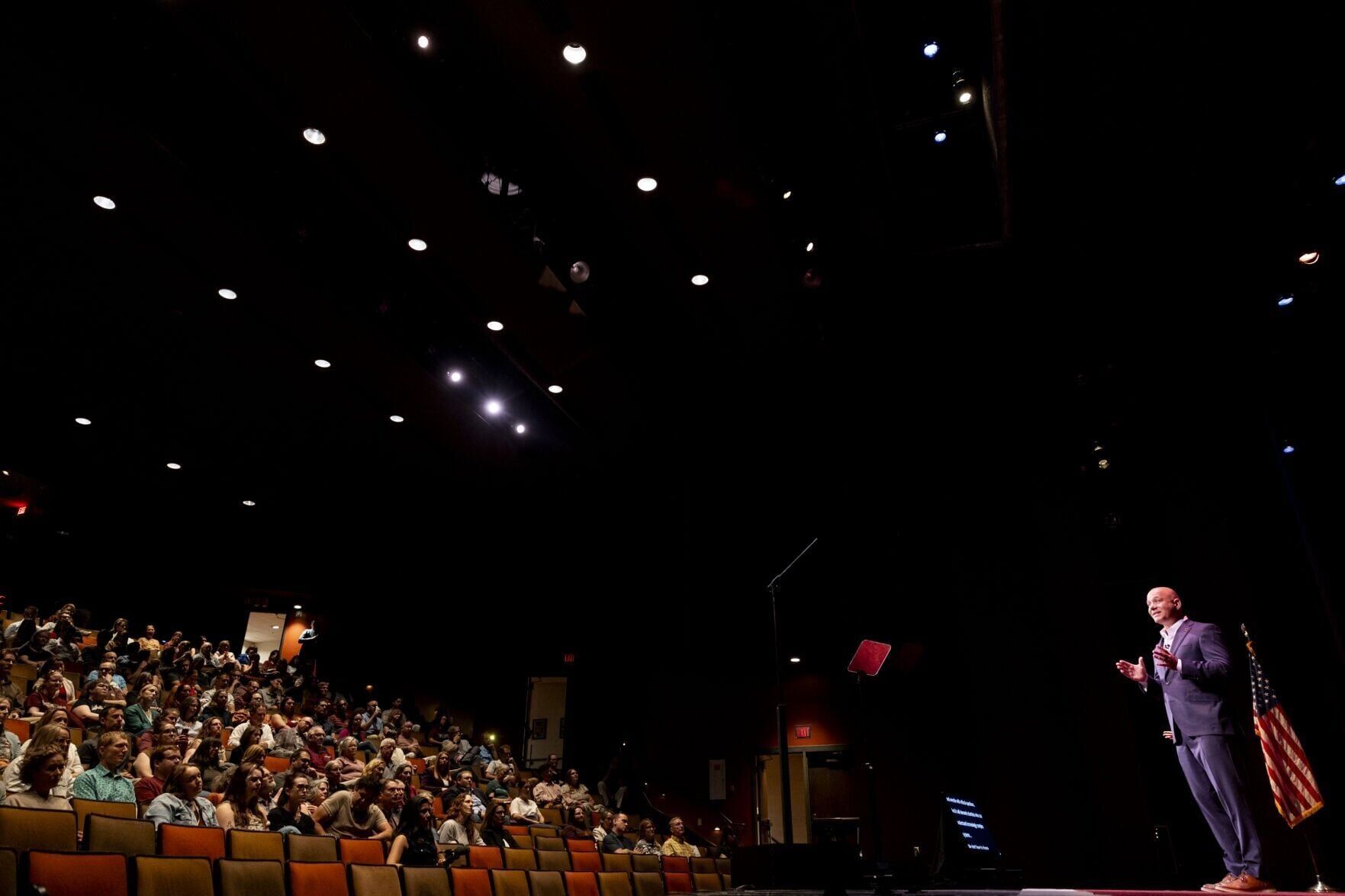
Jeremiah Shinn took over July 1 as the University of Montana's 20th president, coming from Boise State University, where he served as vice president for student affairs and enrollment and then interim president. His predecessor, Seth Bodnar, stepped down in January and is running for U.S. Senate as an independent.
Recruiting and retaining UM students
Less than half of all high school graduates in the state enroll in the Montana University System, with nearly two-thirds of students choosing another path, Shinn said.
While college isn’t for everyone, Shinn hopes with the new fundraising effort, finances won’t be a reason a student doesn't pursue higher education.
“Our goal is simple: if a talented Montana student wants to earn a degree from this university, they will have the resources to earn a degree from this university,” Shinn said.
The school’s retention rate increased 9% in the last decade for first- and second-year students, Shinn said.
“We're not where we need to be, but that's an encouraging statistic,” Shinn said.
Part of retention is making students feel comfortable on campus, he said, with the vast majority of a student’s experience outside the 15 hours an average student spends in the classroom each week.
“Every interaction a student has inside the classroom and out of it is either making it more likely that they'll stay, or that they'll pack their things and go back to a community that they know loves and cares about them,” Shinn said.
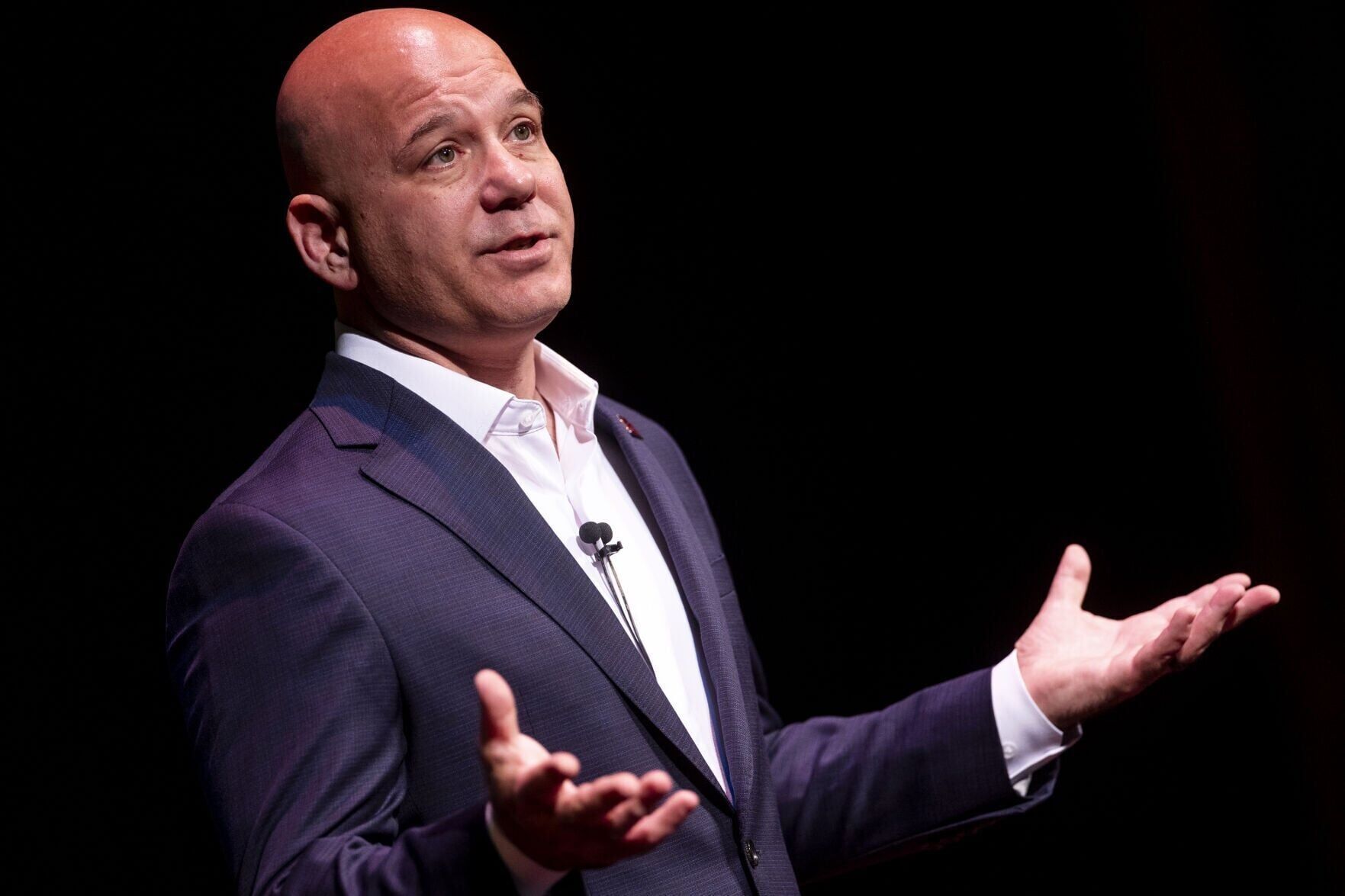
University of Montana President Jeremiah Shinn gives his first State of the University address on Friday in the Montana Theatre on campus.
Preparing to change in a changing world
If the university exists to serve students and the state, the university will “have to change,” Shinn said, referring to evolving program offerings, ways of working and priorities in light of a changing world and technology.
“Change doesn't mean that what came before was wrong,” Shinn said. “The work of generations got us here — we honor that work not by preserving everything exactly as it is, but by building on it.”
In an age of artificial intelligence, UM being both a liberal arts and science university “becomes even more important,” Shinn said, as AI can perform tasks but cannot replace human judgment.
The university can’t prepare students for a world we are leaving behind, he said.
“Our students deserve better than an institution that asks them to adapt to us,” Shinn said. “We need to adapt to the world that they're entering, and we will.”
When asked what kind of changes he had in mind, Shinn told the press universities have systems that can be hard for students to navigate on campus outside the classroom.
“I want students to be able to find what they need, when they need it, on a reasonable timeline with a reasonable amount of effort,” Shinn said.
University of Montana President Jeremiah Shinn gives his first State of the University address on Friday, Aug. 21 in the Montana Theatre on campus.
Programs launching to address needs in Montana
Shinn discussed a number of programs that are working to train the workforce to solve problems across the Treasure State.
One example is the cybersecurity program, which was the first such bachelor’s degree track in the state when it launched in 2024.
Montana was one of the most understaffed states for cybersecurity experts in the country, leaving institutions like hospitals and schools vulnerable to attack. Shinn said graduates from the first cohort in a few years will be able to protect Montana families and businesses.
This semester launched the first cohort of the state’s first physician assistant program, which aims to help fill the more than 60 vacancies in such positions across the state each year. This aims to help reduce wait times and access to medical care in rural settings, Shinn said.
The inaugural class is made up of 24 students, he said, 20 of whom are from Montana.
Shinn said 74% of UM pre-medicine graduates go on to be accepted into medical school, nearly twice the national average.
A donation of more than $9 million from the Phyllis Washington Foundation means qualifying students working to become teachers will have a significant amount of their student loans paid off if they pursue their career in Montana.
“One act of generosity becomes thousands of lives changed by a teacher who chose to stay in this state,” Shinn said. “That's how impact creates impact.”
Fall enrollment numbers are expected to be released in the coming weeks, but Shinn told press the numbers are “strong.”
Last fall’s enrollment increased 2.3%, with increases seen in the graduate school student population.
Shinn said he hopes the faculty and staff present took away the message the university is “going to serve our students and we're going to serve Montana.”
“That's our purpose, and everything else will be in service to that purpose,” he said.
He told the staff and community present he’s grateful he gets to steward the university for the people across the state who believe in it.
“Let’s get to work,” he said, closing his remarks.
Nicole Girten is the education reporter for the Ravalli Republic and the Missoulian.