Lawmakers recommend censorship protection representative for MT university students
Montana lawmakers are asking higher education officials to create a position for an impartial representative for students to use if they feel their civil rights are being violated on campus.

Families move their students into dorms on the University of Montana campus during move-in day on Monday, Aug. 18, 2025 in Missoula.
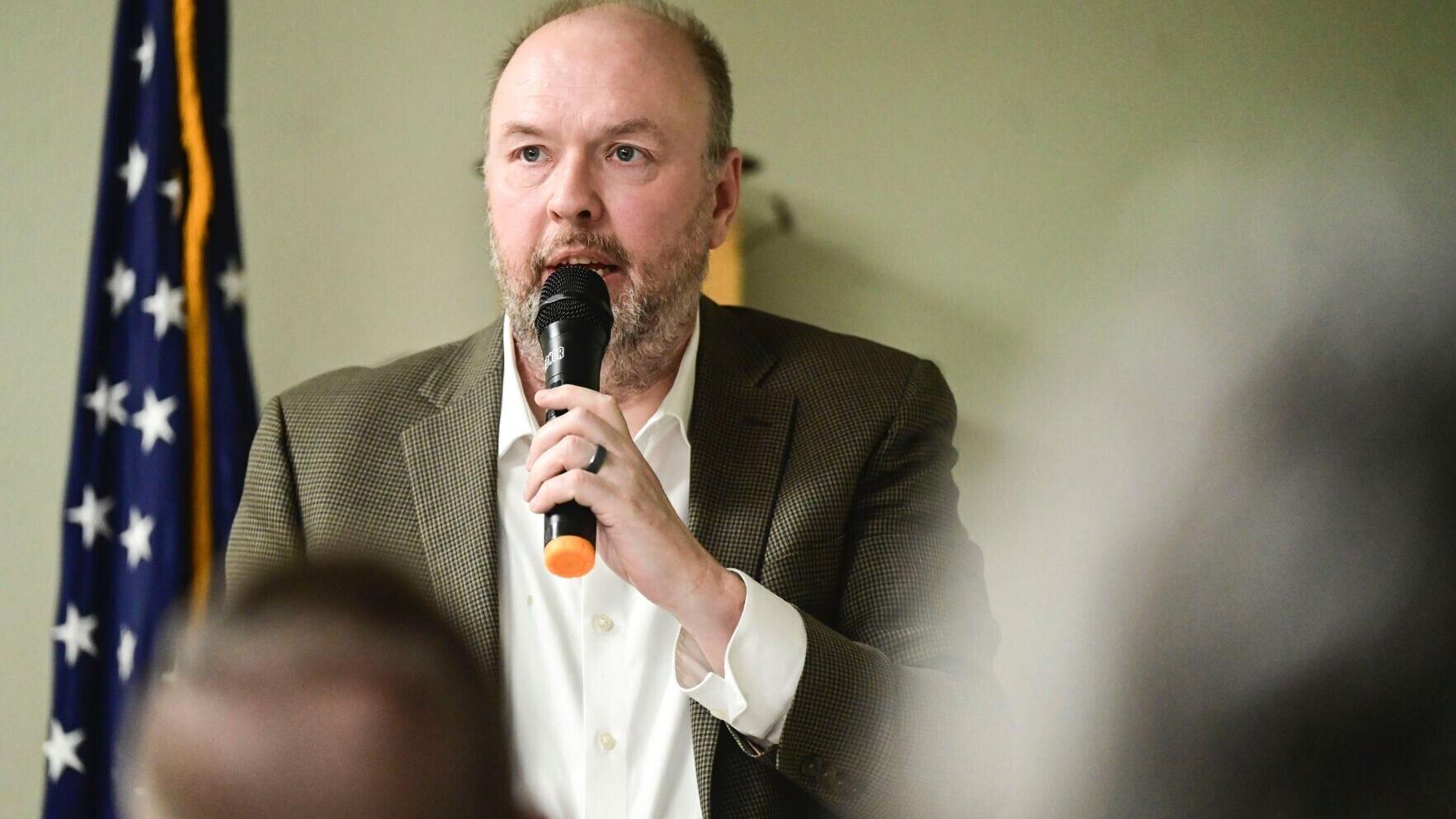
Rep. Greg Overstreet, a Republican from Ravalli County, at a Bitterroot Valley Board of Realtors forum hosted at the Hamilton Elks Lodge on May 14, 2026.
Montana lawmakers are asking higher education officials to create a position for an impartial representative for students at Montana's two flagship universities to use if they feel their civil rights are being violated on campus.
Members of the Civil Rights Violations and Censorship by the Montana University System interim committee voted unanimously on Friday morning to approve sending a letter to higher education leaders requesting the MUS create an ombudsperson program.
An ombudsperson, a general term for a government conflict mitigator, would be available for students to have private and confidential talks with if they believe their civil rights have been violated by university system policies, practices or staff.
The letter recommends the ombudsperson compile a report each interim including information on the number and type of complaints, as well as any broad patterns or practices they may notice, and submit that report to the Education Interim Committee between each legislative session.
The Legislature cannot take direct action to create this position because, according to the state Constitution, the Montana Board of Regents oversees higher education in the Treasure State.
The Montana Board of Regents’ independent control over the university system has been a source of frustration for Montana Republicans for years, with one of the largest recent disputes involving gun rights on campus.
In 2022, the Montana Supreme Court unanimously blocked legislation passed during the 2021 session to allow guns on campus, citing the regents' constitutional authority over the university system.
But committee member Rep. Greg Overstreet, R-Stevensville, filed an amicus brief in the case saying the lower court’s decision "creates a constitution-free zone on the MUS campuses," he said during the committee’s March meeting.
Overstreet said he is drafting a bill for the upcoming legislative session to "give the Supreme Court a chance to correct what I believe is an oversight on their part."
The committee on Friday also unanimously approved a report which included the recommendation in the letter for an ombudsperson position, as well as a recommendation the MUS provide to staff and students, “clear, concise, and accessible policies” on civil rights protections on campus and also provide ongoing training to staff on civil rights.
Both of Montana’s flagship universities have websites outlining students' rights and resources for help.
Montana State University also previously had an ombudsman position from 2002 to 2011, according to information provided by the university system to the committee.
The position functioned as a neutral university-wide faculty and professional staff mediator, the document said. It was a grant-funded position, but it went away when the grant ran out. Students do have access to other resources like case managers and peer advisors, the document read.
UM students with civil rights complaints can go to the Title IX and Equal Opportunity Office and the director of Institutional Compliance, according to UM spokesperson Dave Kuntz, who previously told the Missoulian there isn’t one employee solely dedicated to civil rights complaints.
MSU spokesperson Michael Becker previously told the Missoulian students can turn to the Campus Civil Rights Office or the Associated Students of MSU Legal Services.
Becker said legal services at MSU connect students with attorneys who are not employed by MSU and can serve as truly independent advisers.
Friday’s meeting was the third of three for the temporary interim commission established by House Bill 284, which was sponsored by Rep. Caleb Hinkle, R-Belgrade, during the 2025 legislative session with the intent to "investigate civil rights violations and acts of censorship committed by the Montana university system."
During a public hearing in March, the committee heard from two students at MSU who said teachers gave them failing grades for written assignments in which they expressed their political opinions in favor of President Donald Trump or against "mass migration" in the U.S. One student said he felt he couldn’t express his right-leaning opinions in class but needed to join discussions as part of his grade.
An MSU spokesperson told the Missoulian that academic complaints are a matter of individual student privacy, and could not comment.
Two UM students spoke favorably of the civil rights protections at UM during the hearing.
One Republican lawmaker said during the last meeting he plans to draft a bill for the 2027 legislative session with the hope that the Montana Supreme Court will clarify a previous decision that he says limits rights on campus.
HB 284 outlined the committee send its findings to President Donald Trump, heads of the U.S. Justice and Education departments and congressional leadership, as well as Montana’s governor and the Office of Public Instruction.
The committee is also sending its recommendations to the Office of the Commissioner of Higher Education and to leadership at both of the state’s flagship universities after staff recommended doing so.
Nicole Girten is the education reporter for the Ravalli Republic and the Missoulian.