First hearing held in data center signature-gathering deadline dispute
The county had accepted 7,706 signatures for a proposed data center initiative, before they learned that the deadline had passed weeks ago.
The dispute over whether a deadline for submitting signatures for a data-center initiative has already passed continued on Friday, when Yellowstone County, the company behind a proposed data center and a Broadview resident leading the opposition to that project all appeared in court.
Initially, the county said Kassi Solberg and other proponents of the initiative had until an Aug. 12 deadline to submit signatures. Earlier this week, however, the county said the deadline was actually three weeks ago, on July 13.
County officials said the change came after attorneys for Quantica Infrastructure, which is pursuing a data center near Broadview, informed them of a 2025 Montana law that requires four weeks for initiative signatures to be processed.
The change from an Aug. 12 deadline to July 13 came after Quantica’s attorney informed the county last week of a new law that passed in 2025 that requires an extra four weeks for a deadline.
Solberg and her attorney Brian Miller have since filed a request for an emergency halt to the July deadline that Quantica and Yellowstone County argue should be enforced.
Miller told Yellowstone District Court Judge Ed Zink that since signature gatherers were operating under the Aug. 12 deadline issued by the county for months, there would be no harm in continuing until that date.
The county accepted signatures until Aug. 3, before they were informed of the change. Solberg wants the initial Aug. 12 date maintained.
“That's all we're asking,” Miller said in his opening argument. “It doesn’t go beyond that. They've already said they could do it. They were prepared to do it, and they would have continued to do it if they hadn't become aware of this change.”
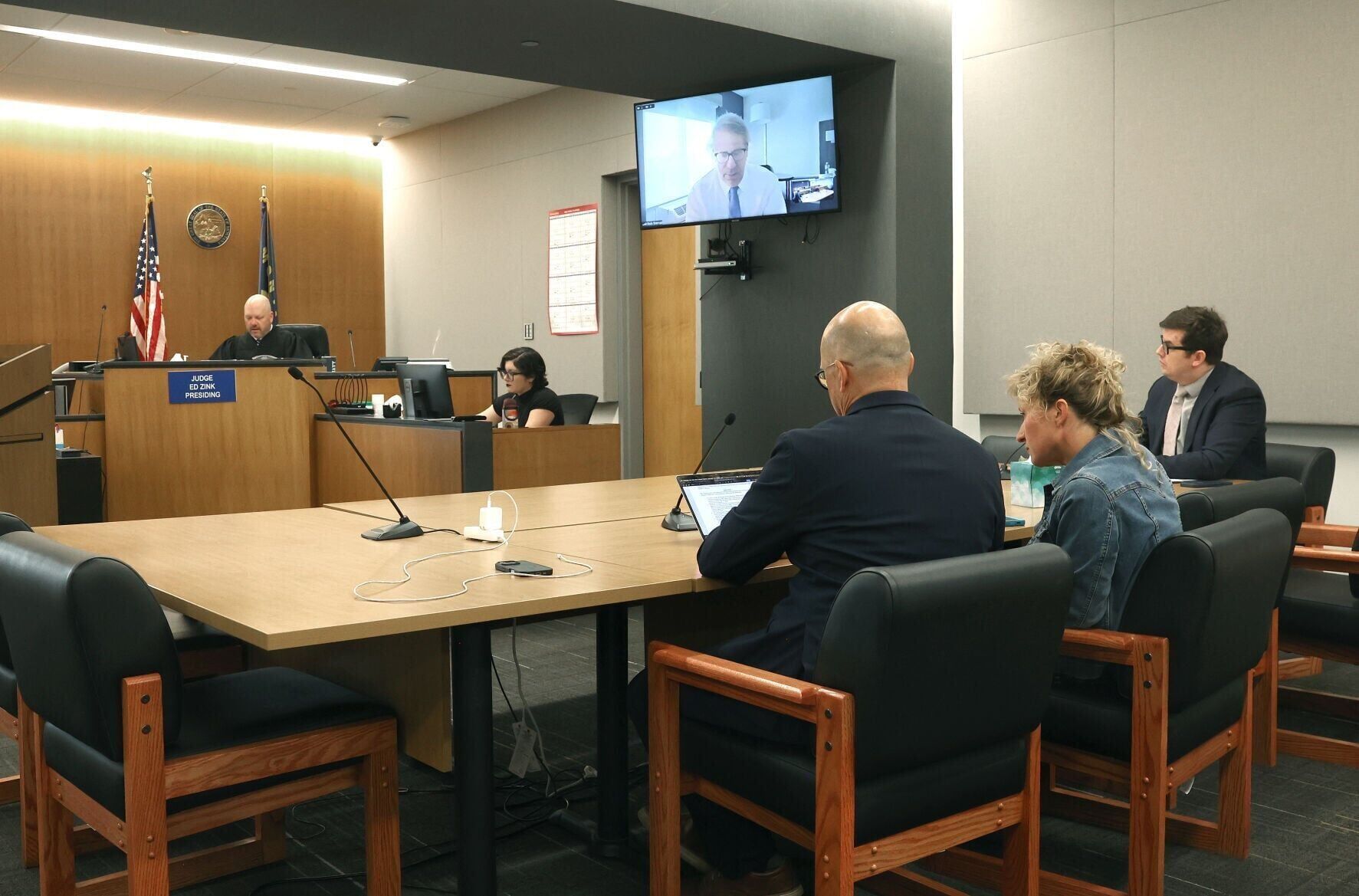
Yellowstone County and Kassi Solberg appear before Judge Ed Zink during a hearing about the petition drive concerning the Quantica Data Center on Friday.
Such an extension would give signature gatherers a better chance to meet the threshold of 16,650 signatures that's required to place the initiative on the November ballot. The county had accepted 7,706 signatures for the initiative before the halt was issued.
Steve Williams, in-house counsel for Yellowstone County, said in his opening argument that the case begins and ends with the law that the government is now trying to follow.
“Administrative error does not invalidate a statute,” the attorney stated.
County Attorney Scott Twito earlier this week recognized the timing of the county's determination that it had to abide by the earlier deadline was "terrible."
In his opening statement, Quantica’s attorney Robert Sterup similarly emphasized the importance of the law, saying the court doesn’t get to “second guess” deadlines that have been made by law.
“The Legislature gets to draw lines,” Robert Sterup told the courtroom, speaking remotely. “It’s critically important to do so with respect to elections, in order that elections may proceed in an efficient way, in a predictable way, in a way that is not chaotic.”
Although the county might not be harmed by the old deadline, Sterup said that wouldn’t be equal treatment of everyone, including Quantica. The business's rights would be “trampled” if the original deadline were to be followed.
Judge Zink scrutinized all of their positions Friday.
The judge recognized that Solberg repeatedly got bad advice from the county’s elections office to her detriment and this "perhaps lulled her into believing she had more time to accomplish this than she actually did.”
Still, that was only after Miller acknowledged that the law was publicly accessible for all parties while the initiative was made.
The judge asked Quantica’s attorney how much a citizen should rely upon the advice of an election official who “has one job.”
Sterup didn’t consider the reliance on Election Administrator Dayna Causby relevant. He had assumed the county would have already known of the law shortly after Quantica retained him and his firm, Brown Law Firm, in late June.
“It was our expectation that the county knew about it as well, and the county would raise it," Sterup said. “And it wasn't until the county filed its brief in support of expedited briefing, or it made reference to a different deadline, that I reached out to Mr. Williams.”
The judge said it seemed that the entire situation was because of two significant timings.
“First, and with respect to Ms. Solberg, she waited an awfully long time to formally commence the initiative process. ... Ms. Solberg had approximately four weeks to gather the buffer of 20,000 signatures,” Zink said, referencing Solberg's decision to first reach out about the initiative on June 9. “That's practically a relatively steep hurdle. That’s number one. But what really gummed things up, it seems to the court, is just the unfortunate issuance of Treasure County v. Edlund.”
The county learned of that Montana Supreme Court case, which restricted a voter initiative in Treasure County, the same day they gave approval to the initiative. That case constitutes the core of the county’s challenge to the legality of the initiative. Its applicability will likely be discussed in future court hearings.
Miller defended Solberg during the hearing, saying she arrived at the option of an initiative after the county commissioners repeatedly rebuffed her pleas to enforce some sort of regulation.
“She was turning one stone after another and found dead ends, and so this was the last thing that she tried to give a shot at,” Miller said.
The judge asked why she couldn’t just go the route that the county had recommended in a memo earlier this week and set a special election for the ballot initiative to be voted on.
Such an election requires 25% of signatures from Yellowstone County voters, in comparison to the 15% needed to place the initiative on an existing ballot.
That remedy would leave Solberg starting from scratch, however.
Williams, with the county, said it wouldn’t be possible to retain signatures previously gathered for the November election since the date in the language people agreed to would be different.
“The court’s correctly identified the increased 25% load, but then it's also saying now you got to go start all over again,” Miller said. “So you're talking about hundreds of hours of volunteer work in the heat of this hot summer we've been having. People, lots of time, it's just gone.”
The attorney acknowledged that the circumstances of the challenge is “messy” and “imperfect,” but said this is where courts come in to determine how law applies in the real world. Miller expressed concerns that some signature gatherers have already lost motivation after the change in deadline, adding to the need for a quick decision.
Zink, who started presiding over the case this week, faced the attorneys with furrowed brows Friday morning after around a dozen documents and new motions had been filed in the past week, included one the night before that he had only been able to skim.
While he didn't issue a decision on the deadline itself, Zink ruled on one request last week by Solberg to prevent the county from implementing signature gathering restrictions as moot after the county tabled an initial attempt. Williams told the judge the county wouldn’t have such revised restrictions ready by the previous Aug. 12 deadline.
The judge said he’ll do his “best to issue a ruling as quickly and as proactively possible.”