EPA hears pushback at agency sponsored public hearing about new lead level for Butte
Butte residents raised concerns Tuesday night during a public hearing with EPA about the agency's latest proposal to address lead contamination in residential soils and interior dust.
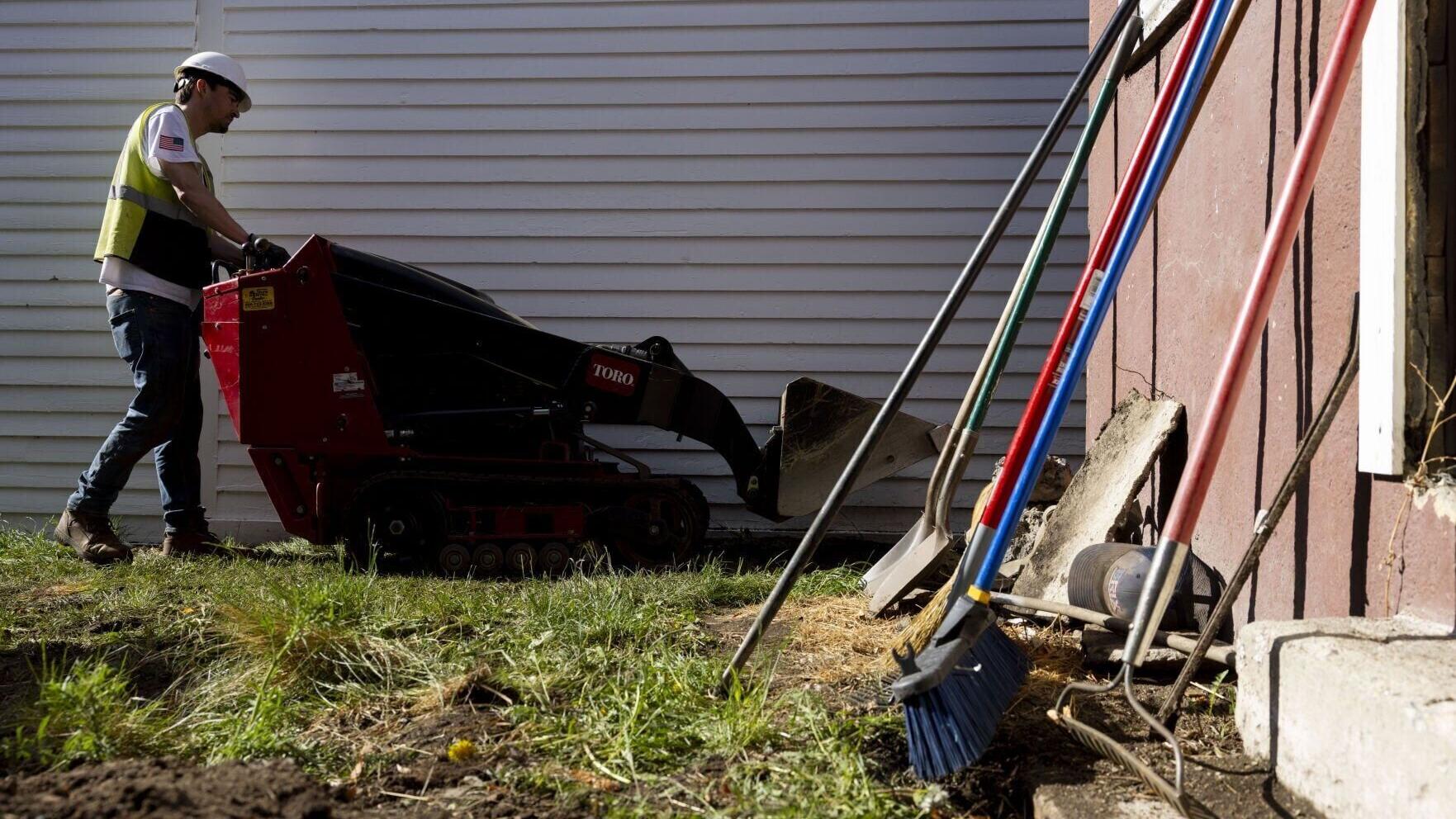
Bryce Sullivan, with Northwest Enterprises, works on a soil remediation project at a home in Butte on June 4.
EPA staff cut off Butte resident Evan Barrett when his three-minute time limit expired. He returned later for another three minutes and managed to keep testifying beyond the call to cease.
Barrett was among several people Tuesday night who criticized EPA’s latest proposal to address lead contamination in residential soils and interior dust from historic mining and smelting. They spoke during an agency sponsored public hearing at the Montana Tech Library that drew about 50 people.
On June 1, EPA proposed dropping the action level for remediation of residential soils and interior dust from 1,200 parts per million to 456 parts per million. The agency also proposed expanding the boundaries for sampling of yards and dust and related remediation when necessary.
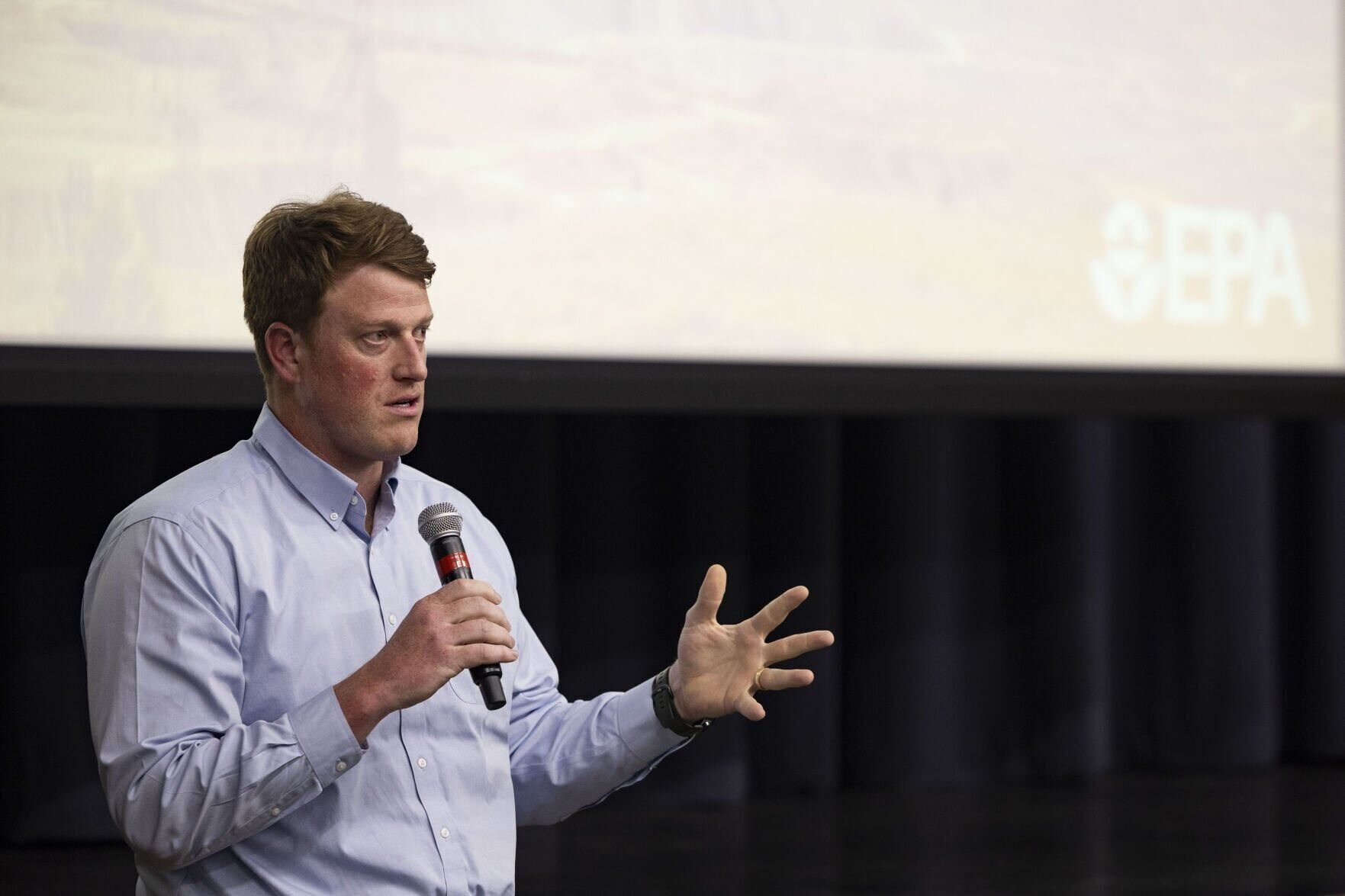
Cyrus Western, EPA’s Region 8 Administrator, speaks at a public meeting regarding the EPA's updated plan for contaminated soil cleanup. He spoke at Montana Tech in Butte on June 16.
Barrett and others acknowledged the 456 ppm was an improvement but recalled that EPA had proposed an action level of 175 ppm in October 2024 — a proposal that disappeared without a convincing explanation.
“So, in 2024, it was 175 (ppm) and now it’s 456 (ppm), and that’s raising the rate, not lowering it,” Barrett said.
J.P. Gallagher, chief executive for Butte-Silver Bow, shared similar comments. He noted that the lead action level in Anaconda has long been 400 ppm.
Both Anaconda and Butte include so-called “operable units” of federal Superfund sites where the focus is remediation of soils, groundwater and surface water contaminated by heavy metals, arsenic and other pollution linked to past mining and smelting.
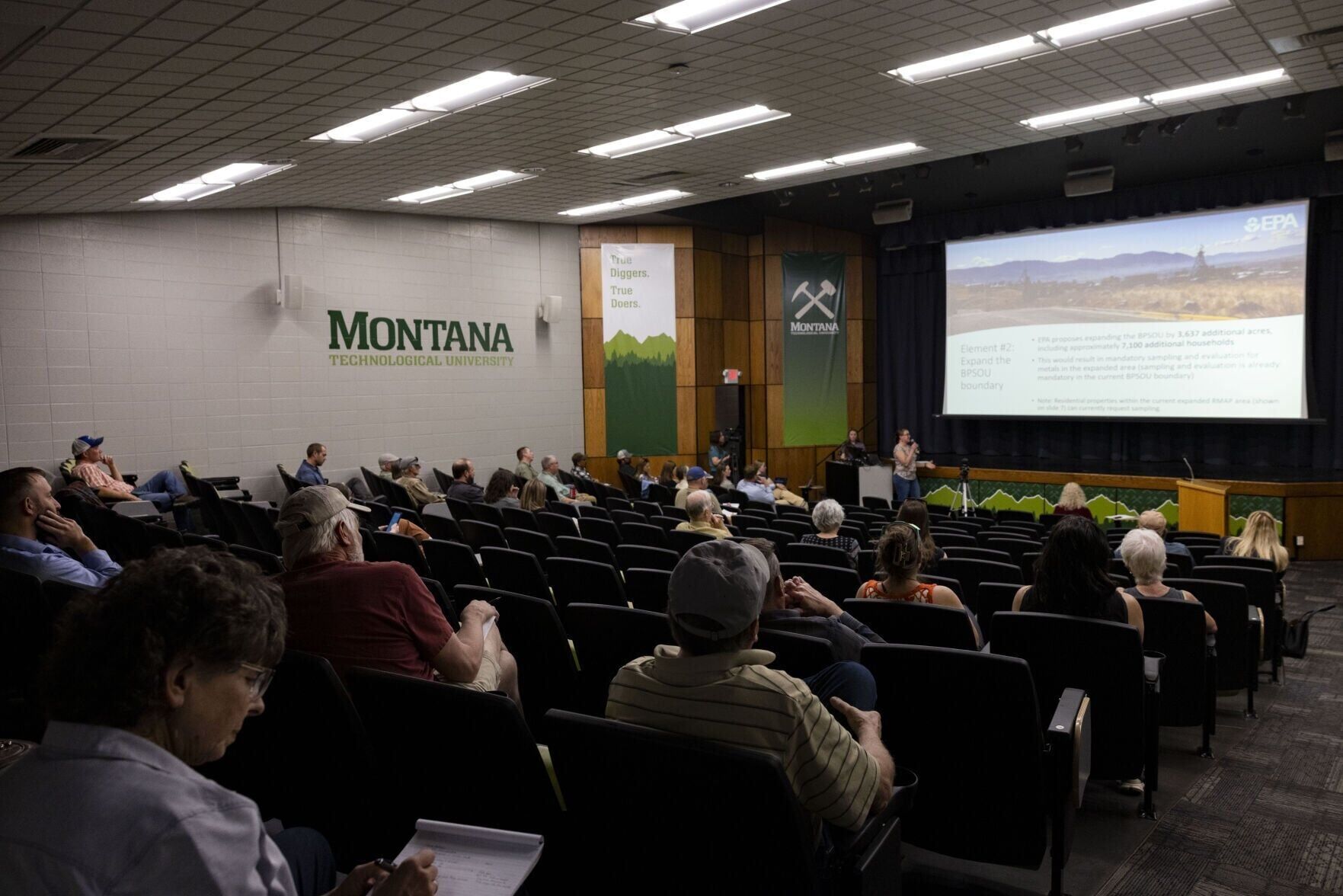
Attendees listen during a public meeting regarding the EPA's updated plan for contaminated soil cleanup at Montana Tech in Butte on June 16.
“First, the lead action level for Butte Silver Bow must not be higher than the Anaconda lead level,” Gallagher said. “The 2026 proposed plan lowers Butte’s residential lead level, and we appreciate that, but the science behind the changes from the 2024 plan needs to be clearly explained, especially why Butte's numbers differ from Anaconda’s, when both communities face similar legacy contamination.
“A higher screening level for Butte is not acceptable,” he said. “Our residents deserve the same level of protection.”
The public hearing format does not provide for immediate responses from EPA staff to comments or questions. Instead, a stenographer documents public testimony.
But Cyrus Western, EPA’s Denver-based regional administrator, spoke to The Montana Standard before the meeting.
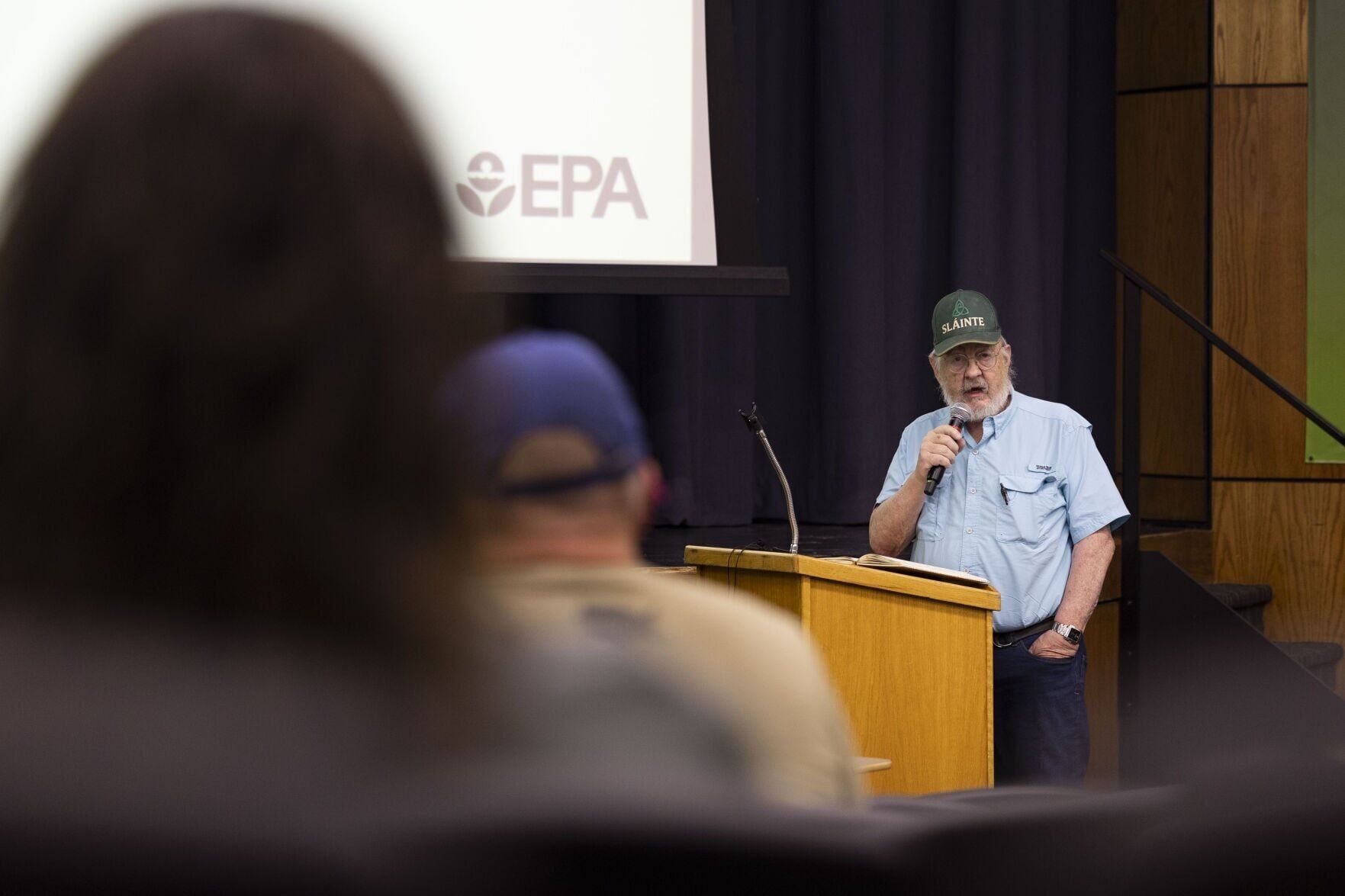
Evan Barrett offers a comment at a public meeting regarding the EPA's updated plan for contaminated soil cleanup in Butte. The meeting was at Montana Tech on June 16.
“One of the issues with that 175 number that was previously mentioned was that it would have taken forever to make meaningful progress, right?” Western said. “And so, part of the strategy was, ‘Is there a way that we can arrive at a new number that is still genuinely protective?’ I mean, that's the No. 1 thing, because we have to protect human health.”
EPA will look to Atlantic Richfield to pay for additional sampling and cleanup costs. Under federal Superfund law, the company became liable for remediation of pollution caused by the Anaconda Co., which Atlantic Richfield purchased in 1977.
Documents obtained by The Montana Standard show that lawyers working for Atlantic Richfield conveyed the company’s firm opposition to the 175 ppm standard.
More recently, the company commented on the 456 ppm proposal.
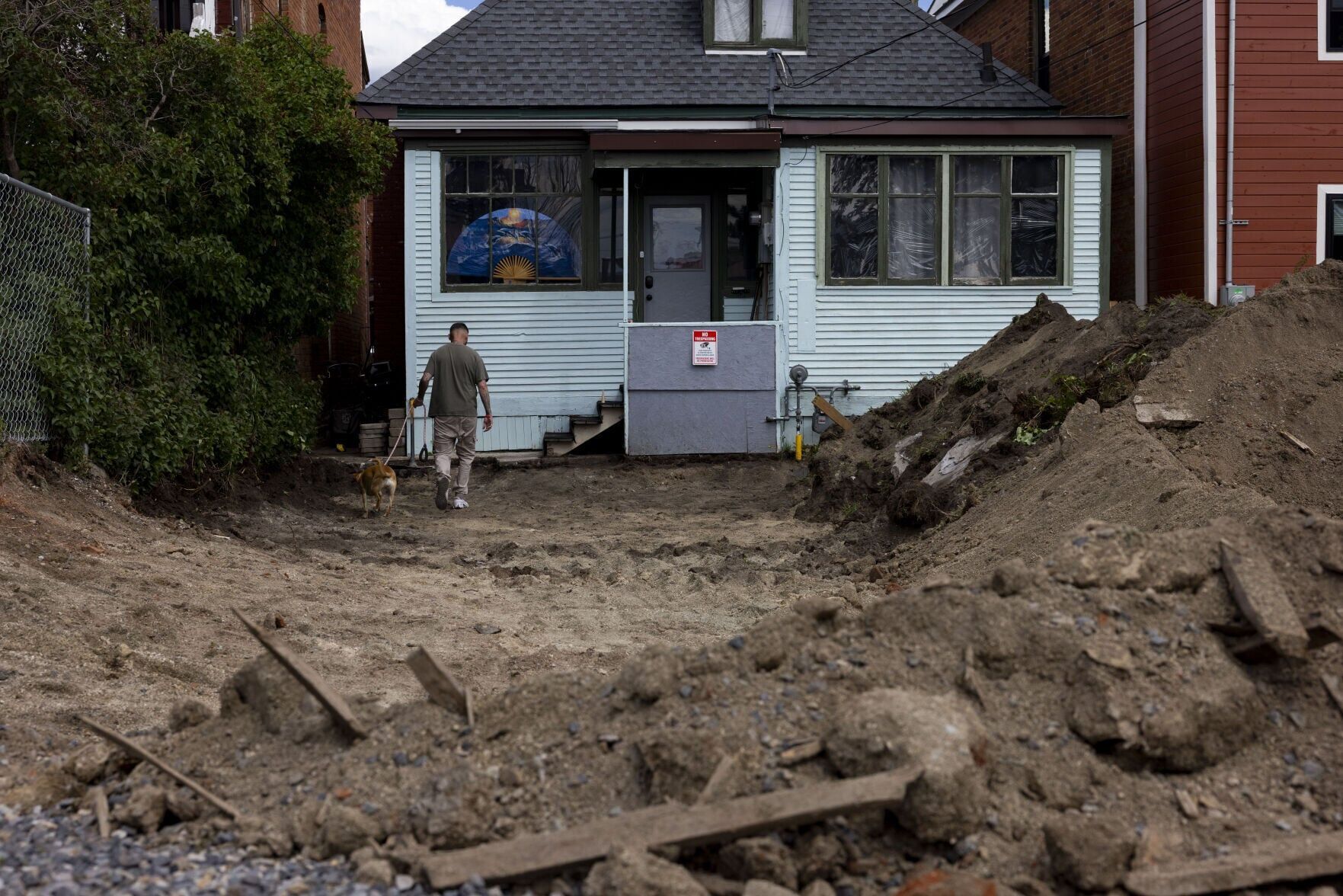
Will Schroeder walks his dog Sunshine through his yard while a soil remediation project is underway at Schroeder and his partner Breezy Cooper's home in Butte on June 3. Schroeder and Cooper decided to get their soil tested last August after one of their neighbors had their yard remediated. The results indicated levels of lead above the local action level and they were put on a list for remediation. The project is one of the first to take place this year.
“Atlantic Richfield will review EPA’s Proposed Plan for Butte and remains committed to working with EPA, the state of Montana and Butte-Silver Bow to implement an effective and protective cleanup for the Butte community,” the company said in early June.
The Centers for Disease Control and Prevention has said that no level of lead is safe for human beings and that children are especially vulnerable to the effects of the heavy metal.
That reality led Barrett, Gallagher and other speakers to object to the EPA’s 15-year estimate for addressing lead contamination if the boundaries expand for sampling and cleanup. An earlier projection envisioned 25 years.
Fifteen years is still too long, Barrett said.
“And if you look at EPA’s record in other communities around the nation, they have been able to drive resources to the area and do it much quicker,” he said.
Butte native Don Petritz was another who weighed in. He referenced the late Fritz Daily, a longtime watchdog of the Superfund process. Daily died in January.
Petritz noted how Daily used to joke, wryly, that he’d likely be buried in a Butte cemetery near the Bert Mooney Airport before lead cleanup was complete.
“I don’t want to be out there with Fritz, waving in the airplanes, before anything is done,” Petritz said. “We need to make sure that our city is safe for our children, our grandchildren and into the future.”
Western addressed the 15-year timeline before the hearing began. He said the crux will be gaining access to residential properties to sample and remediate.
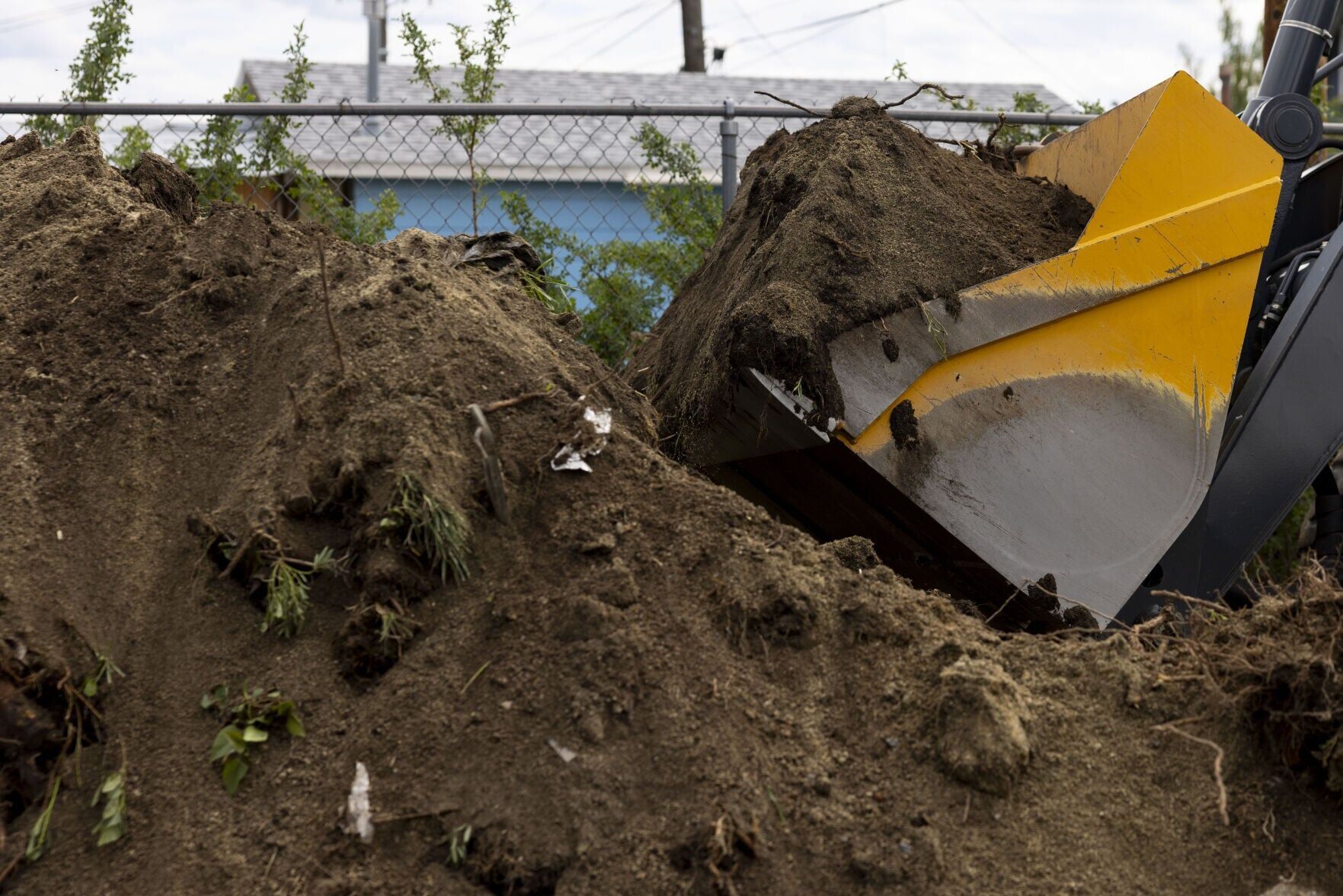
A crew with High Country Concrete scoops up dirt while working on a soil remediation project at Will Schroeder and Breezy Cooper's home in Butte on June 3. Schroeder and Cooper decided to get their soil tested last August after one of their neighbors had their yard remediated. The results indicated levels of lead above the local action level and they were put on a list for remediation.
“I must emphasize 15 is a conservative number,” he said. “We absolutely can do faster, way faster. Probably the No. 1 thing is access. Because at the end of the day, if we knock on someone's door and they say, ‘No, I don't want you coming on my property,’ that slows us down, right?”
Western said a best-case scenario, in which the sampling and cleanup crews receive property owner consent for access, “we could cut that number, probably, to less than 10.”
He said he did not think it would be necessary to add crews to the existing Residential Metals Abatement Program in Butte-Silver Bow County.
“I think we have the resources necessary to move fast,” Western said. “Again, if it all goes well, we can move faster than what we projected.”
Western said the agency will prepare a responsiveness summary to all public comments received, either Thursday or through other means.
He said he anticipates EPA will release its final lead-level guidance this summer. He would not speculate about a specific date.
Duncan Adams covers the environment, natural resources, Montana Tech and other beats for The Montana Standard. Reach him at (406) 496-5572 or duncan.adams@mtstandard.com