Before ExxonMobil sued Montana Department of Transportation, the company sued 19 others
The lawsuit that the state agency was dismissed from had listed initially around 20 defendants in a list that takes up around a whole page of ExxonMobil's federal complaint.
ExxonMobil’s legal challenge against the Montana Department of Transportation isn't the company's its first lawsuit in trying to recover costs related to an ongoing petroleum cleanup in east Billings.
The oil company alleged earlier this month that the state agency had violated Montanans’ right to a clean and healthful environment. But before that, they'd had previously sought recovery of costs in the federal court from MDT, starting in December last year, which manufactured road materials in the area for decades.
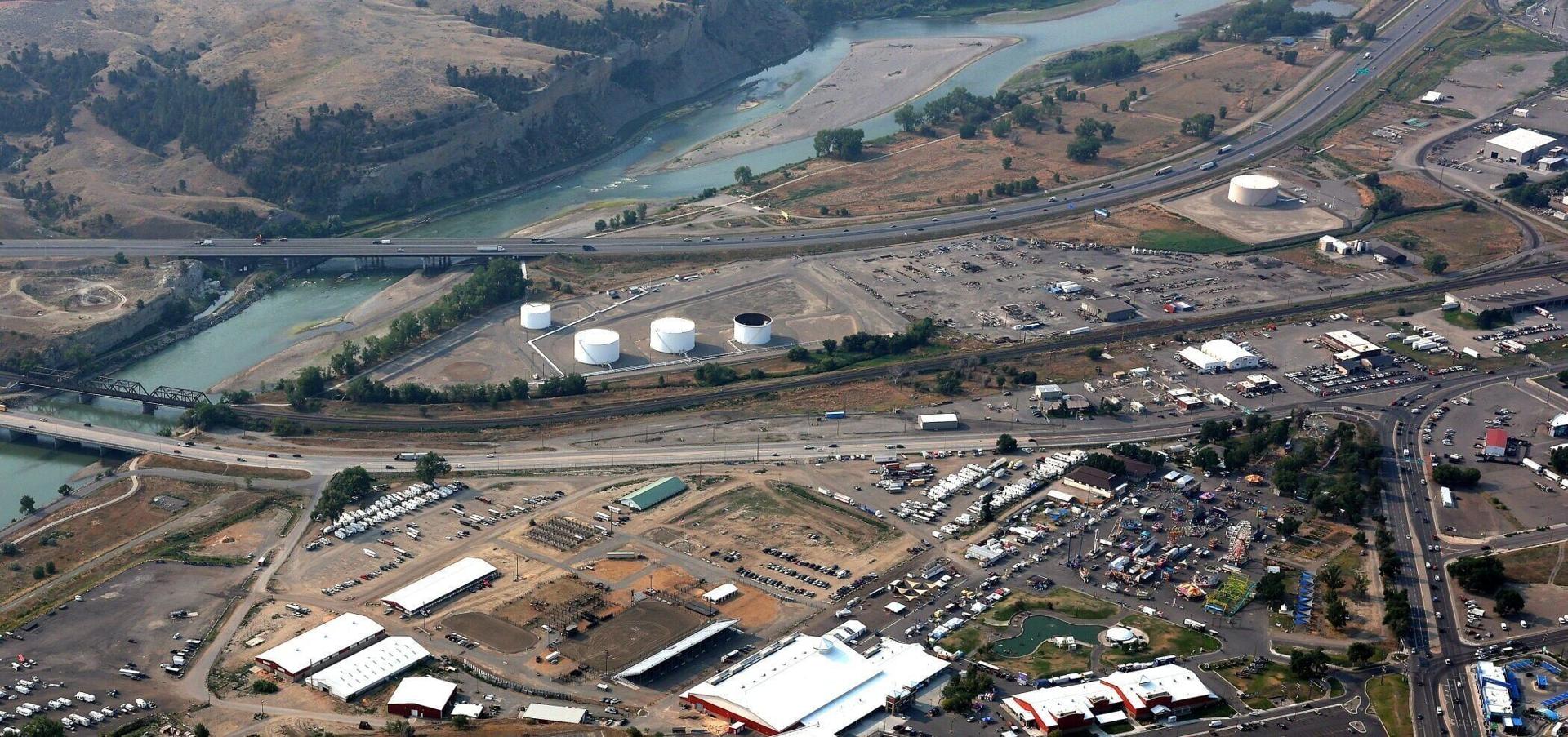
An aerial view shows the proximity of the Yale Oil property to MetraPark, I-90 and the Yellowstone River.
MDT was ultimately dismissed by Exxon from the lawsuit in May, after the agency considered it in violation of the U.S. Constitution, which can protect states from challenges in federal courts.
But MDT isn't the only entity that Exxon is trying to recover costs from for a cleanup that started in 2011 and that the multi-billion-dollar oil company has said has cost them about $10 million so far.
The initial lawsuit the state agency was dismissed from noted 20 entities sued in a list that takes up around a whole page of Exxon's complaint.
While MDT stood out as the only government entity sued, other defendants include practically anyone or any business that had property in the area at some point. That includes Phillips 66, BNSF, Par Montana, Montana Rail Link and several Billings residents and family trusts that owned land in the area at one point or another. The site in east Billings is bordered by the Yellowstone River, commercial properties and a railroad.
Connecting all of the defendants is the Montana Department of Environmental Quality identified them as potentially contributing to conditions at the ongoing petroleum state superfund site in 2011, Exxon said in its complaint.
The details of the lawsuit are similar to the more recent lawsuit targeting just MDT.
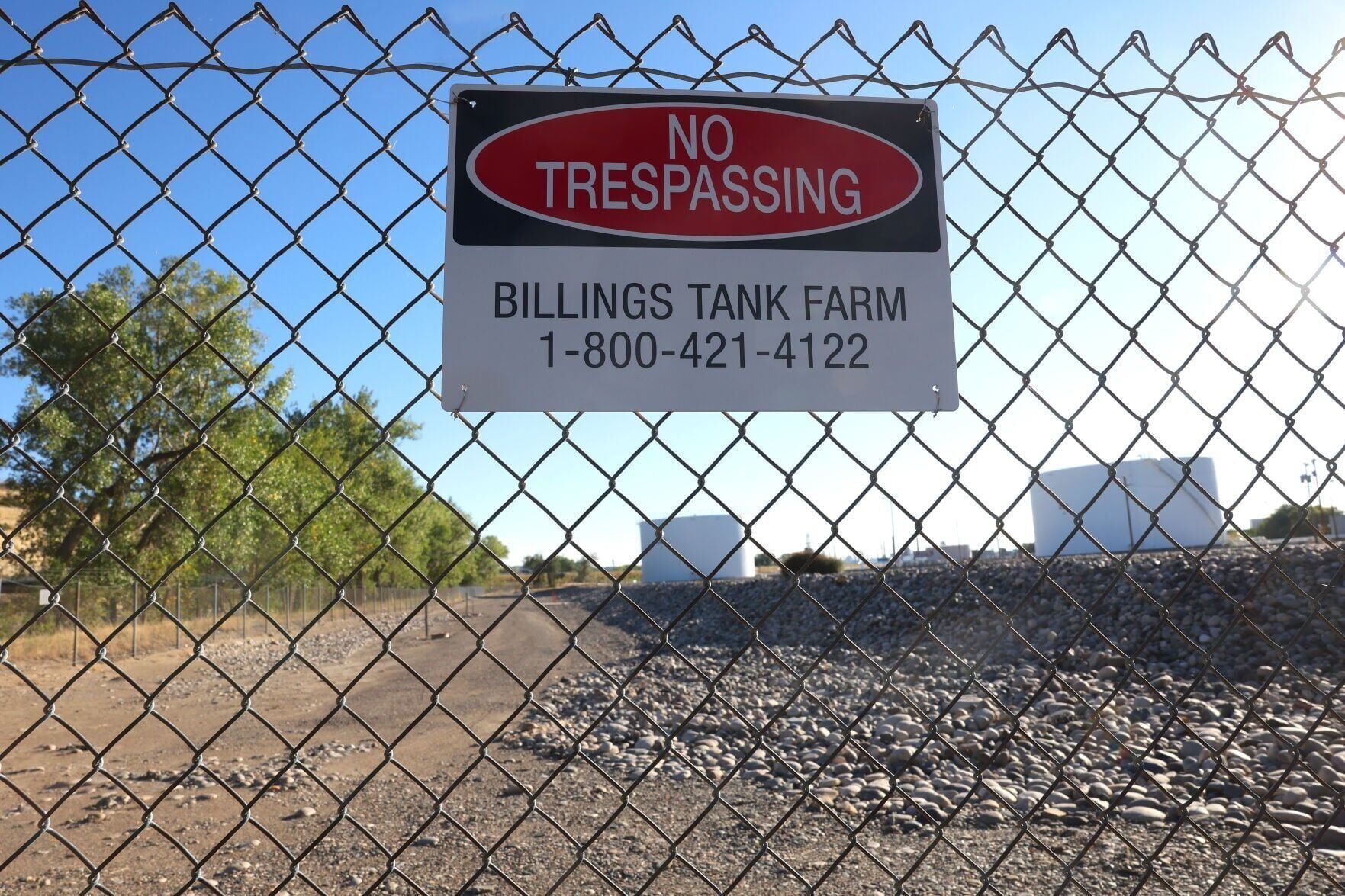
The Billings Tank Farm site can be seen from the bike path near Coulson Park.
The site became contaminated with high amounts of oil back in the 1940s when it was home to a Yale Oil refinery. One such oil spill during its operations saw oil spilling out into the streets. Yale Oil ultimately became part of multi-billion-dollar company Exxon decades later, after the past refinery operator there had removed 1.26 million gallons of petroleum from the site in 1944-1949. The refinery’s operations halted in 1949.
Exxon now functions as the leading entity in the investigation and cleanup, with the company stating in its federal lawsuit that it has spent more than $10 million in response to the 70-acre site. Contaminated asbestos and soil have recently been removed from the location, in addition to ongoing monthly petroleum removal. Petroleum in water and soil can lead to adverse health effects like cancer and liver damage. A ditch running through the property contributes water to the Yellowstone River.
Like the more recent lawsuit against MDT in Yellowstone County District Court, Exxon doesn’t believe it should be the only one paying for costs. The legal action against individuals, BNSF and other oil companies hopes to recover the costs of the cleanup for them.
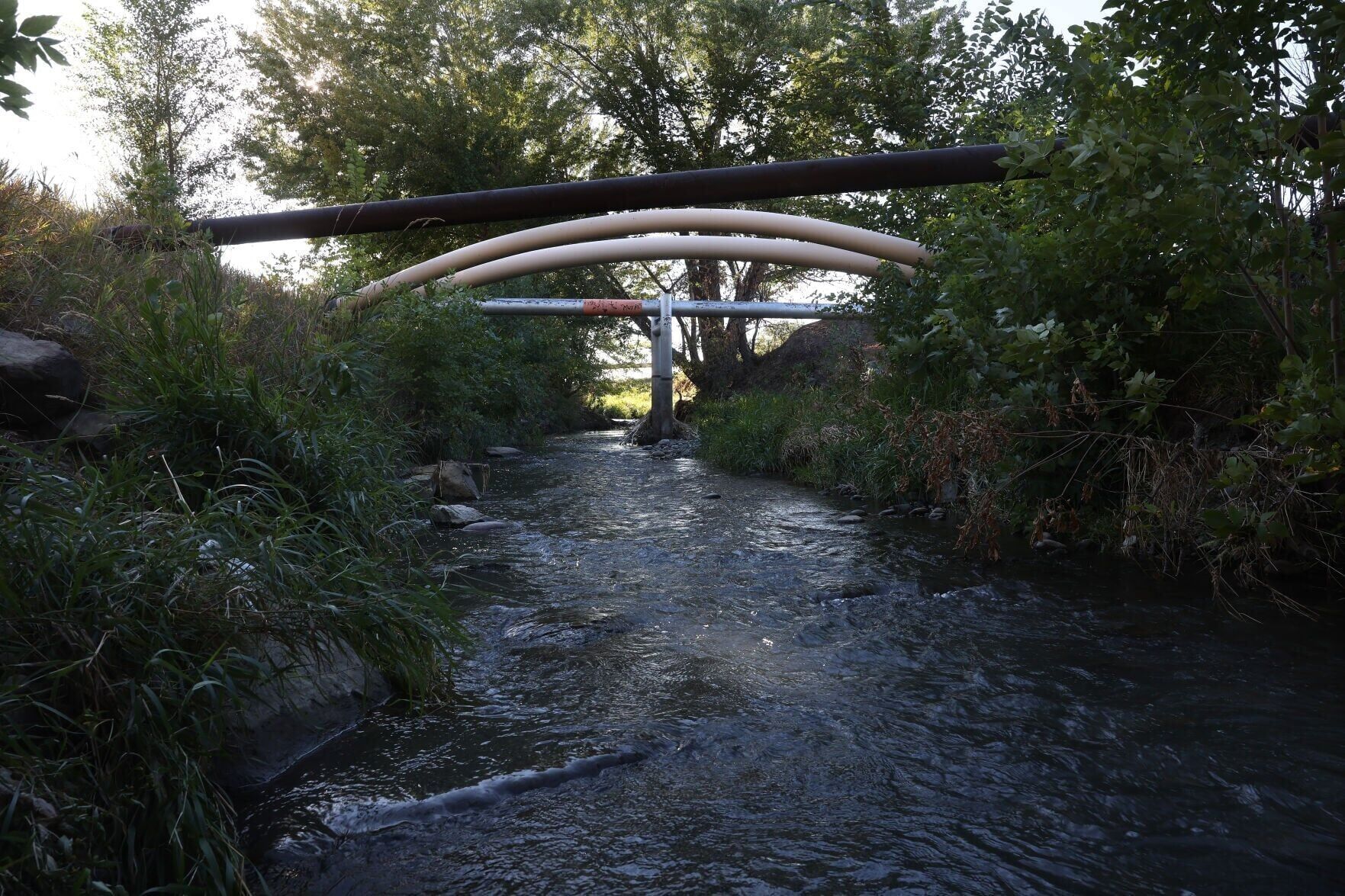
Pipelines cross the Yegen Drain where it flows into the Yellowstone River near Coulson Park.
The site was first identified as a superfund site by the Environmental Protection Agency four decades ago, based upon a recommendation of the Montana Department of Environmental Quality’s predecessor. In 2011, the DEQ identified Exxon as potentially responsible for its release of hazardous materials.
Present-day uses of the site include auto sales, warehouse storage, broadcasting company offices, petroleum pipeline operations, industrial fabrication, road material mixing and storage and the rail line.
The complaint noted that between the rail line and right-of-ways, BNSF possesses some form of control over around 74% of the site affected by petroleum contamination. It added that BNSF accepted hazardous substances for transport to the site for treatment or disposal.
In response, BNSF denied that. Further, the railroad company said it already contributed time and money for the past investigation, totaling around $300,000 from 1994 to 2006, alongside others. BNSF noted that refinery activity historically occurred across the entirety of the site.
BNSF countered that the oil company had yet to pay a fair and equitable share in cleaning up the petroleum, as required by federal law. Further, such substances were the actions of a third party, and not the railroad business, said.
Like others named in the lawsuit, the business stated it shouldn't have to pay for the cleanup costs.
A trial is set for October 2028.