‘At the last possible hour,’ Montana Supreme Court denies AG petition in term limits dispute
Judge Christopher Abbott sided with Reps. Llew Jones and Steve Fitzpatrick, blocking an official opinion from the attorney general that would have booted them from the ballot.
Two of the Montana Legislature's most tenured members will be eligible for reelection after a week-long legal frenzy that threatened to have them thrown off the November ballot.
A legal opinion issued last week by the state attorney general deemed Republican Reps. Llew Jones and Steve Fitzpatrick to be ineligible to run for reelection only days before ballots were to be certified, citing state law around constitutional term limits.
A Lewis and Clark County District Court judge on Wednesday ruled in favor of Jones and Fitzpatrick, who sued Attorney General Austin Knudsen and the secretary of state last week to block them from enforcing that legal determination.
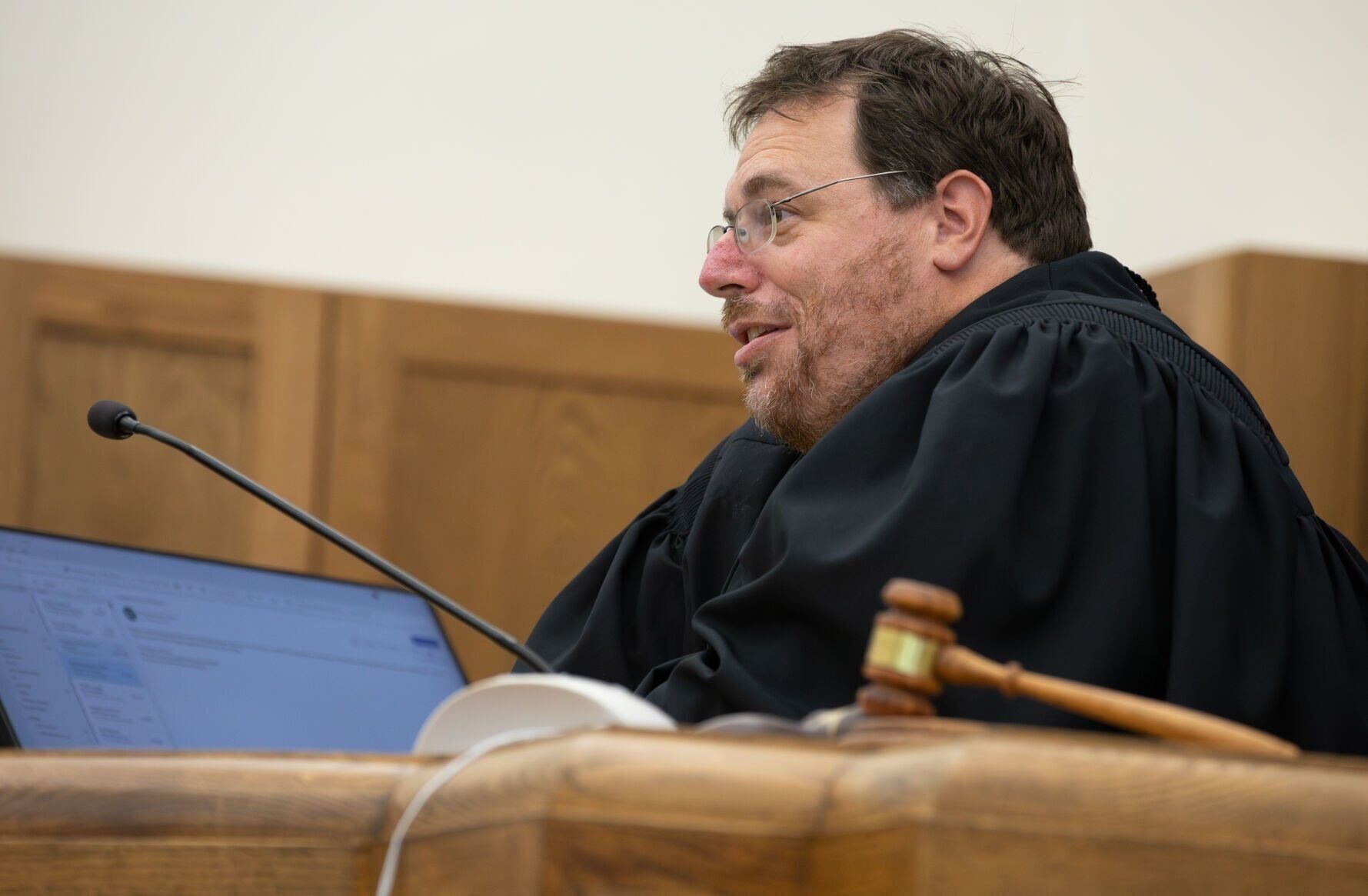
Lewis and Clark County District Court Judge Christopher Abbott listens to attorneys during a hearing on Aug. 18.
In a last ditch effort from Knudsen’s office on Wednesday afternoon, attorneys filed an emergency petition with the Montana Supreme Court, asking it to pause the district court decision and delay Thursday’s ballot certification deadline.
But by the time the dust settled at about 5 p.m. on Wednesday, Jones and Fitzpatrick were deemed eligible for the Nov. 3 general election ballot after the court declined Knudsen's petition.
“It was a frivolous, meritless writ of supervisory control,” Fitzpatrick said moments after the court issued its denial. “I, as a lawyer, would never have even filed something like that, it’s so meritless.”
This legal process has been jammed into a single week, a crunched timeline that has become central to the debate. Knudsen issued his opinion, which had been requested in July by Senate President Sen. Matt Regier, R-Kalispell, on Aug. 11.

Rep. Llew Jones, R-Conrad, the Senate District 9 GOP primary winner, sits on a bench listening to attorneys speak during a hearing on Aug. 18 in Lewis and Clark County District Court.
District Court Judge Christopher Abbott sided with the plaintiffs after hearing arguments from both sides on Tuesday.
"The current tumult is entirely the consequence of the choices to request, and issue, an opinion upending the status quo while an election is underway," Abbott wrote in his decision.
A five-justice panel that included Chief Justice Cory Swanson and Associate Justices Laurie McKinnon, Jim Shea, Beth Baker and Jim Rice echoed that argument in their decision to deny the attorney general’s petition.
“The urgency was created because of a matter that could have been raised much sooner. We have previously ruled that a party cannot manufacture urgency or emergency to fulfill the necessary criteria to justify a writ of supervisory control," they wrote. “We note that in this case, which raises novel legal and Constitutional issues which require careful consideration by the Court, there is no reasonable prospect of ruling on the merits at literally the last possible hour for such a decision to go into effect.”

Abbott was especially keen on the argument that Regier did not have the authority to request Knudsen’s opinion on the matter. State law sets out who can request an official Attorney General Opinion; it also says that the requester is limited to questions about their own office.
In this case, Abbott found that Regier’s request was not germane to his office or the authority of the Senate.
“Rather, the President’s question is about the electoral and political fortunes of the Republican Party in a partisan election,” the judge wrote, noting that the initial request appeared solely concerned about the eligibility of Jones, one of Regier’s longtime adversaries in Helena.
Abbott’s order also addressed the discrepancy between previous legal opinions on term limits as they were enshrined by voters in a 1992 ballot initiative. While a purely literal reading of that constitutional text leads to Knudsen’s opinion, Abbott said, the context of what voters understood at the time they passed the measure matters, as well.

When the ballot initiative went before voters in 1992, more than half of senators had been there longer than eight years. One member of the House of Representatives had held that seat for 33 years.
“The objective of the ballot initiative was to dislodge these long-term legislators who, as of 1992, had been occupying their seats for decades,” Abbott wrote.
Someone considering this initiative at the time would understand it was aimed at public officials in those offices by implementing eight-year terms, Abbott said. Jones, for example, is currently abiding by those term limits by moving from the House to the Senate.
The attorney general’s office, in its petition to the high court on Wednesday, argued Abbott was wrong to round in this additional context. A “purely literal reading” is the correct reading, Montana Solicitor General Christian Corrigan wrote in the court filing.
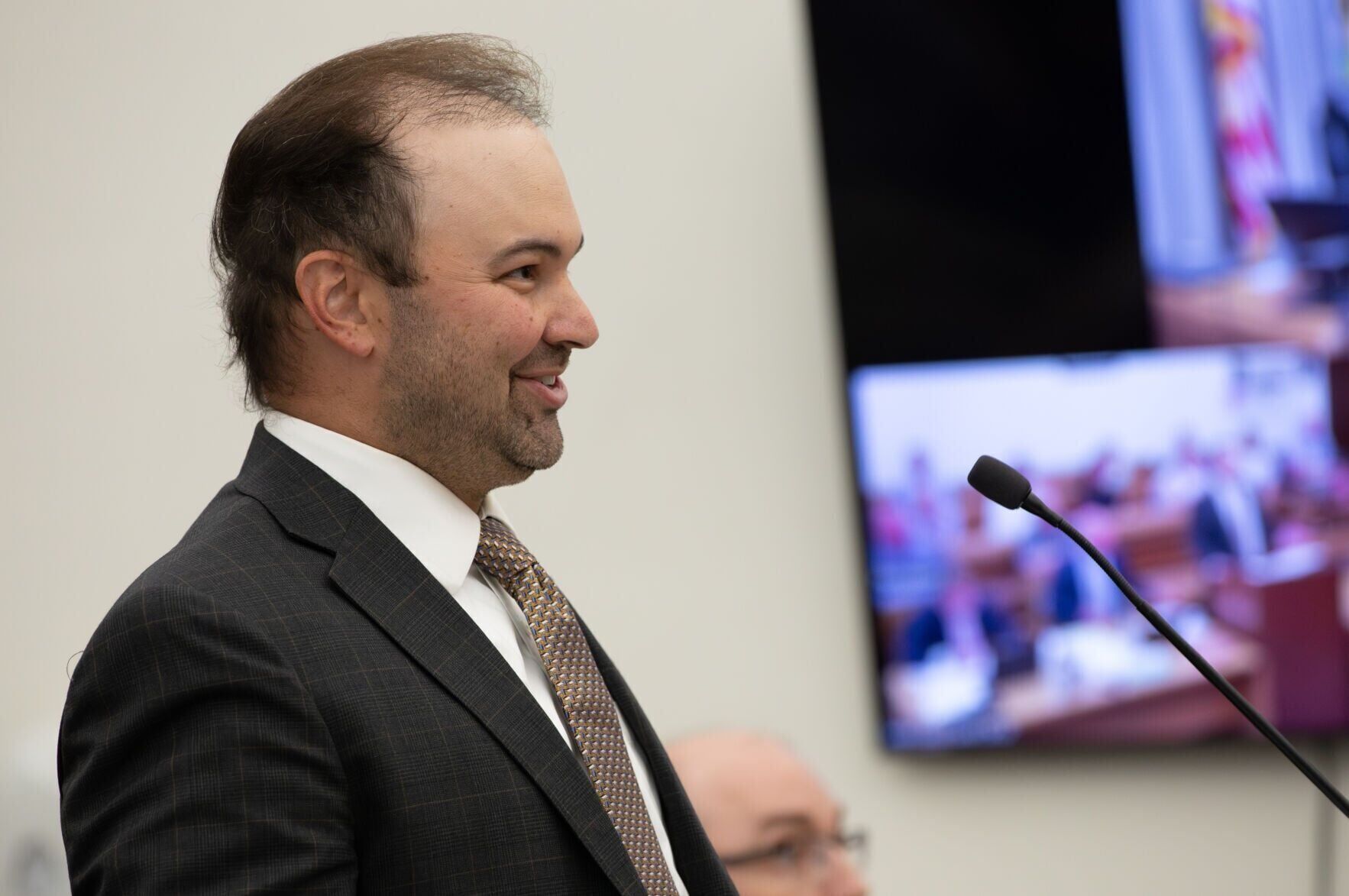
Montana Solicitor General Christian Corrigan smiles listening to Lewis and Clark County District Court Judge Christopher Abbott on Aug. 18 during a hearing.
Attorneys for Knudsen’s office also countered the idea that Regier had no authority to request the AG’s opinion. The Montana Constitution says each chamber “shall judge the election and qualifications of its members,” which Corrigan said was the basis of Regier’s inquiry into term limits, a separate provision of the constitution.
“The Senate president has broad authority to ask what that provision means for purposes of evaluating the qualifications of prospective senators and for legislative purposes,” Corrigan wrote. “The Knudsen Opinion was therefore authorized and lawfully issued.”
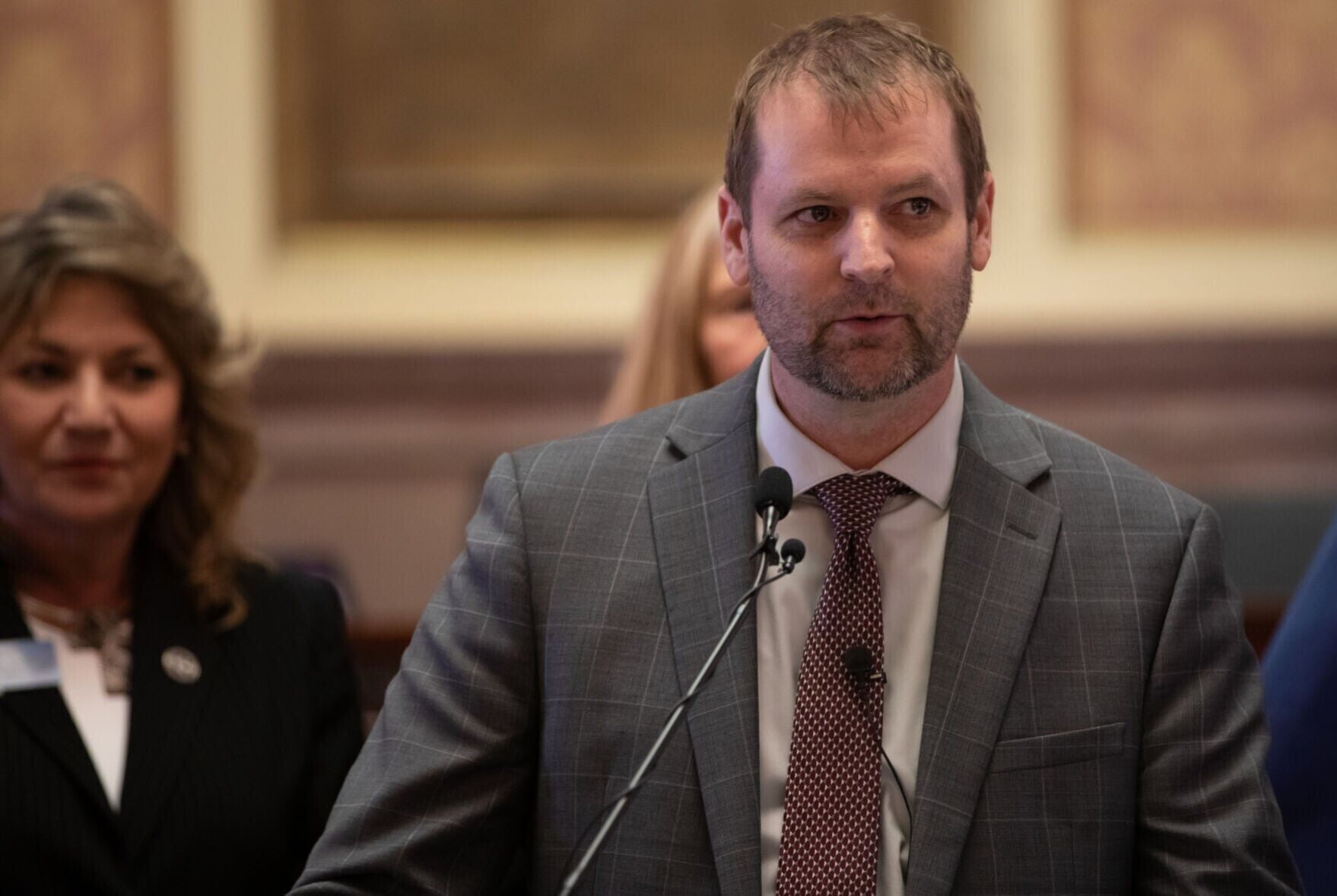
Senate President Matt Regier speaks at a press conference following the final day of the 2025 Montana Legislature.
Regier rejected the suggestion that his request had political motivations.
He called Jones the "poster child" for term limit violations, and said it was "nothing personal." Asked about the timing being so close to the ballot certification deadline, Regier said changing the status quo would have provoked a reaction no matter when he did it.
“When it was asked for, somebody was going to be upset and we need to go back to the principle of what the voters voted for in the ‘90s, and that’s term limits,” he said.
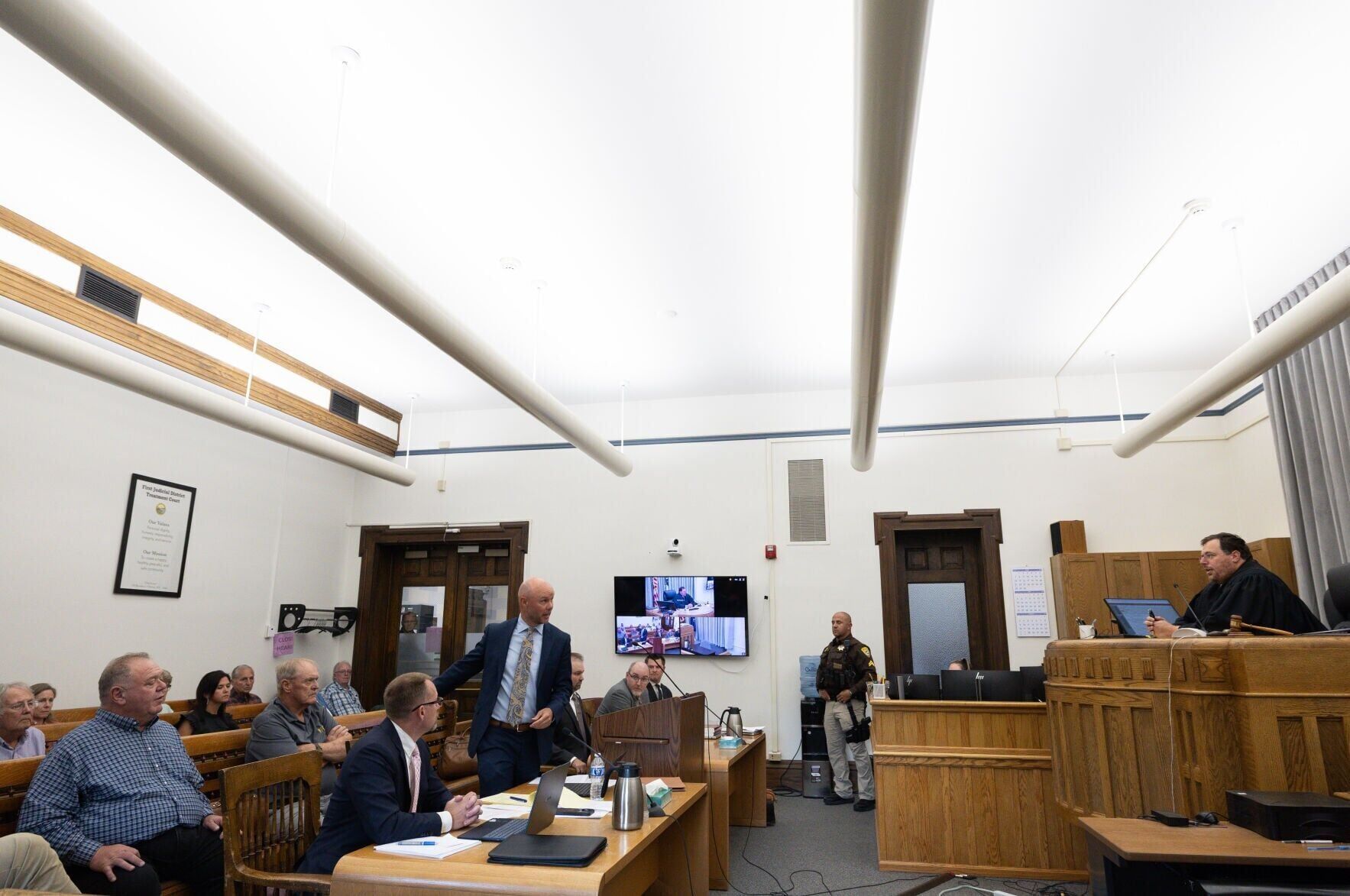
Attorneys speak in front of Lewis and Clark County District Court Judge Christopher Abbott on Aug. 18 for a hearing.
Prior to the Bullock opinion in 2012, the Montana Legislature passed a bill in 2011 that effectively codified chamber switching as a way to clarify the question that’s at the heart of this dispute.
Steve Gallus, a Butte Democrat who sponsored the 2011 legislation, said the measure was seen by most lawmakers at the time as uncontroversial. He said the constitutional language implemented by the ballot initiative created some ambiguity that a number of lawmakers and legislative staff wanted to clarify.
“It wasn’t really highly political, and it passed because, I think people believed that it was trying to clarify things and help,” Gallus said.
Jones and Fitzpatrick, meanwhile, have disavowed Regier's maneuver as a political stunt.
Though Regier, a front man for the Republican party's most conservative flank, has held leadership positions in both chambers, Jones wields substantial power as the de facto head of a moderate, bipartisan coalition that has advanced shared priorities against the far-right in recent sessions, despite the GOP majority in the Legislature.

House Majority Leader Steve Fitzpatrick, R-Great Falls, stands outside Lewis and Clark County District Court Judge Christopher Abbott's courtroom on Aug. 18.
Following Abbott's ruling, Jones said he was "indeed pleased" at the outcome, but that he anticipated more attacks against him would follow.
"This is far from the last bit," he said. "They've made it clear that they are going to throw every road block into the road."
A spokesperson for the attorney general's office said its lawyers were reviewing the Supreme Court's ruling to determine next steps.
"We'll continue to defend the constitution and the term limits overwhelmingly supported by Montanans," said Amanda Braynack, Knudsen's communications director.

Carly Graf has worked for the Montana State News Bureau since 2023.