Gallatin County crime trends show rise in violent crime, drug shifts
BOZEMAN, Mont. — New law enforcement data in Gallatin County shows violent crime rising over the past decade as investigators also reported changes in the local drug picture.
BOZEMAN, Mont. — New law enforcement data in Gallatin County shows violent crime rising over the past decade as investigators also reported changes in the local drug picture.
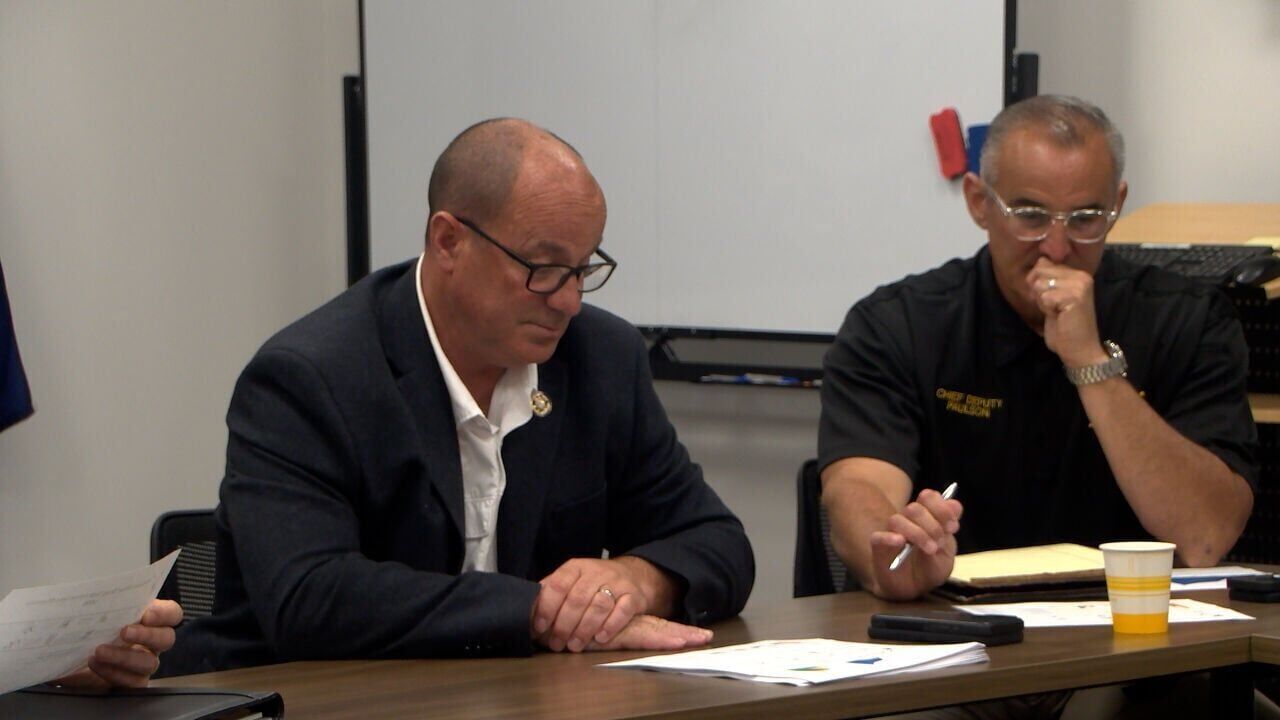
Monday afternoon, local law enforcement leaders hosted a roundtable discussion with Republican Senate candidate Kurt Alme to share key trends and issues they face.
Officials discussed data showing Gallatin County’s population grew 30% between 2015 and 2024. During that same stretch, violent crime rose from about 260 to nearly 400reported crimes per 100,000 people.
Bozeman Police Chief Jim Veltkamp reported violent crime within the city is trending up, noting that just in the last month, a shooting outside a bar downtown left one person dead. Along with that rise in crime, officials reported officers seeing more mental health-related calls.
“I can tell you our officers are dealing with a lot more calls where behavioral health is somehow a component, whether that's drugs or something else. They'rejust — we're seeing a lot more of that. I think, in part, some of that is tied to the crime,” Veltkamp said.
Drugs were a major focal point throughout the conversation.
Investigators with the Missouri River Drug Task Force shared that they were seeing less fentanyl and that it was more often showing up in powder form, rather than pill form seen frequently several years ago. Data from the Task Force shows seizures of meth and fentanyl have gone down since 2023 while cocaine has gone up. Sgt. Justin Schnellbach said Bozeman seems to be an outlier, with more cocaine found here than other Montana cities. They attribute this to a wealthier clientele of drug users.
The Task Force said they are working hard to get to the root of the drug problem, by working their way up the chains of traffickers to take out whole organizations. A problem they face recently is traffickers who are sent in as “ghosts.” They have no criminal history, which means often it is difficult to prosecute them because they do not meet sentencing guidelines that would keep them incarcerated for a significant amount of time, explained Sgt. Schnellbach.
“As they adjust, I know that our system is going to have to adjust, and the federal system you have to adjust to figure out whatever sentencing guidelines may or may not have to switch around and change,” Sheriff Dan Springer said.
In the Gallatin Valley, a recurring issue for many agencies is the cost of living. Many employees with the Gallatin County Sheriff’s Office live in Broadwater County and commute to save on cost-of-living expenses, Springer said. For Bozeman Police, their department is seeing less applicants during hiring processes, Veltkamp added. However, Gallatin College has launched a Law Enforcement Academy, which is currently seeing its first students, both said.
Springer noted mental healthcare access is slowly growing in the Gallatin Valley area, with Bozeman Health opening its adult inpatient psychiatric unit. It has been easier to help people access care that way, he said.
Access to mental healthcare will also be key in reducing drug use and crime moving forward, Alme said.
“We need to be able to deal with treatment of both substance abuse and mental health issues, as well as prevention on the substance abuse side,” Alme said. “We need to reduce demand for drugs if we're going to get on top of drug usage. So that's as critical as the supply side and all the enforcement work that law enforcement is doing to keep these poisons off our streets in the first place.”
The opening of the new FBI field office in Billings will also make it easier for local law enforcement to work with federal partners and access federal resources, Alme said. Along with that office will come a child abduction response unit that Alme said he hopes will be able to make a difference with Missing and Murdered Indigenous persons but also missing children statewide.
New resources also mean an FBI SWAT team that can be deployed to work with local law enforcement.
“We need to support our law enforcement as they continue, especially our local law enforcement, as they continue to keep our neighborhoods safe,” he said.”
NonStop Local also reached out to the other Senate candidates, independent candidate Seth Bodnar and Democratic candidate Alani Bankhead.
Bodnar released the following statement:
"Too often, the broken Washington system plays politics with the safety of Montana families: shutting down the government, supporting pardons for criminals who attack cops, and leaving our law enforcement officers to do more with less. As Montana's Independent Senator, my top priority will be giving our local, state, and federal law enforcement the real resources and support they need, cracking down hard on the drug traffickers and dealers poisoning our communities so that they are prosecuted to the fullest extent of the law. At the same time, I will fight to expand mental health care access across our state, because right now our officers are being asked to serve as cops, social workers, and mental health providers all at once. I will work with anyone—Republican, Democrat, or Independent—to back those who protect and serve Montana, and I will never excuse, minimize, or support pardoning violence against them for any reason.”
On a phone call, Bankhead spoke about her time touring through Montana and seeing the different law enforcement agencies that have been spread thin or lack proper resources.
“We just need to do better in catching up to what is happening in terms of criminal activity and just holding people accountable. And on top of that on the survivor side of things, if you’re a victim of a crime, folks deserve to feel supported by their law enforcement system,” she said. The feedback Bankhead has heard from law enforcement is they want stronger legislation for victim rights.
In February, she retired from the Air Force Office of Special Investigations. She worked in national and international law enforcement cases and worked as a state attorney general agent working as a deputy on an Internet Crimes Against Children Task Force.