Montana volunteers join national push for forest funding, permitting reform
Montana members of Citizens' Climate Lobby (CCL) took part in the organization's national summer conference and lobby day in Washington, D.C. recently, joining more than 850 volunteers from all 50 states in over 400 meetings with congressional offices. The group pressed Congress for robust funding for the U.S. Forest Service, passage of the Fix Our Forest Act and comprehensive permitting reform aimed at expanding the nation's energy grid.
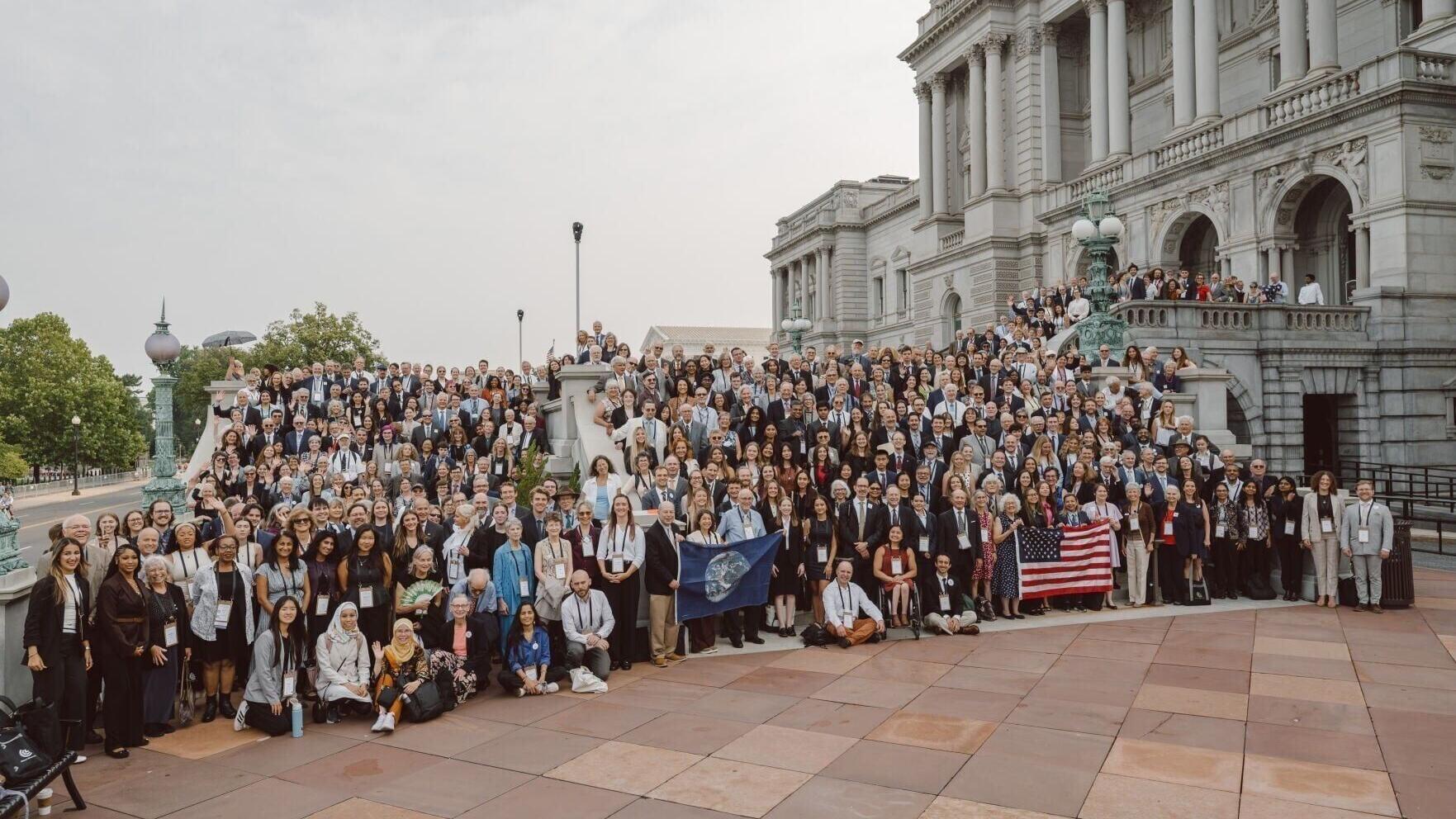
Over 800 volunteers from Citizens’ Climate Lobby, including residents from Montana, gather at the Thomas Jefferson Building at the Library of Congress for their annual lobby day on July 28th.
Montana members of Citizens’ Climate Lobby (CCL) took part in the organization’s national summer conference and lobby day in Washington, D.C. recently, joining more than 850 volunteers from all 50 states in over 400 meetings with congressional offices. The group pressed Congress for robust funding for the U.S. Forest Service, passage of the Fix Our Forest Act and comprehensive permitting reform aimed at expanding the nation’s energy grid.
CCL counts roughly 3,200 members statewide, according to Alex Amonette of Big Timber, who represents Sweet Grass County with the group. Only a handful of Montanans made the trip to Washington in person this round, Amonette said, but many more contributed messages, letters and recorded testimony that were delivered alongside the in-person meetings — including a video message recorded by Tom Osborne (formerly of Absarokee) Sandy Welgreen and Sister Ann Schoch of Billings.
Osborne and Welgreen also met directly with Montana’s congressional delegation at their offices in Helena, an approach Osborne said has been just as valuable as the trip to Washington itself.
Building trust, one meeting at a timeOsborne, who currently resides in Helena, was very active with the Stillwater Valley Watershed Group’s river sampling program. He remains passionate about saving the environment, and said the value of the in-person meetings is less about any single “ask” and more about the relationship built over repeated visits.
“It’s really an educational experience,” Osborne said of engaging directly with elected officials and their staff. “As a citizen you’re used to reading about decisions and policies, but you get a different experience when you engage personally. I’ve had my mind widened.”
Welgreen, a retired geriatrics provider, said she came to CCL with no lobbying experience but found the process unexpectedly rewarding — one that reshaped how she thinks about engaging with elected officials.
“I had never thanked a Congressman about anything. I found out that saying ‘thank you for doing this’ wasn’t something I’d ever done before — and it mattered,” she said, referring to her interaction with Sen. Tim Sheehy, who co-sponsored the Fix Our Forest Act. Welgreen said that support gave her and other volunteers an opening to build on, rather than start from scratch.
The three asksCCL’s Washington push centered on three related goals:
Forest Service funding: ensuring the appropriations process includes enough funding to carry out forest management and wildfire mitigation work.
The Fix Our Forest Act: legislation aimed at streamlining forest management to reduce wildfire risk. The bill passed the U.S. House 279-141 and cleared the Senate Agriculture Committee 18-1, according to Amonette, and CCL volunteers are hoping to see it reach the president’s desk after Senate passage.
Permitting reform: changes intended to speed up approval of energy infrastructure, particularly transmission lines, to improve grid reliability and lower costs. Amonette said one specific goal is expanding transmission capacity connecting eastern Montana to Chicago, Wyoming and the West Coast.
CCL volunteers met with Commissioner Roger Webb on the need for permitting reform. Stillwater County’s neighbors — Golden Valley, Carbon and Musselshell — are among those county governments statewide who provided support letters for permitting reform that CCL hand-delivered in their July lobby meetings with all four MT delegation offices.
Why it matters hereFor Osborne, the connection to Stillwater County is direct. He pointed to declining snowpack, an earlier snowmelt and lower summer river flows on the Stillwater River as changes that threaten irrigation water for local ranchers and hay producers, along with a rise in smoke and heat-related disruptions to outdoor recreation.
“We’re seeing fundamental changes in river hydrology,” he said.
Amonette said permitting reform ties directly into Montana’s hydropower future as well, noting concerns that a drier West — following the trajectory of the Colorado River basin — could put pressure on the water supplies hydropower depends on.
An approach built on respectCCL volunteers describe their lobbying style as deliberately non-confrontational, opening meetings with gratitude rather than demands.
“We always begin with an appreciation,” Amonette said. “We say, ‘Thank you, Senator Sheehy, for your continued support of the Fix Our Forest Act.’ We want to find out how they’re doing, how much time they have for the meeting.”
Osborne said volunteers try to identify where members of Congress and their staff need more information, rather than simply pressing an agenda. “We’re not just there to diminish [concerns] — we’re there to address them and understand them,” he said. “We educate ourselves, we educate them, we move the ball forward.”
The case for showing upSkeptics might ask whether a citizen lobbying trip changes anything in Washington. Amonette pointed to numbers: CCL sent more than 6,800 messages to members of Congress in March and over 6,000 in April, part of a broader campaign that included dozens of meetings with both conservative and Democratic offices this year. Since its founding in 2007, the organization has seen more than a dozen pieces of legislation it supported signed into law — a notable track record given that only about 4% of bills introduced in Congress receive a vote, Amonette said.
“It shows you if you have a good plan and dedicated people, you can make a difference,” Welgreen added. “I used to think you just needed big money. Now I realize you just need the right people.”
Osborne described the experience in broader terms: a chance for ordinary citizens to see, and participate in, the legislative process up close. “It’s pretty exciting and rewarding to be part of the process,” he said.
What’s nextAmonette said permitting reform work will continue into the fall, with Congress expected to revisit the issue after the August recess. CCL is planning another virtual lobbying day in December, and volunteers are encouraging residents to contact Montana’s congressional delegation directly.
Amonette also pointed to the cost of inaction on energy policy specifically, noting that Americans have paid an average of $217 a month for electricity over the past year — a figure she said permitting reform could help bring down.
Those interested in getting involved with Citizens’ Climate Lobby can find more information at CCLusa.org.