Hungry bears make the rounds in Absarokee and along the Stillwater
A late frost, a thin berry crop and a fall feeding frenzy have made this a big year for bears in Stillwater County, and Montana Fish, Wildlife & Parks says the numbers show it.
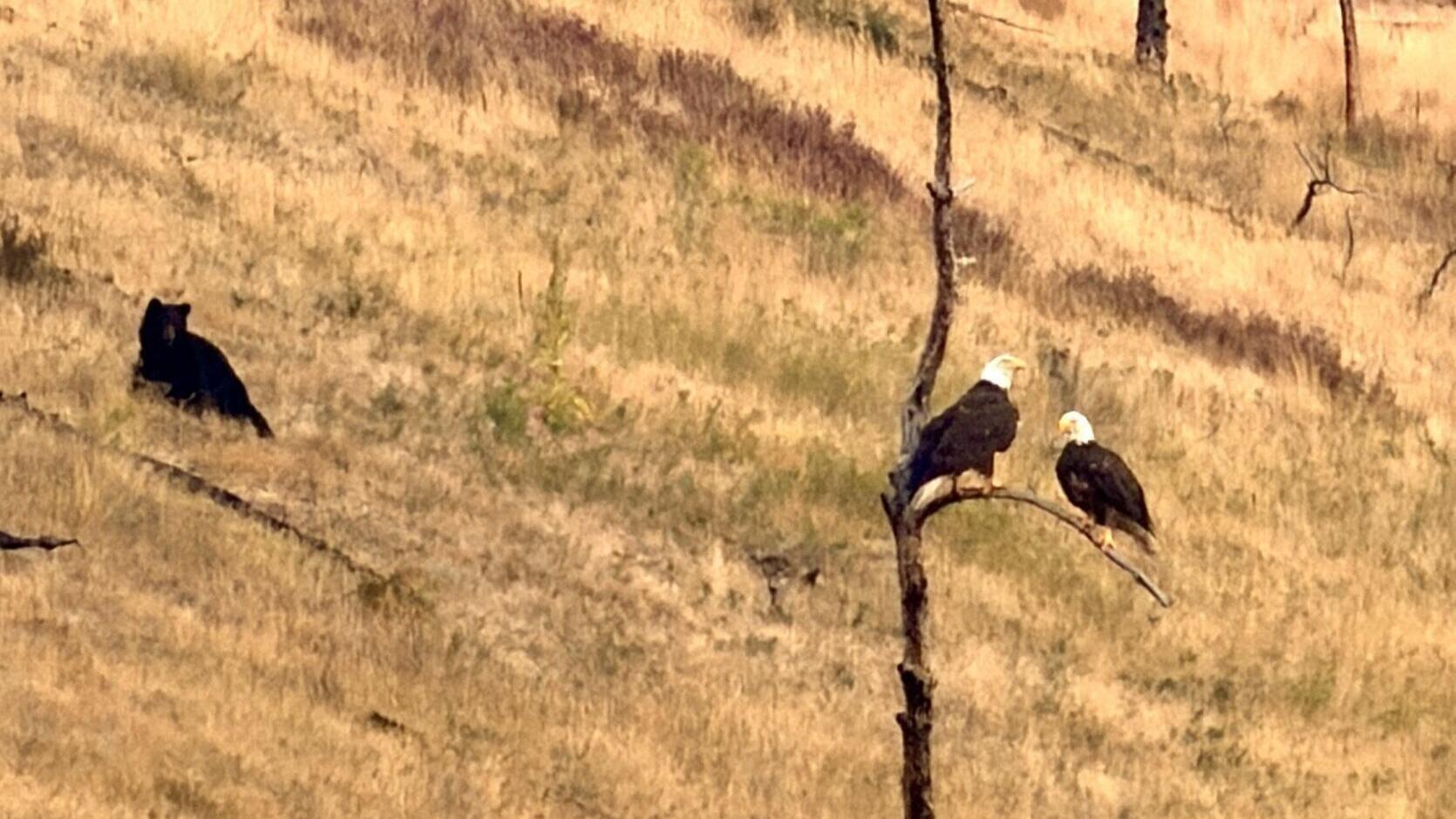
A black bear looks up from a carcass across the county road from Staci Grimm’s home up the Stillwater on Aug. 22 as two bald eagles wait nearby.
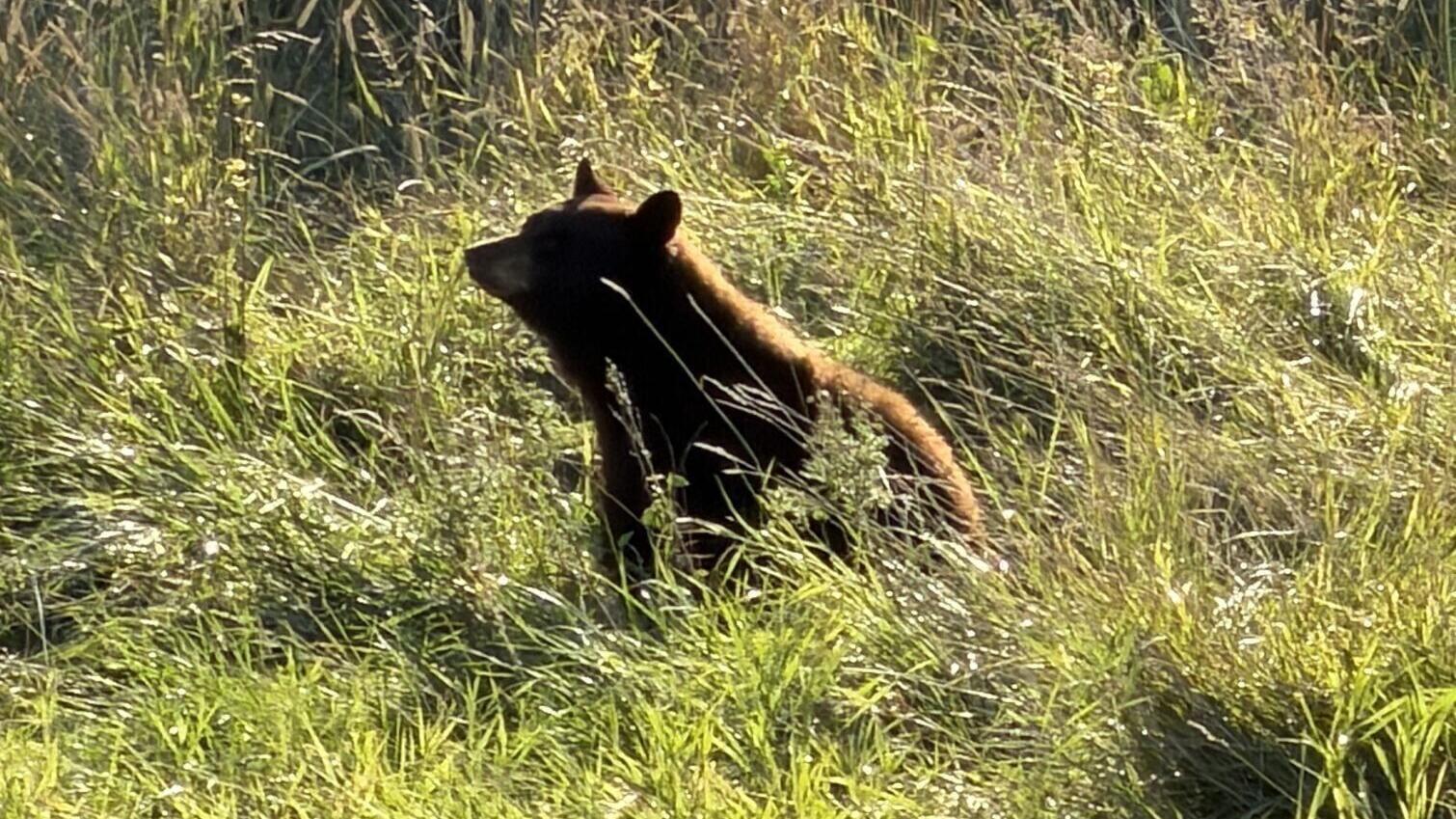
A bear pauses in tall grass near the Rockin’ J in Absarokee.
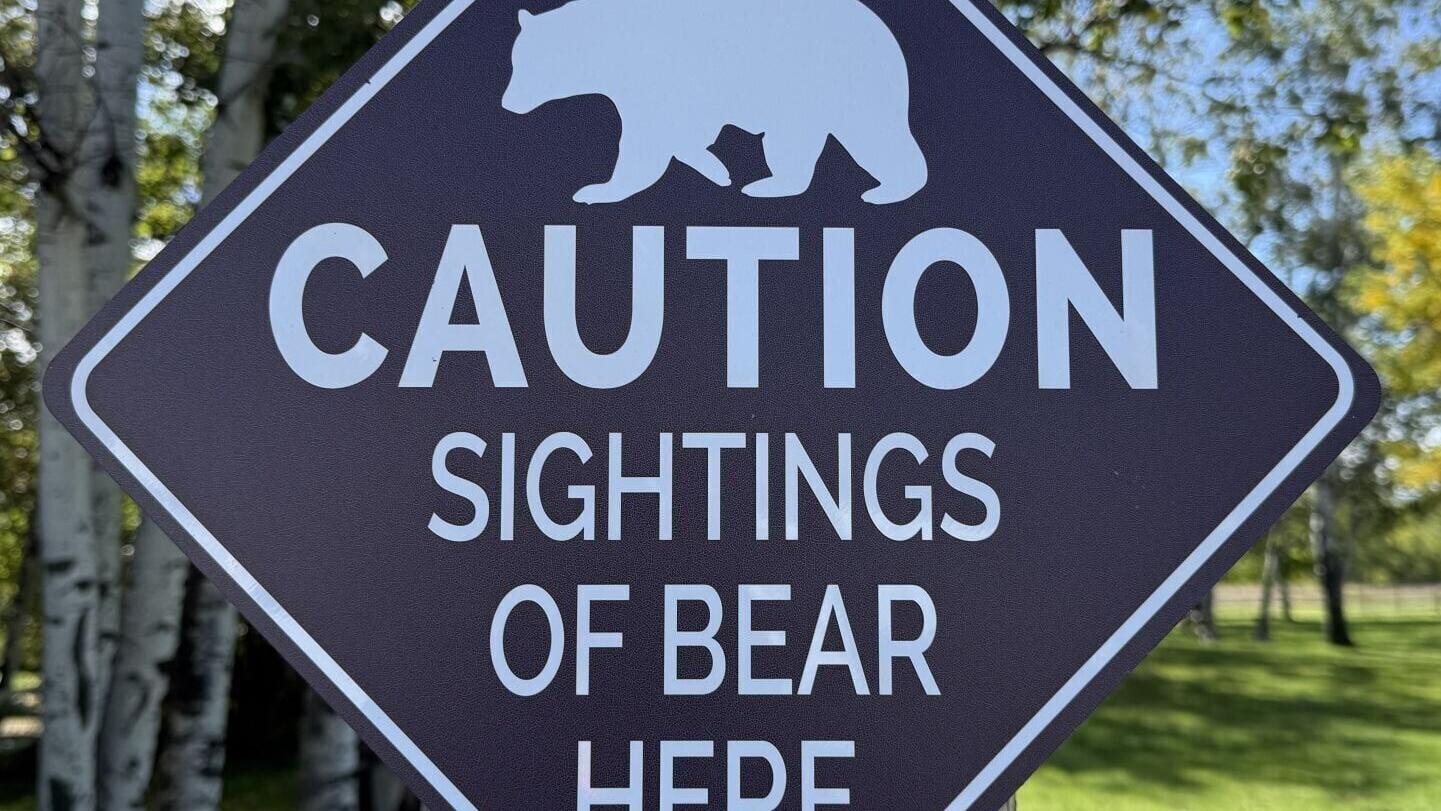
A sign warns of bear sightings outside Fishtail Park.
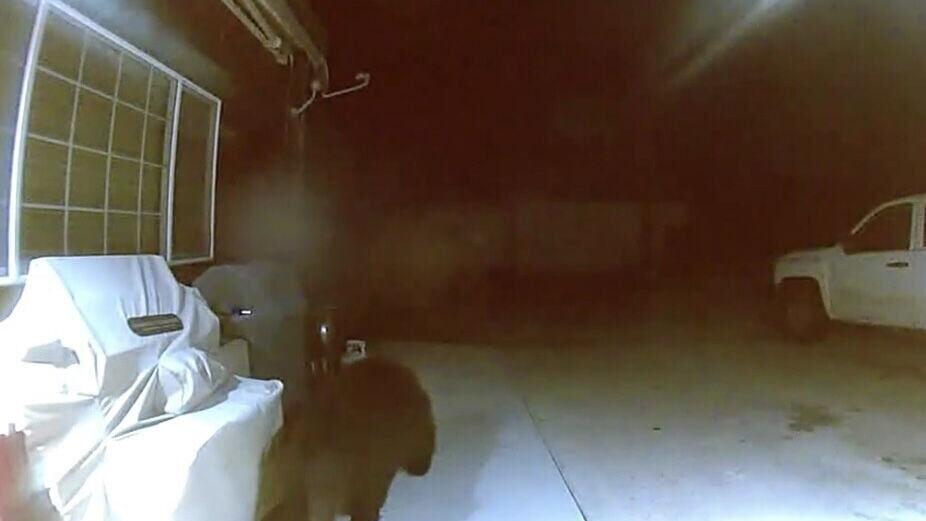
A bear walks past a covered grill in Josh Boyce’s driveway on Grove Street in Absarokee on Sept. 18, captured by his security camera.
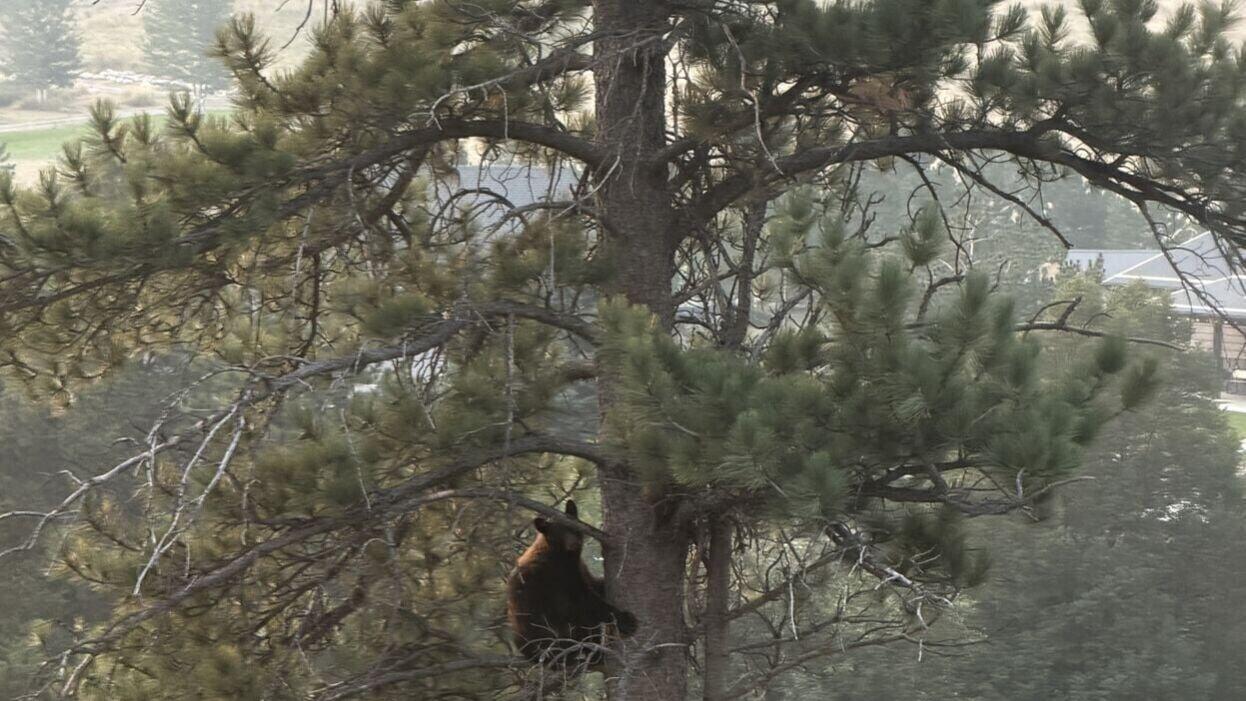
A bear climbs a pine along the Stillwater River recently. Staci Grimm said a sow and cub visited her home several times in late summer and early fall.
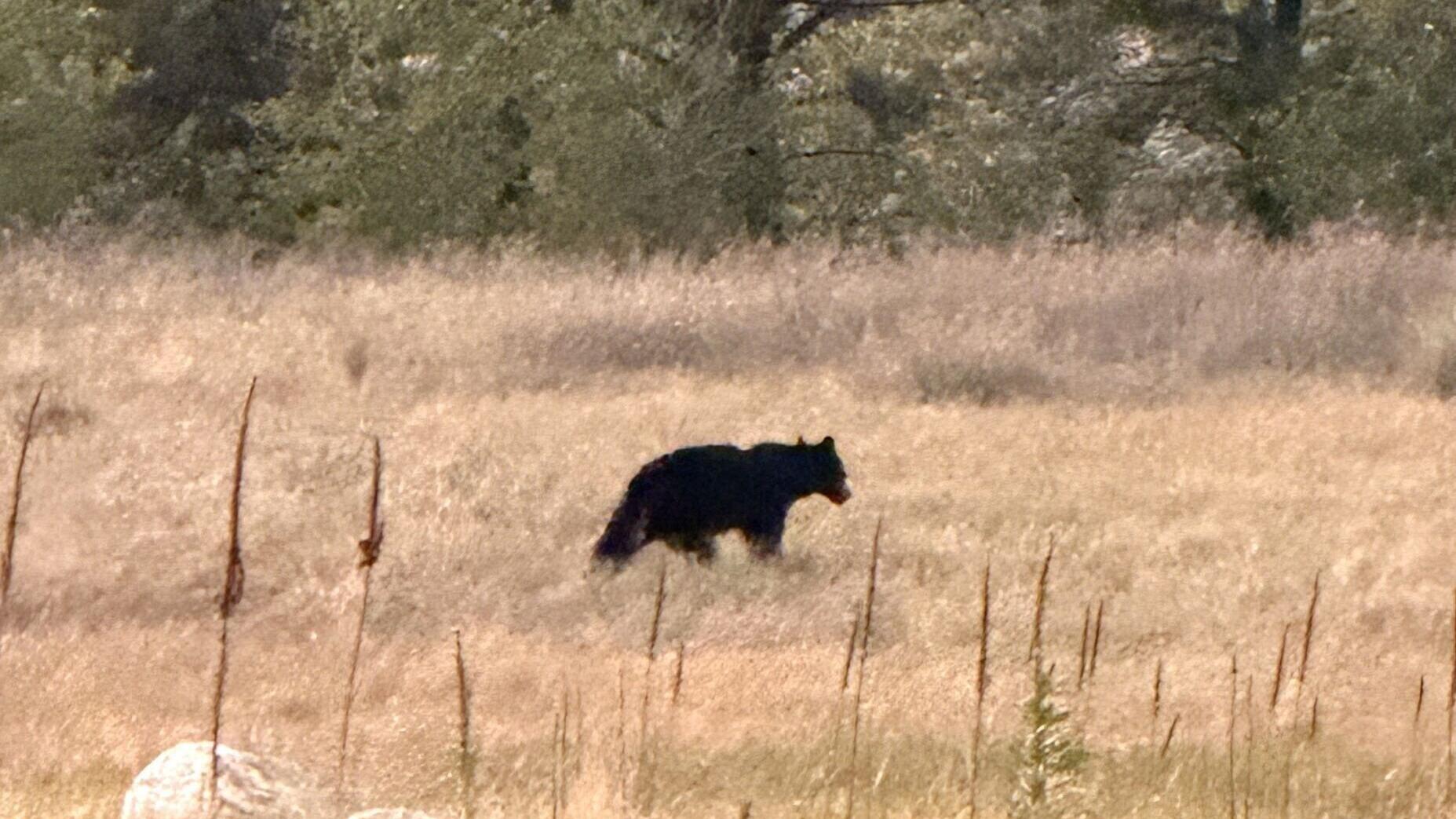
A black bear crosses a field just downstream of Cliff Swallow on Aug. 23.
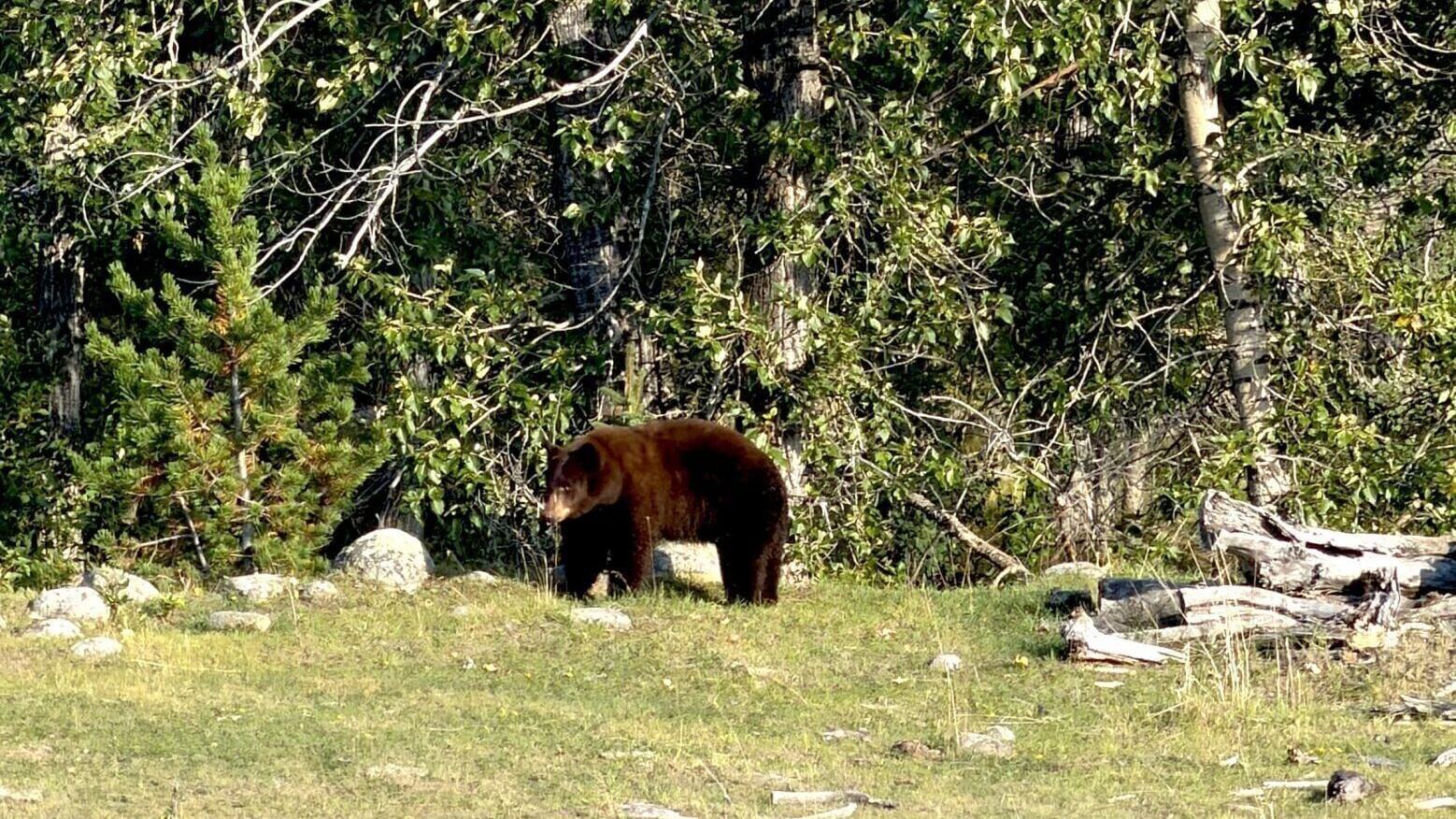
A cinnamon-colored bear pauses at the edge of the trees near Roscoe. Staci Grimm said she watched about six mother cows charge the bear that day, sending it running back toward the river. “I’ve never seen anything like it,” she said.
A late frost, a thin berry crop and a fall feeding frenzy have made this a big year for bears in Stillwater County, and Montana Fish, Wildlife & Parks says the numbers show it.
FWP Region 5 has recorded more than 400 bear conflicts so far this year, according to Region 5 Bear Specialist Daniel McHugh. That compares with about 175 conflicts for the entire region in 2025 and about 130 in 2024.
“In general, we’ve seen a substantial increase in bear conflicts this year compared to recent years,” McHugh said.
County-level numbers aren’t available yet. McHugh said conflict season is still under way, field work has kept staff “extremely busy,” and data will be compiled this winter.
In Absarokee, every confirmed observation has been a black bear. Grizzlies are a different story farther upriver. McHugh said grizzlies have been confirmed “on multiple occasions along the Stillwater River from Nye to near Absarokee.”
He added that the same attractant storage guidelines apply to both species.
Making the rounds
Josh Boyce, who lives on Grove Street in Absarokee, has had bears hang around his driveway twice this summer. He said it happens every year, and his security camera caught one of this year’s visitors.
“Food source is a huge issue,” Boyce said. “From the flood and the drought.”
Boyce also thinks harvest management is part of the problem.
“I believe FWP management [regarding the female quota] is a big problem,” he said. “Along with inexperienced hunters that take the first bear they see instead of hunting males instead of the females. It closes the quota too quickly, leaving these young males free to do what they want.”
McHugh said multiple bears move in and around Absarokee in spring, summer and fall. The most recent activity in town, however, appears to involve a single bear.
A bear has also been photographed on Davidson Street. Staci Grimm, who lives up the Stillwater and keeps up with local sightings, said it sounds like the bear has “been making the rounds around town.”
McHugh cautioned that photos and secondhand accounts can be misleading, and so can size. Yearlings typically leave their mothers in the spring. They often wander into town looking for food while they establish their own home ranges.
“As these younger bears learn to live on their own, they are especially susceptible to getting into unsecured attractants, as it can be an easy meal for them,” McHugh said.
‘Bear heaven’ comes up short
Staci Grimm lives 11 miles up the Stillwater. She said that stretch is normally “bear heaven” for food, but “obviously not the case this year with the late frost.”
This is Grimm’s fifth fall on the river, and she said it has brought the most bears she’s seen. Her Blink camera caught the latest one on her patio Sept. 18.
“He came up from the river, sniffed around the patio and then headed downstream,” Grimm said. “He didn’t bother anything.”
A sow and cub also visited the house a couple of times in late summer and early fall. Grimm and her household hazed the sow away a couple of times, and it hasn’t been back in about a month.
Grimm has also seen bears farther down the valley. Near Roscoe, she photographed a bear being charged by about six mother cows as it ran back toward the river.
“I’ve never seen anything like it,” she said.
She learned about bear-proofing the hard way. About four years ago, a bear came through the dog door into the garage in the middle of the night.
“He made a major mess, and the FWP tried to catch him,” Grimm said. “He returned the following night but outsmarted the trap.”
Now a steel gate covers the dog door from August until December “to keep Yogi out,” she said.
Grimm stays in touch with FWP bear technician Oliver Thomi, who likes to know what kind of bear activity residents are seeing and shares the information with his team. Her homeowners association shares sightings among neighbors and with the folks at Riddle’s when bears, or mountain lions, turn up.
“We love seeing them,” she said. “Less excited about the grizzlies moving in, but it’s part of living in the country.”
Why bears are hanging around longer
Bears are now in hyperphagia, a fall stretch of heavy eating to build fat for hibernation. McHugh said that makes this a critical time to lock up trash, pet food and livestock feed and to put away bird feeders.
Food availability is the chief factor in when bears den. Bears hibernate to hedge against food shortages, slowing their metabolism so they need fewer calories. They typically den when natural foods run out or deep snow makes them hard to reach.
“However, bears that are able to easily access unnatural foods often avoid denning until later in the fall,” McHugh said.
FWP has trapped, relocated and euthanized multiple bears across the region this year, a sharp increase over the long-term average. Stillwater County numbers have not been compiled yet. McHugh said almost every response traced back to improperly stored attractants such as garbage, chickens and bird feeders.
When bears get into those foods, he said, they come to associate homes and people with high-calorie meals. They lose their natural fear of people and escalate to breaking into homes and vehicles, and in some cases chasing people.
The pattern is visible just over the county line. Grizzlies are common near Red Lodge, and McHugh said the town has both black bears and grizzlies that have become food-conditioned “due to poor attractant storage and negligent human behavior.” Grizzlies are typically less likely than black bears to come into town, he said, but it is possible.
Get help before there’s a problem
FWP’s message is to secure attractants before a bear finds them, not after.
“Call FWP for help securing your attractants BEFORE a problem occurs,” McHugh said.
In Stillwater County, contact bear technician Oliver Thomi at 406-927-8644. Bear safety resources are available at fwp.mt.gov/conservation/wildlife-management/bear/be-bear-aware.