'A license to get a job that's in high demand': Inside MCC's growing CDL program
Miles Community College has seen strong growth in recent years, often crediting the quality of its various programs and curriculums as a major factor. Among those, its commercial drivers license program has seen significant strides over the past several years.
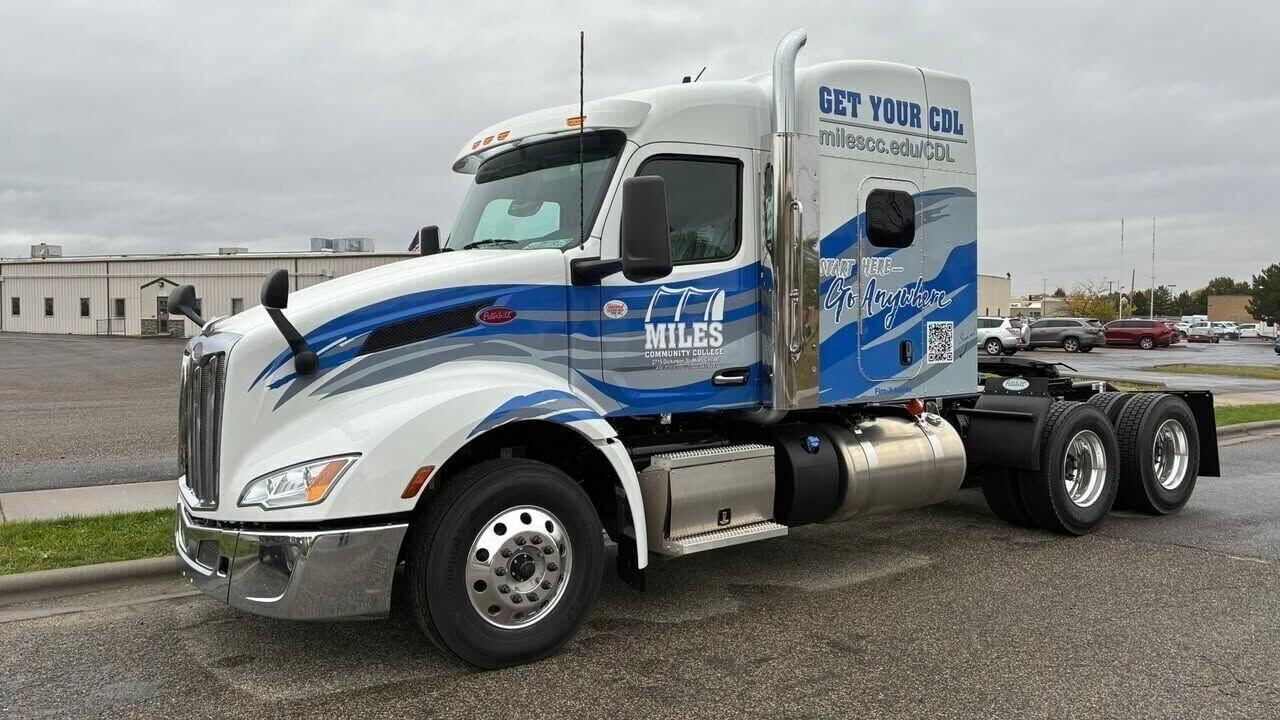
Miles Community College was able to acquire a brand new Peterbilt truck in 2025 thanks in large part to donations from partnerships supporting the college's CDL program.
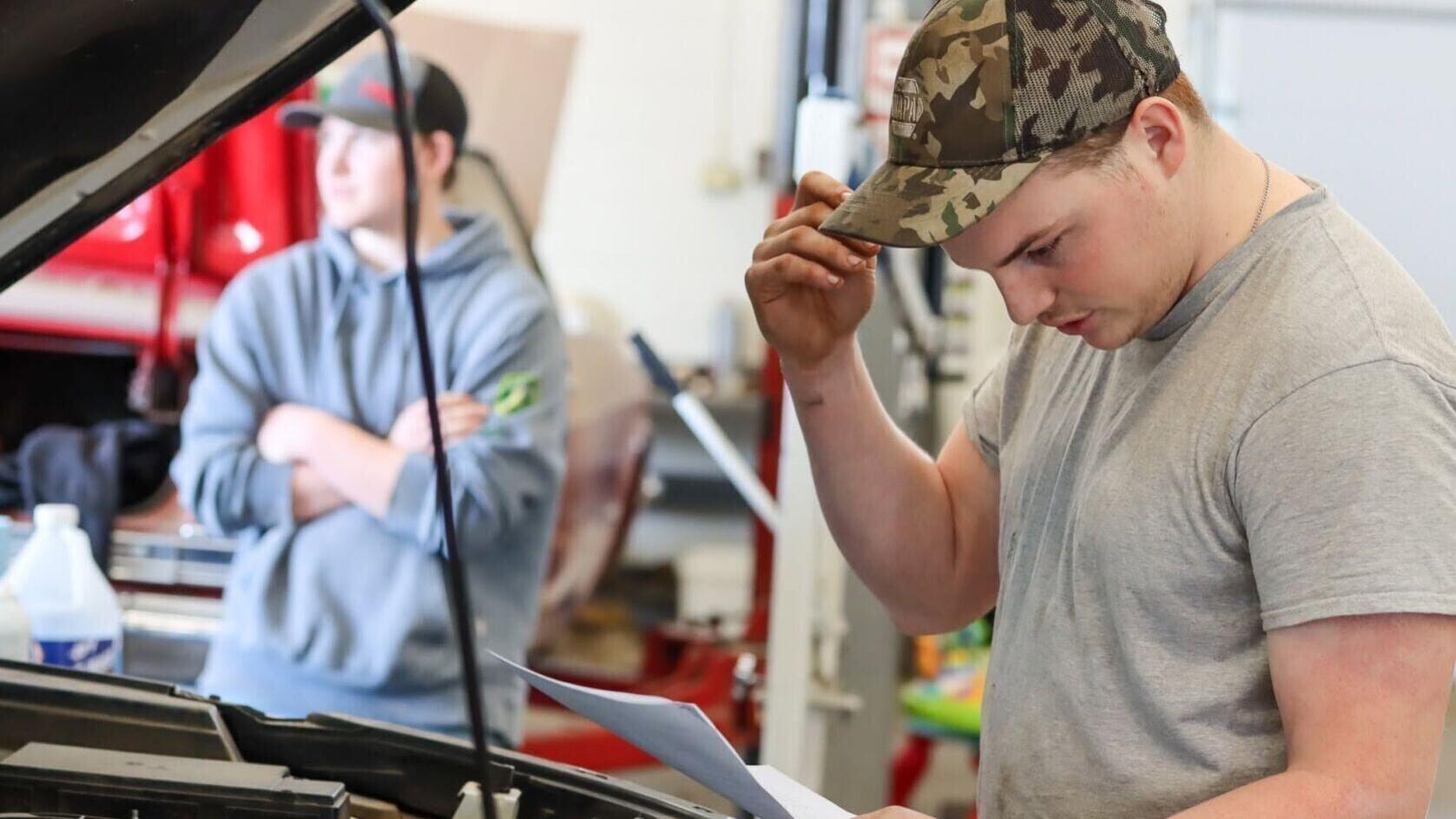
Students get hands-on and learn just about everything from the inside out, equipping them with the knowledge needed to earn their CDL after completing the program.
Miles Community College has seen strong growth in recent years, often crediting the quality of its various programs and curriculums as a major factor. Among those, its commercial drivers license program has seen significant strides over the past several years.
For over 20 years, the program has been preparing drivers to fill in demand jobs behind the wheel of semi-trucks, buses and other large commercial vehicles that require a CDL to operate. These days, the program attracts consistent near-capacity participation from both traditional students — high school graduates continuing their education — and non-traditional students — adults returning to continue their education.
In eastern Montana, MCC’s program is the only one of its kind.
The program is, on the surface, fairly straight forward; learn the basics, get some experience behind the wheel, complete the course with everything you’ll need to earn your license. However, as pointed out by Tyler Niedge, the director for the program, this program provides more than just a license to drive a large vehicle. As demand for commercial drivers grows across numerous industries, a CDL can potentially open opportunities for just about anyone.
“It’s a license to get a job that’s in high demand,” he said.
The timing of MCC’s growth lines up with a workforce gap that shows little sign of closing. The American Trucking Associations estimates the industry is short roughly 82,000 drivers nationally in 2026, a number the trade group projects could climb past 160,000 by 2031. Much of that gap traces back to an aging workforce — the median age of a heavy and tractor-trailer driver nationally is 57 — combined with high turnover among long-haul carriers, meaning even carriers that hire aggressively often struggle to hold onto drivers long-term. The ATA estimates the industry will need to bring on roughly 1.2 million new drivers over the next decade just to replace retirees and keep pace with freight demand.
For graduates staying closer to home, the numbers still pencil out. According to salary data compiled by ZipRecruiter, the average CDL truck driver in Montana earns about $67,000 a year, with local and regional driving positions often paying more than long-haul routes elsewhere in the country. That regional demand is part of what Niedge points to when he describes the program’s value extending well beyond over-the-road trucking — bus routes, delivery routes and other local commercial driving jobs all draw from the same pool of CDL holders MCC is producing.
The recognition of the possible career pathways a CDL could open has been a driving force behind the growth of the MCC’s program. The program has been a part of the college’s offerings for over two decades, though has seen new partnerships and support in recent years largely from businesses that want to provide a pathway for their employers to expand their skills.
“We’re seeing a demand from local employers to send us their employees for that upgraded education, to open them more doors to the job they’re already working,” Niedge said. “We can’t guarantee a CDL, that’s a third-party test that someone has to pass. But, in the almost 20 years of this program, there has been few people that have failed to get their CDL out of it.”
The support from those partnerships can be seen in the class itself as donations from those partners along with other funding sources have helped provide equipment for the class, including a dedicated semi-truck that was acquired by the college just last year.
Also driving the program’s growing popularity has been a push for career and technical education as an alternative to college for students looking to continue their education after high school but not seeking a degree. That push shows up in the numbers, too — national enrollment in K-12 career and technical education programs grew 10% between the 2022-23 and 2023-24 school years, climbing from 7.8 million to 8.6 million students, according to U.S. Department of Education data. In an effort to cater to these students, MCC has opened the CDL program to high school seniors in recent years, having had a total of four students from Custer County District High School graduate from the class, two in 2025 and two more in 2026. For Niedge, these graduates mark a major milestone for the program.
“Having that (education) as a high school senior who doesn’t necessarily plan on going to college, to have that license, it doesn’t open all the doors because of age restrictions and insurance restrictions, but they have it and they keep it,” he said. “Even if they don’t go into the transportation right away, it opens doors to jobs that are in high demand.”
MCC President Ron Slinger said the high school pathway is one of the developments he’s most excited about within the program.
“I think I am most excited about the high school pathway that allows seniors to graduate from MCC with their CDL weeks before graduating from high school,” Slinger said. “This is such a value added, meaningful partnership between MCC and those school districts.”
Looking forward, Niedge hopes to see the program continuing to grow, and fully expects it will as the demand for commercial drivers and career and technical education continues to grow. Coming this spring, he said the program will even open an additional spot for high school students, for a total of three spots. In general, he hopes to see high school seniors become more involved in the program.
Slinger said that growth is something he’s hoping to see as well, pointing to the level of interest already coming from the region’s school districts.
“Based on the tremendous interest from our regional high school partners, I am hoping that we can grow the program so more high school seniors can take advantage of what we have created,” Slinger said. “It is great for them but also adds a much needed workforce for our region.”
Hunter Herbaugh can be reached at hherbaugh@milescitystar.com.