On the Ballot: Q&A with County Attorney Darius Robinson
Editor’s Note: Waverly Newspapers offered candidates of the upcoming county and district races a chance to share their qualifications and views. Over the next few weeks leading up to the Nov. 4 general elections, their responses will be featured.
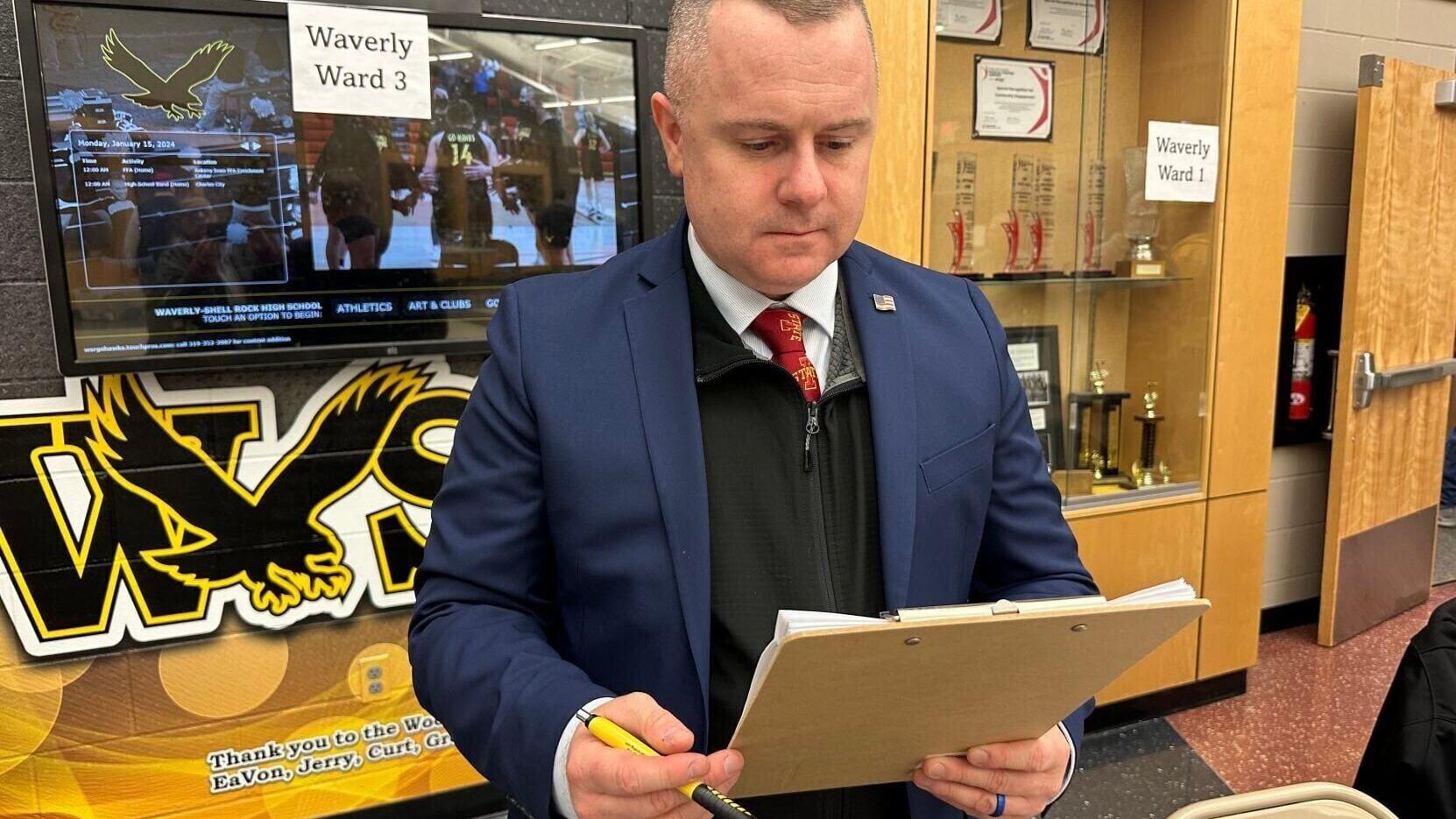
Bremer County Attorney Darius Robinson checking in residents of Ward 3 in Waverly during a past election.
Editor’s Note: Waverly Newspapers offered candidates of the upcoming county and district races a chance to share their qualifications and views. Over the next few weeks leading up to the Nov. 4 general elections, their responses will be featured.
Darius Robinson is the current county attorney, running to hold his seat uncontested. These are his responses.
Q: What do you believe should be the primary priorities of the Attorney’s Office and what changes would you like to bring through the next term?
A: My priorities for the County Attorney’s Office is to continue to enforce state and county laws, continue to provide local counsel for certain state agencies, as required by law, and continue to represent and advise Bremer County government. My office will continue to represent all of the citizens of Bremer County with the same zealousness as my first term. I made changes to the office during my first term that I intend to continue into my second term.
Q: What do you see as the biggest challenge facing the county’s criminal justice system and what role can the County Attorney’s Office play in addressing it?
A: It’s kind of a weird thing to say as a prosecutor, but our greatest challenge in the criminal justice system here in Bremer County is our lack of qualified criminal defense attorneys. As attorneys, we continually lookout for new attorneys that are willing to pitch in to help, especially with indigent defense cases through court appointments. As “ministers of justice,” we help ensure that the criminal justice system is adequately staffed and the constitutional requirements are met, one of which is adequate defense counsel.
Q: How should the County Attorney’s Office work with local law enforcement, the courts and community organizations while maintaining its independence?
A: The County Attorney’s Office, as the prosecuting authority for the State and County, of course has to have a good working relationships with our frontline law enforcement partners, the judicial branch, and local service providers that help with our missions (especially with rehabilitation and juvenile justice). However, we also must have the ability to tell our law enforcement partners, in a professional manner, when they don’t have an adequate case for prosecution or when they’ve done something incorrect. Additionally, with the judicial branch, we remind judges that as representatives of the executive branch that we do not work for them, in their role as judges, and that we exercise independent judgment in regards to the prosecution of criminal cases.
Q: What principles guide your decisions when determining which cases to prosecute and what charges to pursue?
A: The law, in all of its forms, and our professional ethics gives us our guiding principles in regard to the prosecution of cases. The law tells us what is illegal. However, the unique facts and circumstances of each case when combined with the law drives the prosecution of any particular case. Each case is treated as a unique event. The key question is what facts and evidence, when evaluated with the law, supports a charging decision.