Ferguson hearing raises questions about jail restrictions, jury concerns
Defense attorneys for Raylen Ferguson, an alleged co-conspirator in the January shooting of Judge Steven Meyer, challenged restrictions on the defendant being held in isolation, weighing questions about information access, security and an impartial jury.
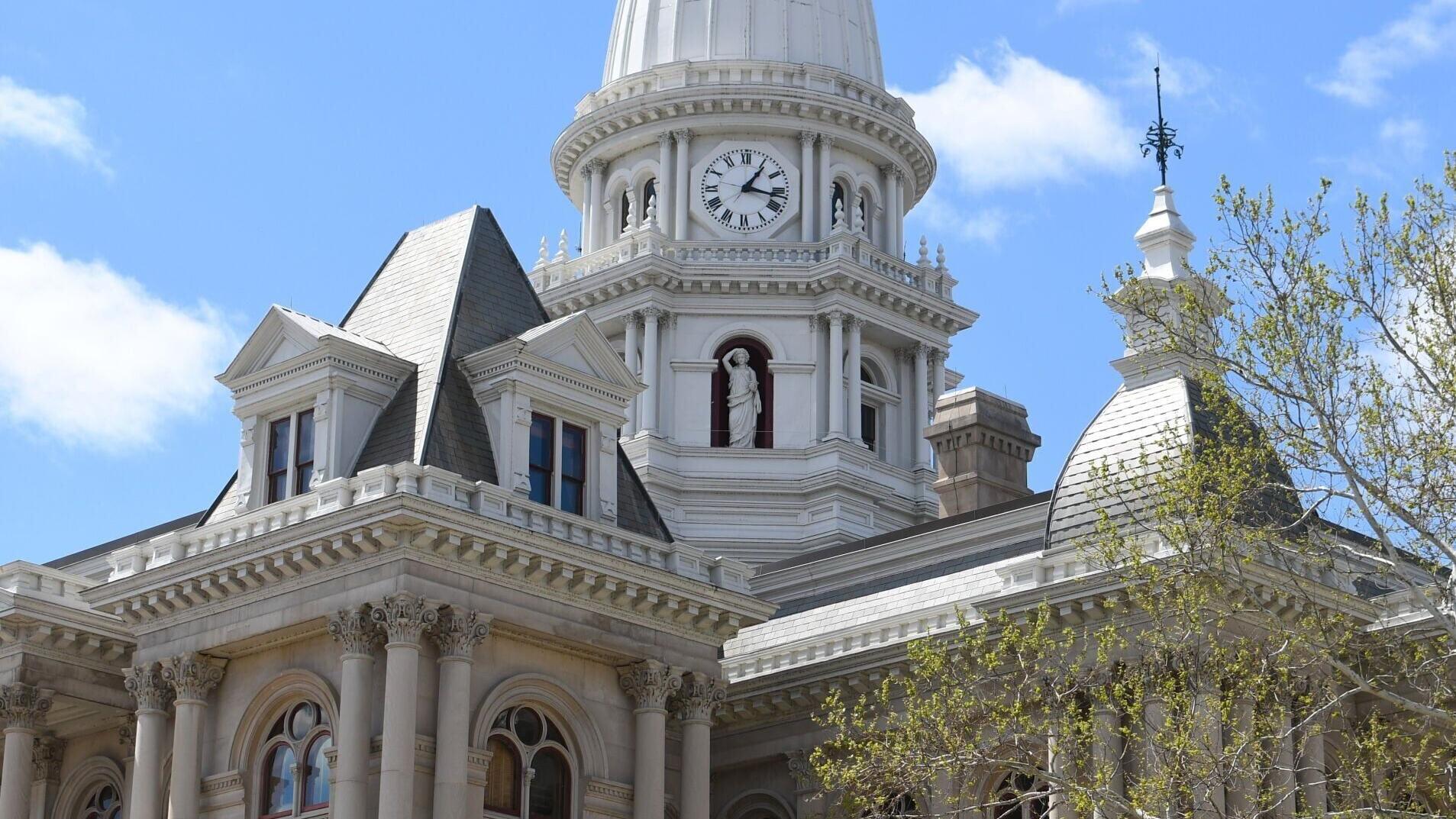
A hearing in the Judge Steven Meyer shooting case focused on a series of disputes surrounding the defendant’s conditions in the Cass County Jail, including access to media, communication with family and attorneys, commissary purchases and continued efforts to ensure a fair and impartial jury.
The defendant Raylen Ferguson, 38, of Lexington, Ky., is facing criminal charges for an alleged connection with the Jan. 18 shooting which wounded Meyer and his wife Kim.
Ferguson was arrested on Jan. 22 and charged with alleged attempted murder, conspiracy to commit murder, battery and several other federal offenses. Prosecutors allege that Ferguson was the direct shooter in coordination with Thomas Moss, a member of Phantom Bike Club, in order to delay his trial in front of Judge Meyers on Jan. 20, 2026.

Raylen Ferguson, 38, allegedly pulled the trigger on the Meyers on Jan. 18. He asked for a public defender during his pretrial in January 2026.
In 2024, Moss was charged with unlawful possession of a firearm by a serious violent felon, intimidation, criminal recklessness, and domestic battery with a deadly weapon, and now faces a series of other charges for his alleged involvement in the Jan. 18 shooting. He is set to be heard in court this December for the original 2024 charges, and in April of 2027 for the additional 2026 charges of attempted murder and conspiracy.
Ferguson’s charges followed an investigation involving multiple law-enforcement agencies in Indiana and Kentucky. Ferguson’s case was subsequently moved to Cass County, where Judge Lisa Swain was appointed as the special judge after judges in Tippecanoe County recused themselves.
A hearing in late January determined Ferguson’s bond to be set at $4 million cash and $2 million surety. It was at this hearing that Ferguson initially pleaded not guilty of charges against him.
The defense later filed a number of motions and petitions, including a special prosecutor petition, change of venue motion, and continuance of jury trial, all of which were discussed at Monday's hearing.
Ferguson was present at the hearing on Monday, to determine the court's ruling on a number of motions as well as bond review. His attorney, David Shircliff, along with the state representative Patrick Harrington and Judge Lisa Swaim, discussed the timeline for the upcoming pretrial hearing and jury trial, setting those dates for Nov. 10 and Jan. 19, respectively.
The hearing continued with motions being heard from the defense, beginning with discussions on the change of venue.
Shircliff said the defense wanted a test jury in order to ensure they would have a “representative sample” of potential jurors in Tippecanoe County. His argument for a change of venue is to confirm that Ferguson has a fair and impartial jury for his trial. As Meyer was reportedly well-known in the county in which the trial would take place, the defense alleges it may be difficult to find an unbiased juror pool in Tippecanoe. However, Swaim said going through the process of a test jury seemed to be an "unwieldy procedure.”
Swaim suggested instead that the final jury be pooled from Tippecanoe County, with a “back-up” jury being selected from the nearby Cass County.
The state objected to a change in venue, stating that the motion would have needed to be filed in May in order to be heard, and that the defense did not file until July. Regardless, the state sided with Swaim and found a test jury to be unnecessary, seeing as it would continue to push back the official jury trial that is already to be set almost a year after the initial arrest.
Both sides came to an eventual agreement to follow Swaim’s proposed solution of having an outside county chosen by both the state and defense be a potential replacement jury for the initial Tippecanoe County jurors.
The defense counsel continued on with their special prosecutor petition, asking that the prosecuting attorneys be removed and reselected due to their close professional relationship to Meyer.
Shircliff said, “How is it not at least the appearance of impropriety?”
The defense requested that new prosecutors be selected in order that they would remain unbiased.
The prosecution asserted that in order for the removal of prosecutors the defense needed to establish a legitimate conflict between the prosecutors and the case, finding that simply having a professional relationship with Meyer was not enough to bias the court.
Swaim then moved to discuss the motion on the defendant's bail. The defense brought private investigator and former FBI special agent Doug Kouns who spoke as to the conditions of Ferguson’s conditions at the Cass County Jail. Kouns said that Ferguson was under very restrictive conditions in the jail.
Kouns continued on to say that Ferguson was, to his knowledge, unable to make phone calls, send or receive mail or access the commissary. However, Ferguson is able to speak to his lawyers and legal team.
The state was then able to question Kouns, where they asked about access to books and media, including the law library while in the jail, where Kouns stated that he was unsure if Ferguson had all of these things.
Kouns was highlighted as a seasoned agent with isolated inmates and emphasised that in most cases he saw the individuals become depressed due to their conditions in jail. Kouns said this stemmed largely from a lack of communication with others. He said that Ferguson expressed a want to speak with his relatives, especially his mother, since he had not been given the opportunity to do so since his arrest.
Ferguson was then asked to speak on the conditions.
“I would like to speak to my mother,” Ferguson said to the court.
The state asked Ferguson if he was allowed to make purchases from the commissary, or if it was simply the issue of having money put on his books. Ferguson responded, saying he believes his commissary account is restricted but even if it wasn’t, he has no way to contact anyone to add money.
Ferguson continued to say that he was unsure of his access to the law library, but he could confirm his access to other reading materials and television. The defense asked that Ferguson be granted access to a tablet in order to communicate with family, as well as access the commissary. They said that he has not given any reason for either to be taken away.
The hearing concluded with Judge Swain asking to speak with the sheriff in order to gain more information on the procedures for commissary. This meeting is scheduled for 2:30 p.m. on Oct. 7.