Tracking U.S. Airline Traffic Trends
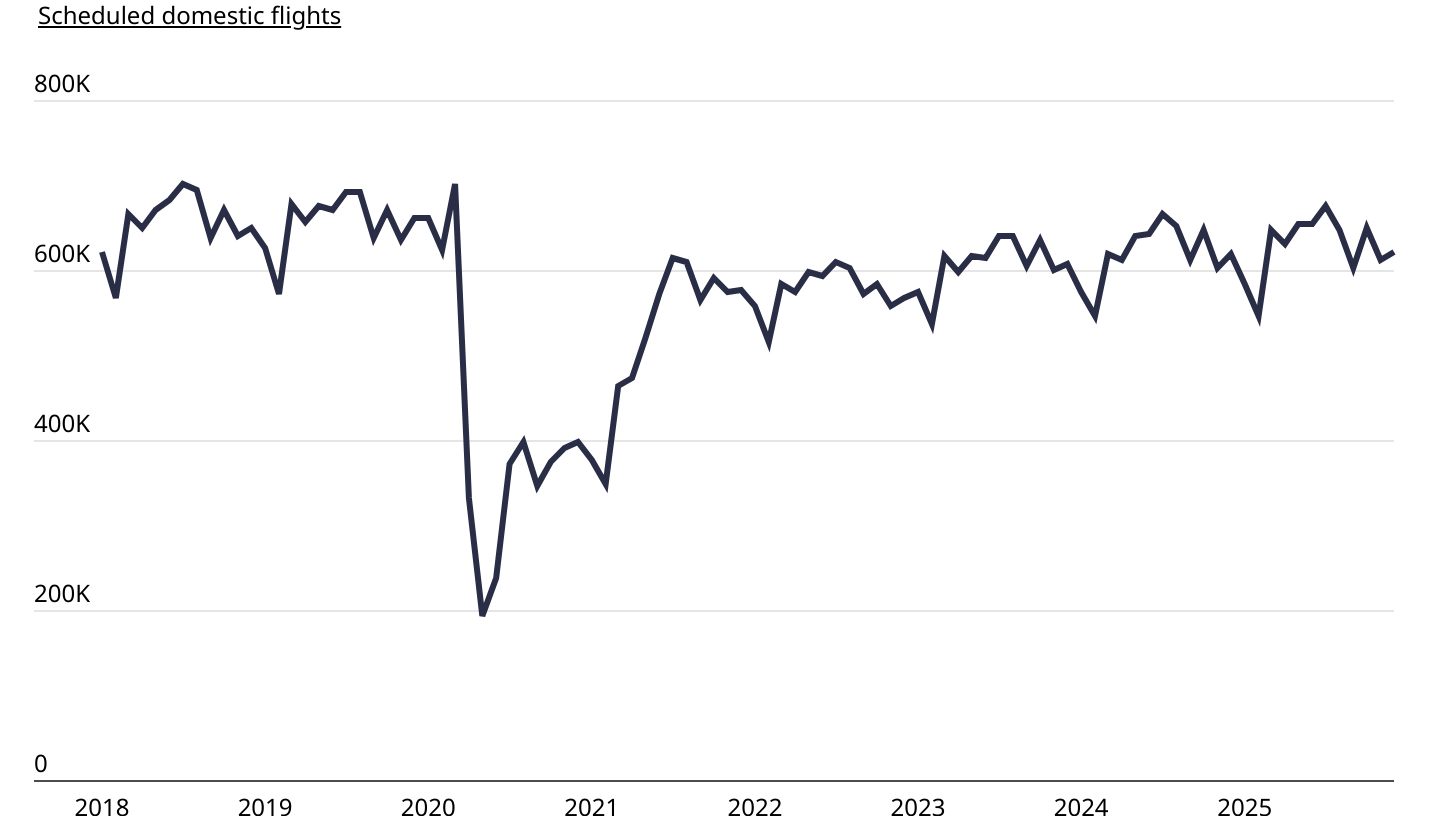
Scheduled domestic flights typically peak in the summer and are approaching pre-pandemic totals
Source: Luxury Link analysis of Bureau of Transportation Statistics data
The surge in travel demand surrounding Independence Day reflects a broader recovery in U.S. air travel. After the COVID-19 pandemic triggered an unprecedented decline in airline activity, domestic flight schedules have steadily rebounded toward pre-pandemic levels. According to Bureau of Transportation Statistics data, scheduled domestic flights—commercial flight segments from reporting carriers that exclude cargo-only flight operations and general aviation—fell from 701,274 in March 2020 to just 192,412 in May 2020 as travel restrictions and public health concerns curtailed demand. By July 2025, however, airlines had scheduled 675,722 domestic flights, bringing capacity close to the volumes recorded before the pandemic disrupted travel.
As a part of the broad recovery, domestic airline traffic returned to a predictable seasonal cycle. In 2025, scheduled domestic flights rose 15.8% from January to July, reflecting the typical summer build-up as schools close and leisure travel increases. Pre-pandemic data show a similar pattern: in 2019, scheduled flights climbed from 626,472 in January to a summer high of 692,256 in August. As airlines concentrate more flights into the summer travel season, holiday periods such as Independence Day place additional demands on airport capacity and airline operations.
As featured on