Trends in Vacation Home Purchases Over Time
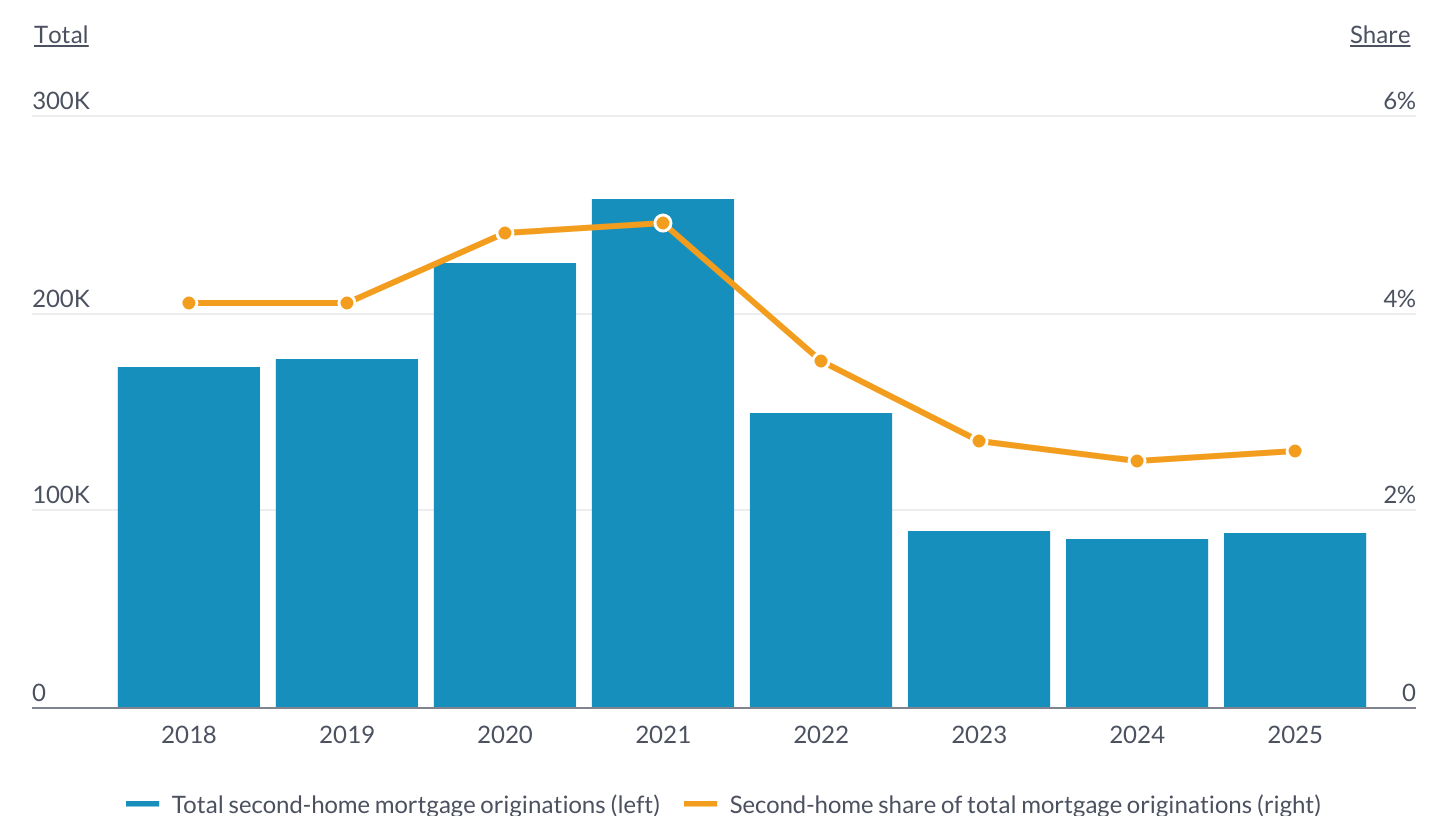
Vacation home purchases fell by nearly two-thirds from 2021 to 2025 amid soaring prices and mortgage rates
Source: SellMyTimeshareNow analysis of FFIEC’s Home Mortgage Disclosure Act data | Image Credit: SellMyTimeshareNow
The U.S. vacation-home market has contracted sharply since its pandemic-era peak, reversing a surge driven by historically low borrowing costs and increased demand for remote-friendly living. Vacation-home purchases using a mortgage fell from 257,549 units in 2021 to just 88,158 in 2025, a decline of 65.8%. Similarly, the vacation-home share of total mortgage originations fell from 4.9% in 2021 to 2.6% in 2025. These drops followed a period when second-home demand expanded rapidly, particularly in resort markets and lower-density areas.
The decline aligns with a rapid deterioration in affordability. Mortgage rates rose significantly from pandemic-era lows, increasing borrowing costs and reducing purchasing power, even for higher-income households that typically drive second-home demand. At the same time, home prices in the U.S.—including many vacation-oriented markets—remained elevated, limiting the ability of buyers to re-enter the market after the initial pandemic surge. Taken together, these conditions appear to have significantly reduced the pool of buyers able or willing to purchase vacation homes outright. The scale and speed of the decline suggest that the vacation home segment—often more sensitive to financial conditions than primary housing—has been particularly affected by the post-pandemic economic conditions.
As featured on