How Many K-1 Fiancé Visas Are Issued Each Year?
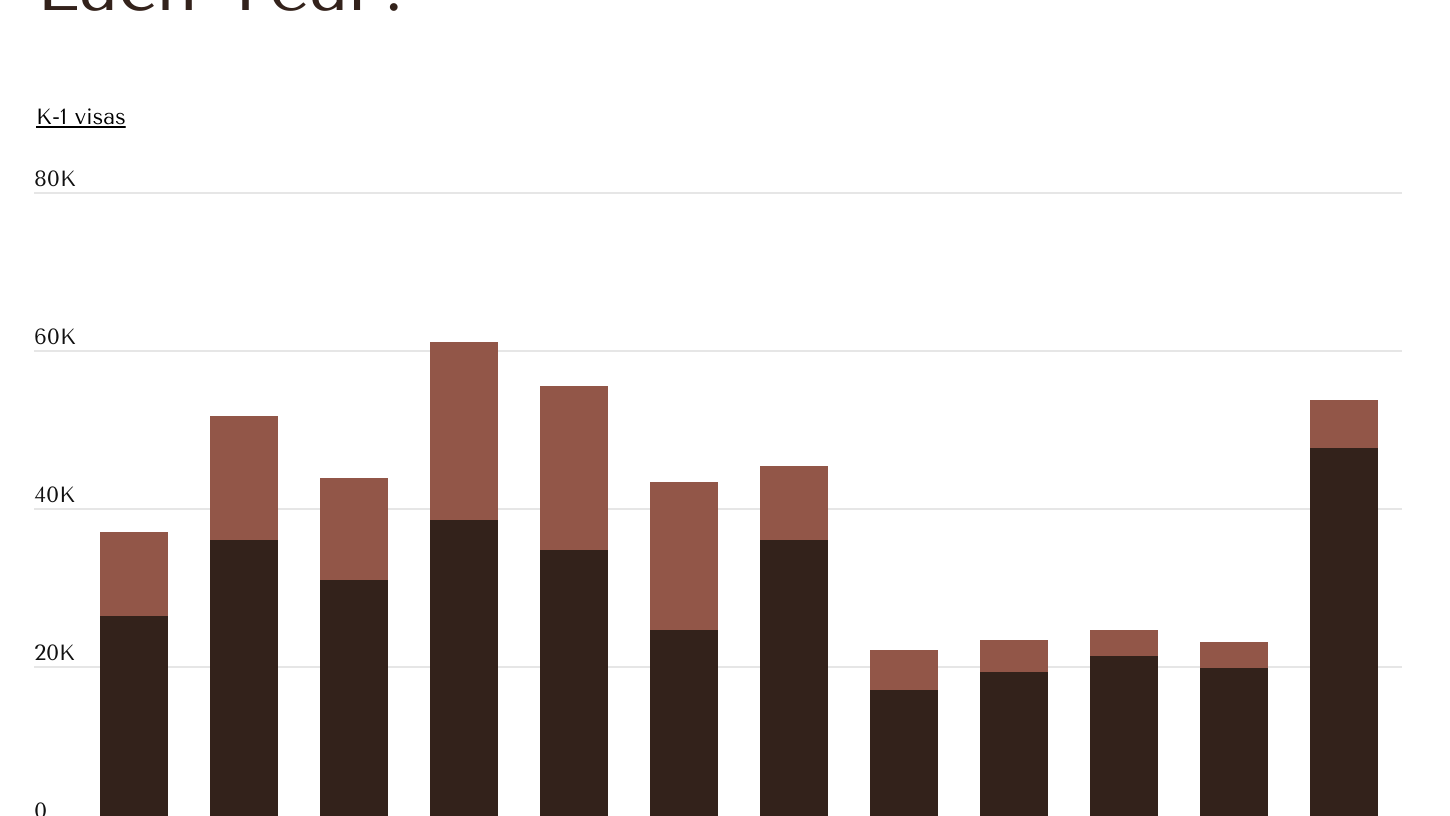
Following years of increasing backlogs after COVID, fiancé visa issuances surged to a 12-year high in 2024
Source: Manifest Law analysis of U.S. Department of State data
Although USCIS petition approvals determine whether a couple may continue through the immigration process, a K-1 visa is not issued until the foreign fiancé completes consular processing with the U.S. Department of State. As a result, annual visa issuances often lag changes in petition adjudications and can reflect both current processing capacity and the resolution of cases that accumulated during previous years.
Annual K-1 visa issuances fell from 35,881 in FY2019 to just 16,849 in FY2020 as consular operations around the world were disrupted. Issuances recovered partially to 19,218 in FY2021 and 21,351 in FY2022, then slipped to 19,825 in FY2023, remaining well below pre-pandemic levels despite USCIS increasing petition approvals during that period. In FY2024, however, visa issuances surged to 47,579, the highest annual total in the Department of State's published series, which begins in 2013, and nearly 24% higher than the previous peak of 38,403 in FY2016.
The surge in visa issuances coincided with a broader State Department effort to reduce visa backlogs that accumulated during the COVID-19 pandemic. Throughout 2023 and 2024, the Department reported recovering visa processing capacity more quickly than anticipated by assigning additional consular officers overseas, introducing new technology to streamline adjudications, reducing administrative processing times, and implementing other operational efficiencies aimed at increasing visa throughput. Refusals also rose, from 3,276 in FY2023 to 6,130 in FY2024.
Total adjudications more than doubled over that period, while the refusal rate fell from roughly 14% to 11%, so consular posts were both working through far more cases and issuing a somewhat larger share of them. Department of State refusal counts include INA 221(g) administrative processing refusals that are later overcome, so they are not a clean measure of final denials.
As featured on
