Faith of our fathers: John Adams
This column follows earlier ones on the religious views of Thomas Jefferson and Benjamin Franklin.
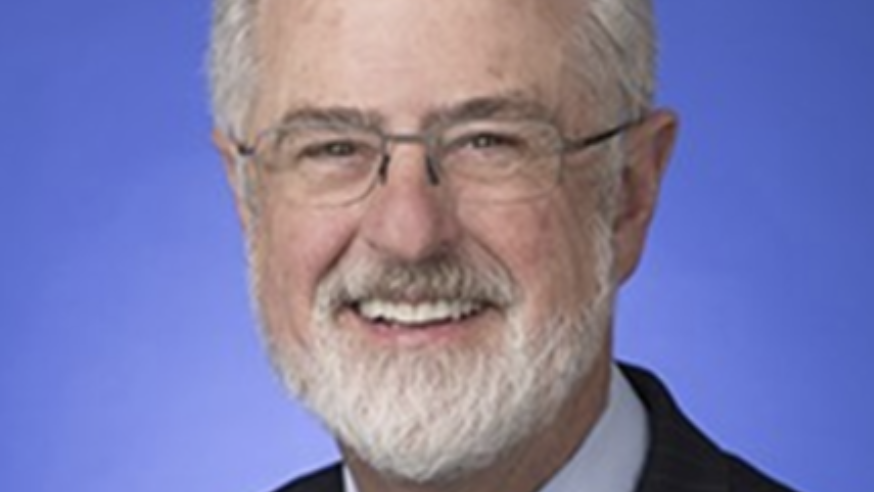
D. Joe Smith is a member of Emmanuel Church in Chestertown.
This column follows earlier ones on the religious views of Thomas Jefferson and Benjamin Franklin.
John Adams was one of the most deeply religious Founding Fathers. He was the son of a deacon in the First Congregational Church in Braintree, Massachusetts. Adams attended this church all his life, except when his political career took him to Philadelphia, Paris or London. His wife and inspiration, Abigail Smith, was the daughter of a Congregational minister in nearby Weymouth.
The Congregational Church had evolved from the Puritan beliefs of the Pilgrims who settled Massachusetts into a church emphasizing Bible study and simple living. Congregational churches could be found on the greens of many New England towns, but the denomination was not widely spread through other colonies.
Adams initially intended to study theology at Harvard College, but he ultimately chose to study law. As a young lawyer, he famously defended the British officer and soldiers who had fired the shots in what became known as “the Boston Massacre.” On behalf of the British captain, Adams argued that he had not given any order to fire, which led to his acquittal. On behalf of the soldiers, he argued that the actions of the mob had incited the violent reaction, and six of the eight were acquitted. Some Patriots accused Adams of favoring the British, but others saw the trials as evidence of the fairness and integrity of American courts.
Adams, like the other Founding Fathers, was a product of the Age of Reason, but he found reason alone inadequate to give purpose to life. He agreed with other founders that there was a natural, God-given law that was the basis for the self-evident rights Jefferson enumerated in the Declaration of Independence.
In his popular biography of Adams, David McCullough wrote, “Adams was both a devout Christian and an independent thinker, and he saw no conflict in that.” He was a lawyer who enjoyed a good argument, and he became one of the most sensible and forceful speakers in the Continental Congress. In the aftermath of Lexington and Concord, Adams proposed George Washington as commander in chief of Patriot forces.
Adams continued to attend church faithfully while in Congress. Indeed, he described himself as “a church-going animal.” With no Congregational church in Philadelphia, he attended Christ Church (Anglican) and the meetinghouses of Baptists, Methodists, Presbyterians, Quakers and Moravians. Adams and Washington together attended afternoon Mass at St. Mary’s Catholic Church to demonstrate their support of religious toleration. Although Adams preferred the simpler services of other denominations, he acknowledged to Abigail that there was something awe-inspiring in the Latin Mass.
Adams’ faith carried him through the tumultuous days of breaking with Great Britain. After Congress voted for independence on July 2, he wrote to Abigail:
Yesterday the greatest Question was decided which ever was debated in America, and a greater perhaps, never was or will be decided among Men. A Resolution was passed without dissenting Colony “that these united Colonies, are, and of right ought to be free and independent States, and as such, they have, and of Right ought to have full Power to make War, conclude Peace, establish Commerce, and to do all the other Acts and Things, which other States may rightfully do.” You will see in a few days a Declaration setting forth the Causes, which have impell’d Us to this mighty Revolution, and the Reasons which will justify it, in the Sight of God and Man.
Adams declared that Independence Day should be celebrated not only “with shows, games, sports, guns, bells, bonfires and illuminations,” but also with “solemn acts of devotion to God Almighty.”
Six weeks after Congress issued the Declaration of Independence, the battle for Long Island and Manhattan began. The Patriots lost the battle and narrowly escaped capture of their entire army. Adams turned to his faith in these dark days, praying, “May Heaven grant us victory, if we deserve it; if not patience, humility and persistence under defeat.”
Later in life, Adams began a correspondence with Jefferson that included discussion of the role of Providence. While they both affirmed their belief in a Creator, Adams was more certain than Jefferson that they would be reunited after death with those they loved. On Dec. 8, 1818, he wrote:
I believe in God and in his Wisdom and Benevolence: and I cannot conceive that Such a Being could make Such a Species as the human merely to live and die on this Earth. If I did not believe a future State I Should believe in no God. . . . And if there be a future State Why Should the Almighty dissolve forever all the tender Ties which Unite Us So delightfully in this World and forbid Us to See each other in the next?
Adams gave Jefferson his views on the nature of God, writing on Jan. 20, 1820:
When we say God is Spirit, we know what we mean — as well as we do when we say that the Pyramids of Egypt are Matter — Let us be content therefore to believe Him to be a Spirit, that is, an Essence that we know nothing of — in which Originally and necessarily reside all energy — all Power, all Capacity — all Activity — all Wisdom — all Goodness — Behold the Creed and Confession of Faith of your ever affectionate Friend.
Both men died on July 4, 1826.
D. Joe Smith is a member of Emmanuel Church in Chestertown.