Crypto Slump vs. Trading Boom: What Lies Ahead for Robinhood Stock?
HOOD's record revenues show non-crypto trading can offset crypto weakness, but rising costs and a premium valuation cloud the outlook. Is the stock a buy?
Robinhood Markets’ HOOD second-quarter 2026 results highlighted a significant shift in its growth story. Once viewed primarily as a platform dependent on retail enthusiasm for cryptocurrencies and meme stocks, this fintech brokerage firm is increasingly developing into a diversified financial services ecosystem.
HOOD delivered record quarterly revenues of $1.31 billion, up 32% year over year, while earnings climbed 48% to 62 cents per share. Both beat the Zacks Consensus Estimate. The strong performance came despite a sharp decline in cryptocurrency transaction revenues, as heightened activity in equities, options and event contracts more than offset weakness in digital assets.
Although the quarterly performance was encouraging, the sustainability of trading-driven growth remains uncertain. HOOD continues to benefit from strong retail engagement and favorable market activity, but its revenues remain sensitive to volatility, customer sentiment and regulatory developments.
Against this backdrop, there is an important question for investors: can Robinhood sustain its earnings momentum without relying on a crypto recovery?
Non-Crypto Trading Supports Robinhood’s Growth
Robinhood’s transaction-based businesses remain the primary growth driver. Transaction revenues jumped 44% year over year in the second quarter, as equities and options revenues advanced strongly.
This underscores Robinhood’s ability to generate growth even when one of its historically important businesses weakened. The lingering weakness in underlying assets led crypto transaction revenues to decline 38% during the quarter, but strength in other trading categories limited the impact on overall results.
Event contracts also emerged as a significant contributor. Customer interest in products linked to sports, politics, economic outcomes and other real-world events supported substantial revenue growth. This gives Robinhood another way to expand transaction revenues beyond conventional stocks, options and cryptocurrencies. However, event-contract revenues may fluctuate with major events and face greater regulatory scrutiny, making the segment’s recent growth pace difficult to sustain.
The ability of Robinhood’s non-crypto businesses to compensate for crypto weakness is encouraging. In earlier stages of the company’s development, this could have created considerable pressure on overall top line. Nonetheless, the latest results suggest that Robinhood has reduced this concentration risk by expanding its product offerings and encouraging customers to use the platform for a wider range of financial activities.
The Zacks Consensus Estimate for Robinhood’s sales for 2026 and 2027 suggests 13.4% and 24.8% year-over-year growth, respectively.
Sales Growth
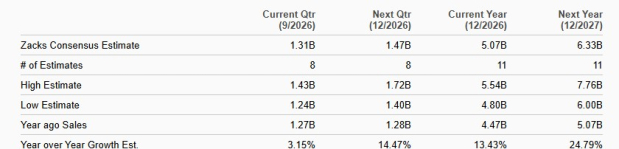
Image Source: Zacks Investment Research
Diversification Improves Robinhood’s Business Mix
Robinhood has made progress in broadening its operations beyond commission-free retail trading. The platform now includes retirement accounts, subscription services, credit cards, advisory offerings, banking-related features, private-market products and international initiatives. The company now has 13 business lines generating at least $100 million in annualized revenues, illustrating the growing breadth of its platform.
This diversification is strategically important. A broader range of products can deepen customer relationships, improve retention and increase the amount of assets held on the platform. It can also reduce Robinhood’s reliance on any single revenue source. Robinhood Gold subscriber growth is expanding recurring revenues and encouraging broader product adoption. Record net deposits also support interest income and trading activity, signaling deeper customer engagement.
Even so, Robinhood is still in the early stages of becoming a full-service financial platform. Many newer businesses will require continued investment and may take time to contribute meaningfully to profits. The company must prove that it can successfully scale these offerings while maintaining customer trust and managing additional regulatory and operational complexity.
Crypto Weakness Remains a Concern for Robinhood
Cryptocurrency continues to be an important part of Robinhood’s platform, even though the company has reduced its dependence on the segment. A steady decline in crypto transaction revenues this year underscored the cyclical nature of digital-asset trading.
The segment also faces substantial competition from specialized exchanges and other brokerages like Interactive Brokers IBKR and Charles Schwab SCHW. Robinhood must continue investing in product capabilities, pricing and customer experience to remain competitive.
Regulatory uncertainty presents another challenge. New rules governing token listings, custody, stablecoins and trading practices could increase costs or limit the company’s flexibility. A recovery in cryptocurrency activity could provide meaningful upside to future results. However, relying on such a rebound would add risk to the investment thesis.
HOOD’s Profitability Improves, Costs Rise
Robinhood’s revenue growth is driving strong earnings and adjusted EBITDA performance. The company benefits from higher trading activity, strong deposit growth and a greater contribution from premium services.
Still, operating expenses are rising substantially as Robinhood invests in marketing, product development, international expansion and new business lines. These expenditures may support long-term growth, but they can also limit margin improvement if revenues moderate.
The company’s growing product portfolio introduces new costs and risks. Credit cards, advisory services, private markets and banking-related products require additional infrastructure, compliance and risk controls. International expansion may also take time to reach profitability.
Competition from Schwab, Interactive Brokers and other fintech platforms could also pressure customer acquisition costs and pricing. Robinhood must therefore demonstrate that it can convert strong customer and revenue growth into sustainable operating leverage. If expenses continue to rise at a pace similar to revenues, earnings growth could become less consistent.
What Could Drive the Next Growth Phase at Robinhood?
Several catalysts are expected to support Robinhood’s future performance.
First, continued momentum in equities and options could sustain transaction revenues even if crypto remains subdued. Robinhood’s accessible interface, commission-free model and popularity among younger investors provide a foundation for ongoing customer engagement.
Second, event contracts could become a meaningful structural growth engine. While the segment’s performance has been impressive, it should not be assumed that its rapid growth rate will continue indefinitely. Demand is likely to fluctuate around elections, sporting events and other high-profile developments, while regulatory scrutiny could increase as the business expands.
Third, additional Gold subscriber growth could strengthen recurring revenues and deepen customer relationships. Growing adoption of retirement accounts, advisory products, banking features and credit offerings could further transform Robinhood from a trading application into a primary financial platform.
Finally, a recovery in cryptocurrency trading would provide upside. Because the company has demonstrated that it can grow despite a crypto downturn, renewed digital-asset activity could complement rather than dominate its earnings trajectory.
As such, analysts are turning bullish on HOOD’s prospects. Over the past seven days, the Zacks Consensus Estimate for earnings has meaningfully moved upward for 2026 and 2027.
Earnings Revision Trend

Image Source: Zacks Investment Research
Despite estimates moving north, the consensus estimate for 2026 earnings of $1.98 indicates a 3.4% decline from the prior year. But the trend is expected to reverse next year, with earnings projected to jump 33.4% to $2.64.
Earnings Estimates

Image Source: Zacks Investment Research
Valuation Limits Robinhood’s Near-Term Upside
Robinhood’s strong performance and expanding growth opportunities have increased investor expectations. Persistent crypto weakness has led to bearish investor sentiment, and Robinhood shares are significantly down from the highs witnessed last year.
However, the stock has regained some momentum, and over the past three months, it has rallied 17.5%. Robinhood has outperformed the industry and its peers, Schwab and Interactive Brokers, in the same time frame.
Three-month Price Performance

Image Source: Zacks Investment Research
HOOD’s valuation reflects confidence in continued revenue growth, product adoption and margin expansion. But this creates a potential challenge. A slowdown in trading activity, deposit growth or subscriber additions could pressure the stock.
Currently, Robinhood is trading at a premium to the industry. At present, the company has a price/tangible book (P/TB) of 8.88X for the trailing 12 months compared with the industry average of 3.37X.
Robinhood’s P/TB TTM

Image Source: Zacks Investment Research
HOOD stock is expensive compared with Schwab and Interactive Brokers. Schwab and Interactive Brokers have a trailing 12-month P/TB of 7.97X and 1.83X, respectively.
How to Approach HOOD Stock Now?
Robinhood’s first-half performance highlights its improving revenue diversification, with strength in equities, options and event contracts helping offset weakness in cryptocurrency trading. Record net deposits, expanding Gold subscriptions and continued product launches are deepening customer engagement and strengthening the company’s recurring revenue base.
While trading activity remains cyclical and investments in newer businesses may keep expenses elevated, Robinhood’s growing platform, strong customer asset inflows and expanding suite of financial products should support sustained growth. Its ability to attract and retain younger investors also provides a meaningful long-term competitive advantage.
Robinhood appears well-positioned to capitalize on rising retail participation and broaden its presence across brokerage, retirement, banking and prediction markets. These growth prospects, along with improving business diversification and operating leverage, support a compelling buy on HOOD.
At present, HOOD carries a Zacks Rank #2 (Buy). You can see the complete list of today’s Zacks #1 Rank (Strong Buy) stocks here.
Zacks' Research Chief Names "Stock Most Likely to Double"
Our team of experts has just released the 5 stocks with the greatest probability of gaining +100% or more in the coming months. Of those 5, Director of Research Sheraz Mian highlights the one stock set to climb highest.
This top pick is a little-known satellite-based communications firm. Space is projected to become a trillion dollar industry, and this company's customer base is growing fast. Analysts have forecasted a major revenue breakout in 2025. Of course, all our elite picks aren't winners but this one could far surpass earlier Zacks' Stocks Set to Double like Hims & Hers Health, which shot up +209%.
Free: See Our Top Stock And 4 Runners UpWant the latest recommendations from Zacks Investment Research? Today, you can download 7 Best Stocks for the Next 30 Days. Click to get this free report
Robinhood Markets, Inc. (HOOD): Free Stock Analysis Report
The Charles Schwab Corporation (SCHW): Free Stock Analysis Report
Interactive Brokers Group, Inc. (IBKR): Free Stock Analysis Report
This article originally published on Zacks Investment Research (zacks.com).