3 Reasons AI Stocks are Primed for a Rebound
While recent market turbulence tested momentum, the washout of extreme leverage combined with surging multi-year infrastructure spending and real-world biotech breakthroughs means the AI rally is far from over.
Although AI stocks have been highly volatile over the past two months, they likely aren’t finished moving higher. Below are three reasons why:
The Situational Awareness Saga is Over
Last month, momentum stocks, particularly AI stocks, suffered one their worst drawdowns in history. Situational Awareness, one of the newest and hottest hedge funds, got caught on the wrong side of long trades in leading AI-related stocks like Bloom Energy (BE) and Micron (MU) with extreme leverage. The fund, up a staggering 439% in the first half of the year due to 4x leverage, dropped nearly 70% in July, leading to a record $35 billion in losses.
To stay solvent after steep losses, Situational Awareness sold its entire public book to Wall Street kingpin Citadel for over $4 billion. A handful of days later, Citadel sold its Situational Awareness positions for a massive profit. The Citadel sales likely explain the recent volatility an weakness in AI stocks.
NVIDIA Earnings Loom
Zacks Rank #2 (Buy) stock NVIDIA (NVDA) is the largest company in the world and the most important in the leading artificial intelligence industry. Wednesday, NVIDIA will report earnings after the market close. In recent quarters, NVIDIA has released earnings growth that is unprecedented for a company of its size. However, according to the latest hyperscaler capital expenditure estimates, NVIDIA’s growth curve may gain even more momentum. CAPEX spending is expected to surge to more than $1 trillion over the next few years. According to UBS (UBS), CAPEX spending will surge 60% by 2028. That’s good news for NVIDIA, which captures roughly 39% of every hyperscaler dollar spent.
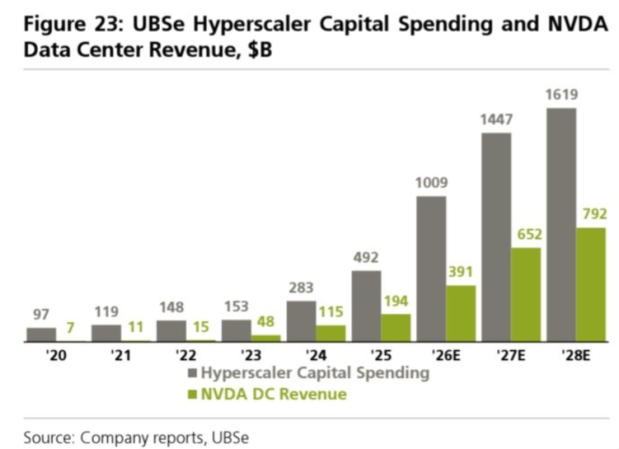
Image Source: UBS
Meanwhile, despite its high double-digit top-and bottom-line growth rate, NVIDIA remains surprisingly cheap with a P/E ratio of just 35.70x.
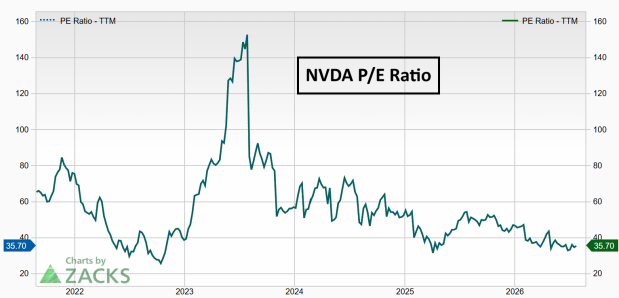
Image Source: Zacks Investment Research
AI is a Gamechanger for the Biotech Sector
Until recently, most investors AI mostly benefited AI-centric stocks. That said, AI’s positive impact is finally being seen across sectors. Last week, Moderna (MRNA) announced that its personalized melanoma cancer therapy succeeded in a 1,137-patient Phase 3 trial. However, the Phase 3 win is much more than a biotech story. The Moderna data shows that AI computation allowed Moderna to personalize the medicine, making it far more effective than legacy biotech drugs. Moderna shares jumped 176% on the news. The Moderna news is likely just the tip of the iceberg.
Bottom Line
While recent market turbulence tested momentum, the washout of extreme leverage combined with surging multi-year infrastructure spending and real-world biotech breakthroughs means the AI rally is far from over.
Radical New Technology Could Hand Investors Huge Gains
Quantum Computing is the next technological revolution, and it could be even more advanced than AI.
While some believed the technology was years away, it is already present and moving fast. Large hyperscalers, such as Microsoft, Google, Amazon, Oracle, and even Meta and Tesla, are scrambling to integrate quantum computing into their infrastructure.
Senior Stock Strategist Kevin Cook reveals 7 carefully selected stocks poised to dominate the quantum computing landscape in his report, Beyond AI: The Quantum Leap in Computing Power.
Kevin was among the early experts who recognized NVIDIA's enormous potential back in 2016. Now, he has keyed in on what could be "the next big thing" in quantum computing supremacy. Today, you have a rare chance to position your portfolio at the forefront of this opportunity.
See Top Quantum Stocks Now >>Want the latest recommendations from Zacks Investment Research? Today, you can download 7 Best Stocks for the Next 30 Days. Click to get this free report
UBS Group AG (UBS): Free Stock Analysis Report
Micron Technology, Inc. (MU): Free Stock Analysis Report
NVIDIA Corporation (NVDA): Free Stock Analysis Report
Moderna, Inc. (MRNA): Free Stock Analysis Report
Bloom Energy Corporation (BE): Free Stock Analysis Report
This article originally published on Zacks Investment Research (zacks.com).